

By: Fatmata Grace Okekearu | Bo City
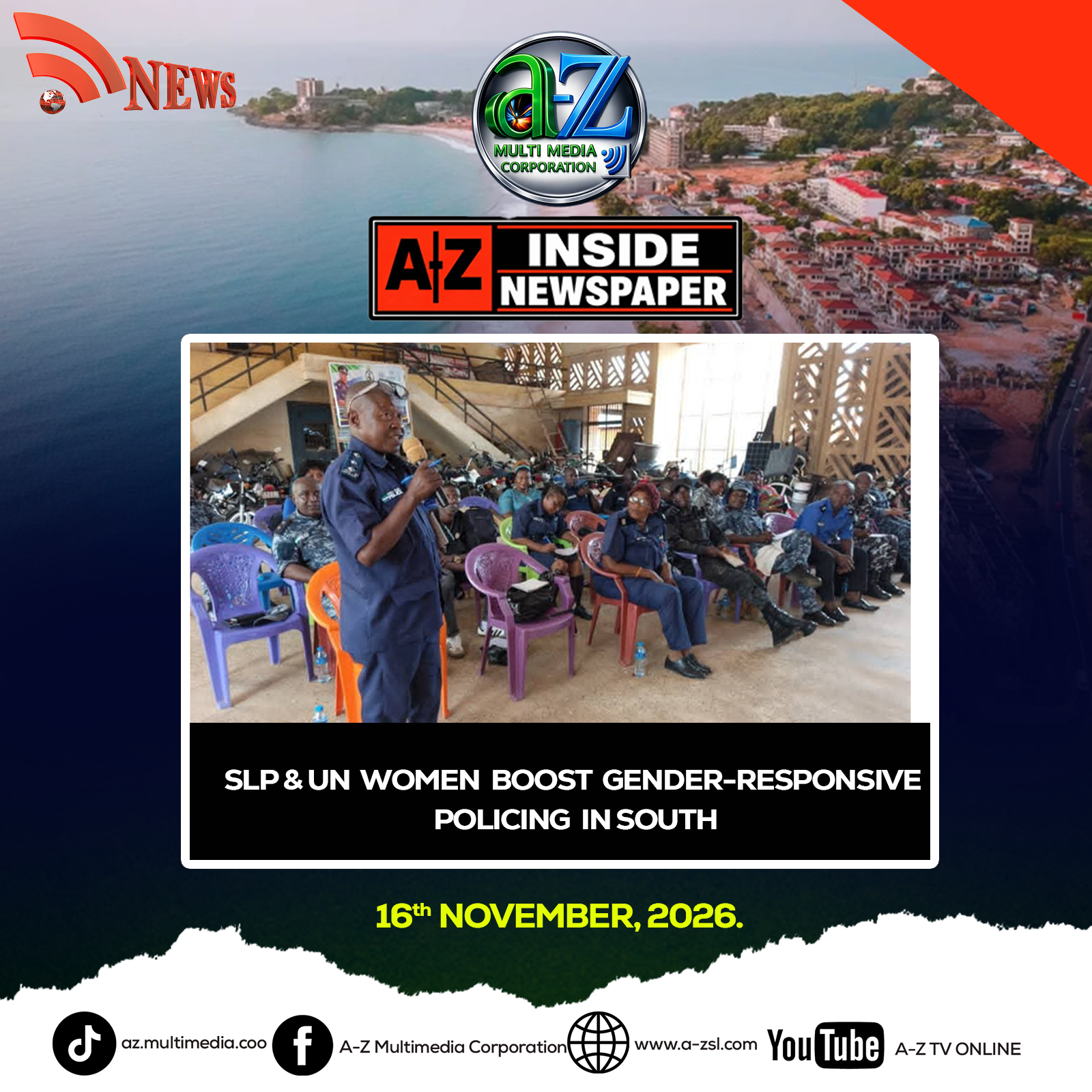
The Sierra Leone Police (SLP), in partnership with UN Women, has intensified efforts to promote gender equality, inclusivity and professionalism within the Force through a two-day capacity-building training programme for Gender Focal Persons drawn from seven Police Divisions in the Southern Region.
The training commenced on Wednesday, 11 November 2026, at the Bo East Division Hall in Bo City and concluded on Thursday, 12 November 2026. The initiative forms part of a broader national effort to strengthen the institutional capacity of police personnel to understand, promote and respond effectively to gender-related issues within the policing environment.
The programme brought together selected police personnel from Bo East, Bo West, Moyamba, Bonthe, Pujehun, Rutile and Mano River Police Divisions. It provided participants with an opportunity to enhance their professional knowledge, share experiences and develop a common understanding of gender-responsive policing.
The initiative is being implemented under the leadership of the Inspector General of Police, Mr. William Fayia Sellu, whose administration continues to prioritize professional development, institutional reforms and the transformation of the Sierra Leone Police into a more accountable, inclusive and people-centred institution.
The Regional Police Commander South, Assistant Inspector General of Police (AIG) Joseph Ibrahim Lahai, underscored the broader importance of the initiative, recognising that effective policing goes beyond the traditional responsibility of maintaining law and order. It also requires professionalism, respect for human rights, sound judgement and an understanding of the diverse needs and vulnerabilities of individuals within society.
The participation of all seven Police Divisions in the Southern Region reflects the importance the Force attaches to developing a coordinated institutional approach to gender-responsive policing. Through the training, officers are expected to strengthen their understanding of gender-related responsibilities and identify practical ways of promoting equality and fairness in their respective divisions.
Gender equality and inclusivity are essential elements of modern policing. Police personnel must be able to identify gender-related challenges, handle sensitive complaints professionally and treat individuals with dignity and respect. These principles are critical to building public confidence and strengthening police-community relations.
The training therefore emphasised the importance of integrating gender considerations into routine police responsibilities, including investigations, community engagement, operational activities, personnel management and the protection of vulnerable persons.
The programme is being coordinated nationally by the Director of Gender and Community Affairs, Assistant Commissioner of Police (ACP) Esther Saffa, in collaboration with the Head of Training of the Sierra Leone Police, Deputy Superintendent of Police (DSP) Alphan Kamara.
Their involvement, together with the partnership with UN Women, highlights the importance of institutional collaboration in advancing gender equality, strengthening professional standards and promoting a police service that respects the rights and dignity of all citizens.
Beyond the immediate training objectives, the selected Gender Focal Persons are expected to serve as resource persons and advocates for gender-sensitive policing within their respective divisions. They will also be expected to apply the knowledge and skills acquired to improve police operations and internal administrative practices.
The engagement further reinforces the need to create a professional working environment free from discrimination, prejudice, harassment and unfair treatment, regardless of an officer’s rank, gender or position within the Force.
With the training concluded on Thursday, 12 November 2026, expectations are high that participating officers will put their newly acquired knowledge and skills into practice to strengthen gender mainstreaming across the seven Police Divisions in the Southern Region.
Ultimately, the success of gender-responsive policing will not be measured solely by the number of officers trained, but by how effectively the knowledge acquired translates into improved professional conduct, better service delivery, protection of vulnerable groups and stronger public trust.
The partnership between the Sierra Leone Police and UN Women therefore marks an important step towards building a more professional, inclusive, accountable and gender-responsive police institution in Sierra Leone.