

By: Aminata Sesay
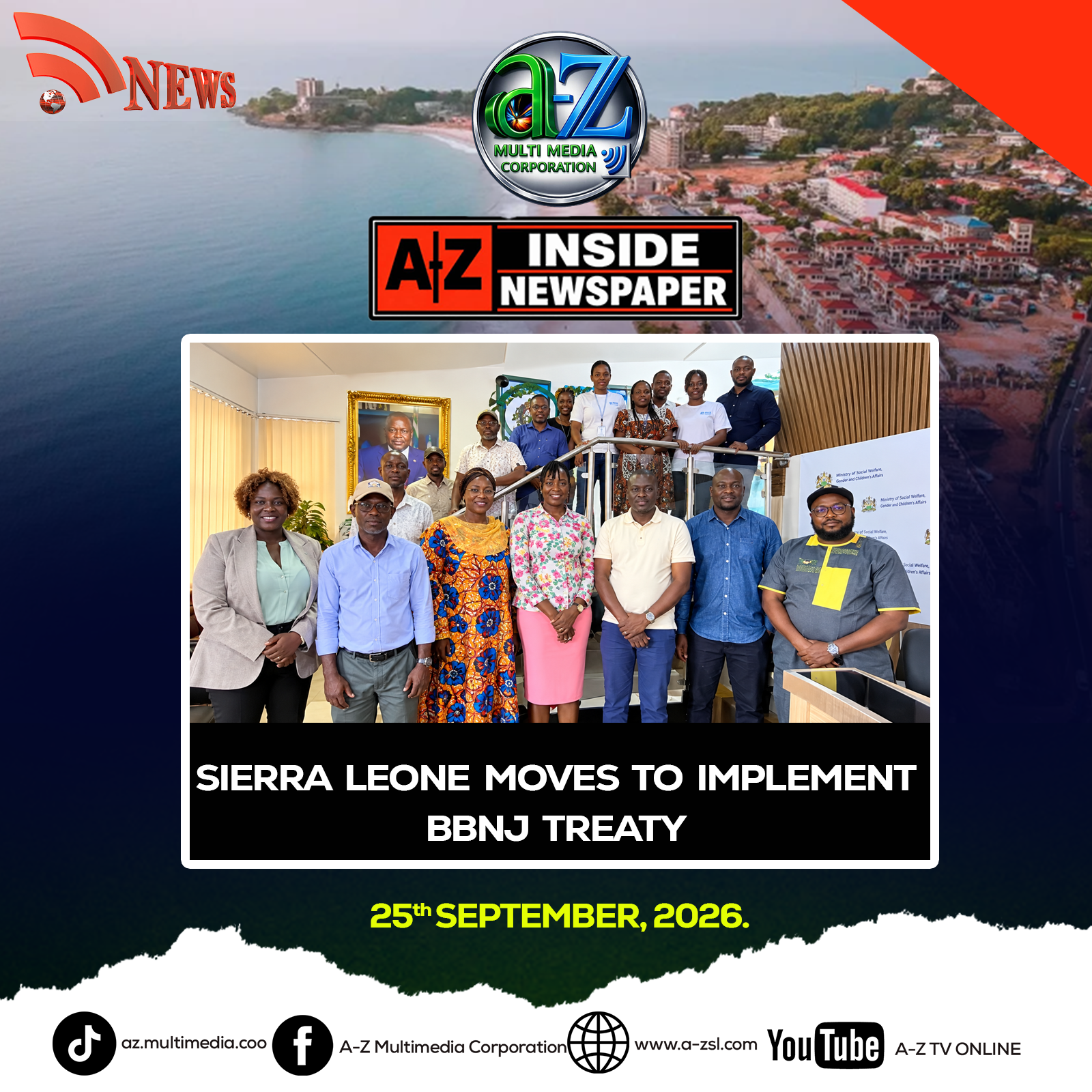
Sierra Leone has begun consultations to strengthen national arrangements for implementing the Biodiversity Beyond National Jurisdiction (BBNJ) Agreement following the country’s ratification of the international ocean treaty.
The consultations bring together representatives from ministries, departments and agencies (MDAs), civil society organizations and development partners to assess existing institutional mandates, clarify responsibilities and identify challenges that could affect effective implementation of the Agreement.
The process is aimed at moving Sierra Leone from ratification to practical implementation of its obligations under the BBNJ Agreement, which entered into force internationally on January 17, 2026.
The Agreement provides a legal framework for the conservation and sustainable use of marine biodiversity in areas beyond national jurisdiction.
Stakeholders are reviewing the roles of relevant institutions and exploring ways to improve coordination among government agencies and other actors involved in marine and environmental governance.
Key areas identified for implementation include institutional capacity needs assessment, capacity building and knowledge exchange, regional cooperation and coordination, as well as national awareness and sensitization programmes.
The BBNJ Agreement covers four main areas: marine genetic resources and the fair and equitable sharing of benefits; area-based management tools, including marine protected areas; environmental impact assessments; and capacity building and the transfer of marine technology.
Sierra Leone’s ratification contributed to the final number of countries required for the Agreement to enter into force, following the achievement of the 60 ratifications required under the treaty.
The United Nations Environment Programme (UNEP) and the Global Environment Facility (GEF) have identified Sierra Leone among countries that have ratified the Agreement and are supporting efforts towards its early implementation.
The Environment Protection Agency (EPA) previously said Sierra Leone’s national ratification process involved several institutions, including the Conservation Society of Sierra Leone, the Ministries of Tourism and Fisheries, Local Government and Trade, the Sierra Leone Maritime Administration and other stakeholders.
The Agency said the process also established a basis for national implementation in areas such as marine spatial planning, environmental impact assessments and equitable benefit-sharing.
With the Agreement now in force, the ongoing consultations are focused on translating Sierra Leone’s international commitments into coordinated national action.
Stakeholders have also highlighted the need to strengthen technical knowledge and institutional capacity, while promoting cooperation with other countries and regional bodies.
The BBNJ Agreement seeks to support the long-term conservation and sustainable use of marine biological diversity in areas beyond national jurisdiction, while providing mechanisms for international cooperation on scientific knowledge, marine technology, capacity building and benefit-sharing.
The consultations concluded with stakeholders agreeing on next steps to advance the national implementation process, with continued collaboration among government institutions, civil society organizations and development partners expected to remain central to the work.