

By: Saidu Jalloh
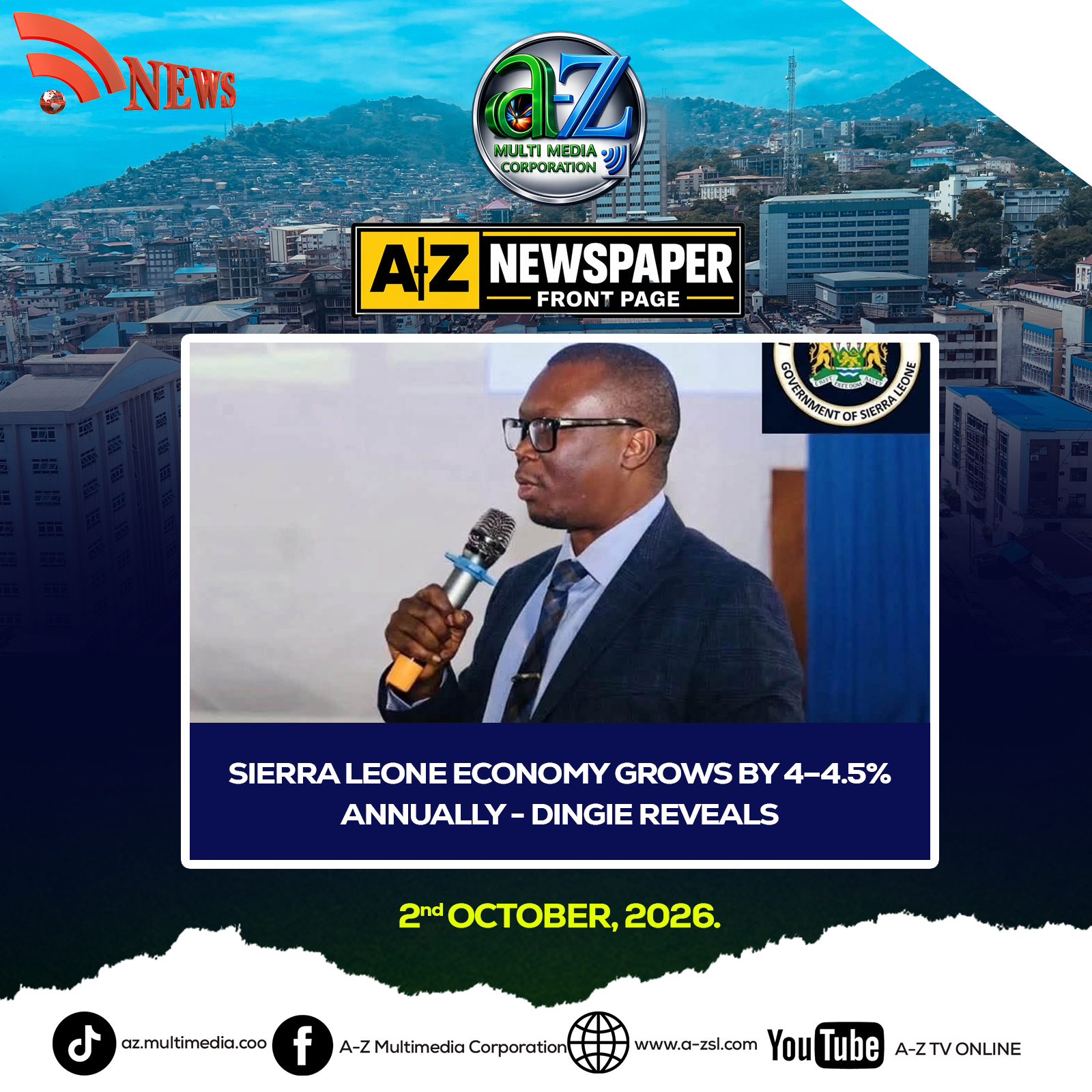
The Financial Secretary at the Ministry of Finance, Matthew Dingie, has disclosed that Sierra Leone’s economy has recorded an average annual growth rate of between 4 and 4.5 percent over the past three years.
Dingie made the disclosure during the ongoing FY2027 Budget Discussion, where he outlined the country’s economic performance, government priorities and challenges affecting the implementation of programmes by ministries, departments and agencies (MDAs).
He said the Ministry of Finance is responsible for managing the economy and coordinating financial resources to enable MDAs to implement their programmes in line with the country’s National Development Plan.
According to Dingie, economic growth has been recorded across various sectors of the economy over the past three years.
He also highlighted efforts to promote local production, noting that some goods previously imported are now being produced locally.
On inflation, Dingie said the government had made progress in bringing inflation under control, but noted that external global shocks continue to put pressure on prices.
He explained that Sierra Leone’s dependence on imported commodities, including wheat and petroleum products, makes the country vulnerable to international price increases.
Dingie said the recent conflict in the Middle East had contributed to increases in petroleum prices, which have subsequently affected different sectors of the economy.
He said the government continues to subsidize some petroleum products to cushion consumers from higher international prices.
The Financial Secretary also disclosed that government Treasury bill rates, which were previously around 40 to 41 percent, had been reduced. He said the reduction was intended to improve private-sector access to finance and support investment and business activities.
On the exchange rate, Dingie said the Leone had remained relatively stable over the past three years, helping to protect the value of savings and investments.
He further explained that the government continues to support public transportation, school feeding, cash transfers and other social protection programmes.
Dingie said the energy sector remains a major pressure on the national budget because electricity providers require government support to cover costs that cannot be fully recovered through revenue collection.
He noted that these subsidies and other competing demands on government finances have contributed to delays in releasing some resources to MDAs.
Despite these challenges, Dingie said the Ministry would continue to focus on domestic revenue mobilization and ensure that resources are made available to MDAs to implement their programmes.
He said the Ministry’s budget primarily covers its administrative and central financial functions, while also providing support for other government institutions to deliver on their mandates.
Dingie added that budget ceilings and guidelines had been issued to MDAs to ensure that public spending remains aligned with government priorities and available resources.