

By: Audrey Raymonda John
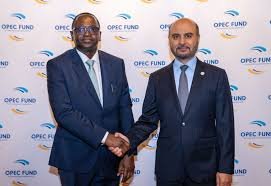
The Presidential Initiative on Climate Change, Renewable Energy, and Food Security (PI-CREF) convened a technical workshop at its Secretariat Office in the Freetown City Council Building to discuss the establishment of the Sierra Leone Climate Finance and Energy Innovation Hub (CFEIH). The initiative received support from the Vienna-based OPEC Fund for International Development as part of its mandate.
PI-CREF, established to provide strategic leadership and coordination on climate action at the highest level of government, seeks to align climate policy with national development priorities, unlock climate finance, and ensure that climate action delivers tangible socio-economic benefits for the people of Sierra Leone.
The Hub will facilitate the integration of climate action across key sectors, ensuring that energy innovation contributes to adaptation, resilience, and inclusive growth. Through this central coordination role, PI-CREF aims to strengthen Sierra Leone’s presence in regional and global climate finance and energy innovation platforms.
Welcoming participants on behalf of Hon. Dr. Kandeh Kolleh Yumkella, PI-CREF Chairman, Peter Kaindaneh, Chief Technical Adviser, stated:
“The establishment of the Climate Finance and Energy Innovation Hub represents a bold and strategic step toward securing Sierra Leone’s climate-resilient and low-carbon future. It signals our commitment to proactive climate leadership, effective resource mobilization, and meaningful participation in the global green energy transition.”
The Hub is a key outcome of the High-Level Investment Roundtable held in Vienna in June 2024, which brought together members of the Arab Coordination Group (ACG) including the Abu Dhabi Fund for Development (ADFD), the Arab Fund for Economic and Social Development (AFESD), the Arab Gulf Programme for Development (AGFUND), the Arab Monetary Fund (AMF), the OPEC Fund for International Development, and the Saudi Fund for Development (SFD).
The Hub has already received a grant of US$200,000 from the OPEC Fund for its establishment. It is expected to leverage additional resources, strengthen coordination, accelerate energy transition implementation, and develop robust investment pipelines. By supporting the development of bankable projects and enhancing national technical capacity, the CFEIH will directly contribute to Sierra Leone’s Nationally Determined Contributions (NDCs) implementation, the Energy Transition and Green Growth Plan, and broader socio-economic development objectives.
Dr. Abdul Rahim Jalloh, Deputy Minister II, speaking on behalf of Minister of Energy Cyril A. Grant, emphasized the importance of climate finance for development. “The Hub should operate as a national coordinating mechanism to unlock international climate finance, strengthen project pipeline development, and drive innovation in clean energy and climate action.”
Sellu McCarthy, representing Minister of Finance Sheku A.F. Bangura, highlighted. “The Hub is our engine room for innovation. It is where policy meets action, turning our green ambitions into tangible realities.” The Ministry called for the Hub to be aligned with the National Climate Finance Strategy to maximize its impact.
Dr. Patrick Kormawa, PI-CREF Director, urged development partners and relevant government agencies to work closely with PI-CREF in establishing and operationalizing the Hub, stressing that strong institutional ownership, sustainability, and alignment with national systems are critical. He described the CFIEH as a national asset while PI-CREF’s role remains catalytic.
The workshop featured focused discussions on Sierra Leone’s Energy Transition and Climate Finance Readiness, the Hub’s workstreams and thematic focus including Renewable Energy Scale-Up, Clean Cooking, Project Preparation, Agriculture and Climate Resilience, data requirements, tools, support models, bankable project pipelines, and governance structures.
SEforALL Country Manager Ngozi Beckley-Lines presented an overview of the Energy Transition and Green Growth Plan, highlighting national targets, renewable energy investment opportunities, barriers, and implementation pathways. Aminata Wurie, Clean Cooking Lead at PI-CREF, shared recent gains, including the development of the National Clean Cooking Strategy.
Key outcomes of the workshop included the establishment of the Hub Secretariat within the Office of the President, overseen by an inter-ministerial steering committee chaired by the President. The Hub will provide targeted technical assistance to ministries, agencies, the private sector, civil society, and local authorities to mobilize innovative financing mechanisms while avoiding duplication. The Hub will leverage existing institutional arrangements, infrastructure, governance frameworks, and proven models to ensure efficiency, coherence, and long-term sustainability.
Development partners, including the UK High Commission, Irish Embassy, German Embassy, GIZ, UNDP, and FAO, welcomed the Hub and pledged continued support to help it grow into a central mechanism for mobilizing climate finance and delivering tangible benefits to communities.