

By: Aminata Sesay
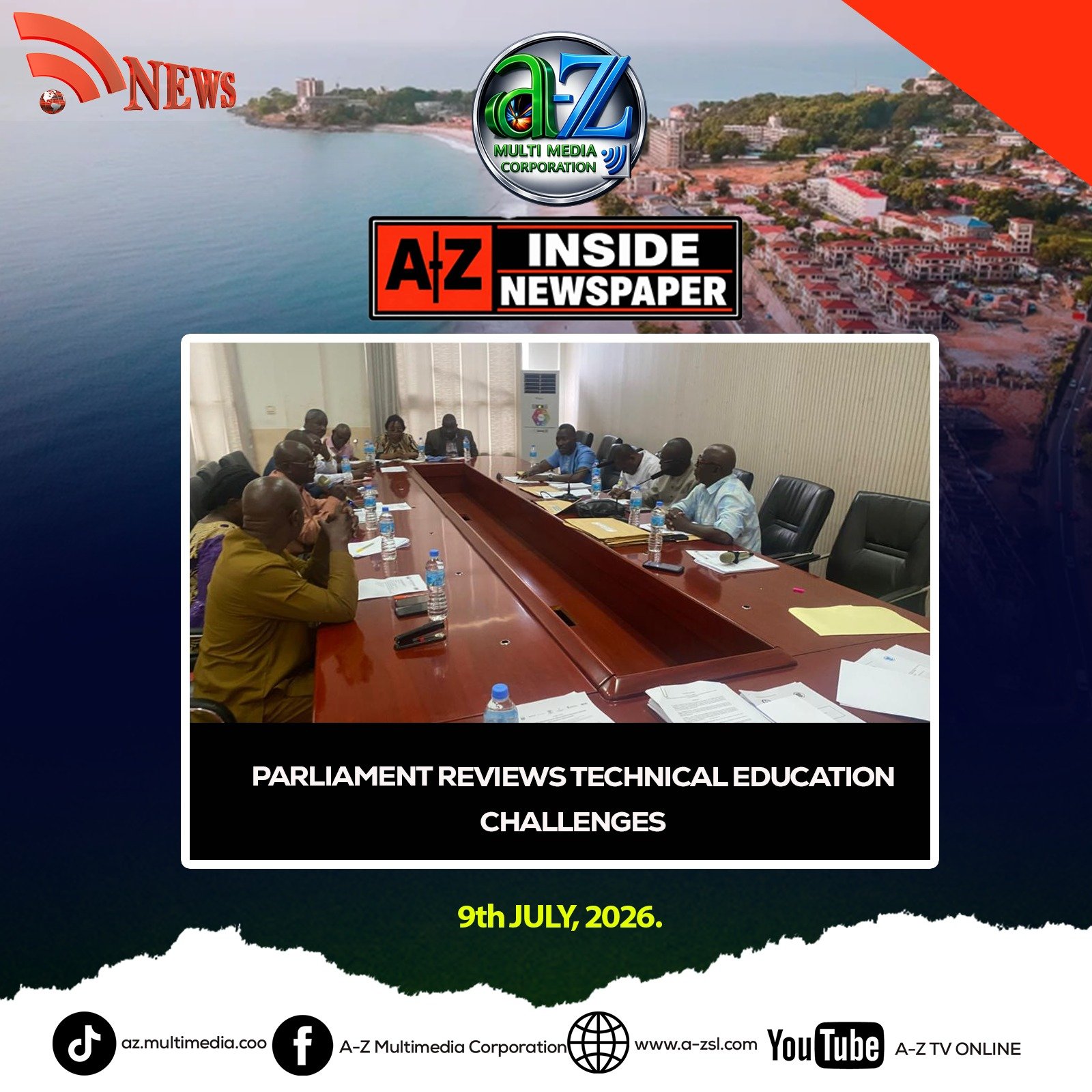
Freetown Polytechnic has appealed for increased government support, legislative reforms and improved funding to strengthen technical and vocational education in Sierra Leone during an oversight engagement with Parliament’s Committee on Technical and Higher Education.
The meeting, chaired by Hon. Williams Lamina, provided Members of Parliament with an opportunity to assess the institution’s achievements, operational challenges and strategic plans aimed at producing the skilled workforce required to support national development.
During the engagement, Committee members commended Freetown Polytechnic for its significant contribution to addressing the country’s shortage of middle-level technical professionals through quality skills training, technical education and professional development programmes.
The Committee observed that technical and vocational education remains central to Sierra Leone’s economic transformation and encouraged the institution to strengthen collaboration with the Ministry of Youth Affairs and other government agencies to expand student internships, employment opportunities and youth empowerment initiatives.
Management of the Polytechnic informed the Committee that the institution has been working closely with the Ministry of Youth Affairs and development partners, including the German Agency for International Cooperation (GIZ), to improve technical training and youth skills development programmes. They added that discussions are also underway to expand partnerships in the automotive sector and other technical disciplines.
The Committee was also briefed on the Polytechnic’s Skills Training Centre at Jui, where final-year students combine classroom instruction with practical industrial training. According to management, many graduates secure employment through the institution’s partnerships with industry.
The institution further disclosed that it has established a collaboration with a Chinese educational institution, through which the first cohort of 40 students successfully completed their studies. Management noted that additional cohorts are expected once academic activities resume.
Despite these achievements, management highlighted several challenges affecting the institution’s growth, particularly inadequate funding.
Officials revealed that construction of a 14-classroom building has stalled because of financial constraints, while delays in the disbursement of government subventions continue to hamper the institution’s operations.
The Committee was informed that following Freetown Polytechnic’s transition to polytechnic status, expenditure on staff salaries and benefits exceeded the approved budget ceiling. As a result, the institution received only half of its 2025 government subvention, which was disbursed in December 2025, and had not received any funding allocation for 2026 at the time of the hearing.
Hon. Williams Lamina assured management that the Committee would engage the Ministry of Finance and other relevant authorities to facilitate the release of the outstanding funds.
Management also appealed for a review of the Freetown Polytechnic Act, which currently prevents polytechnics from independently awarding degree programmes.
Committee members acknowledged the proposal but explained that granting degree-awarding status would require significant financial investment, institutional restructuring, salary harmonisation and improved staff welfare, all of which would require careful consideration by the Government.
The hearing also focused on student welfare and campus security.
Management informed Parliament that student union elections have been suspended indefinitely and fraternity activities prohibited following recurring incidents of campus violence associated with student politics.
The Committee welcomed the measures and encouraged the institution to strengthen engagement with students, parents and surrounding communities to promote lasting peace and stability on campus.
Members also expressed concern over environmental challenges affecting the institution, including illegal waste dumping around the campus and noise pollution caused by commercial activities in neighbouring communities.
The Committee pledged to engage relevant local authorities to improve waste management and regulate excessive noise in order to create a safer and more conducive learning environment.
Land encroachment also featured prominently during the discussions, with Members noting reports that nearly 40 percent of the Polytechnic’s land has been occupied by illegal settlers.
The Committee encouraged management to explore innovative solutions, including responsible land development and partnerships with private investors, to protect the institution’s remaining property while generating additional revenue and employment opportunities.
Closing the engagement, Hon. Williams Lamina assured management that all concerns raised would be reflected in the Committee’s report to Parliament for appropriate consideration and action.
He reaffirmed Parliament’s commitment to supporting reforms that will strengthen technical and higher education and improve the quality of technical and vocational skills training across Sierra Leone.
The meeting concluded with both the Committee and the management of Freetown Polytechnic expressing appreciation for the constructive engagement and reaffirming their shared commitment to advancing technical and vocational education as a key driver of national development.