

By: Aminata Sesay
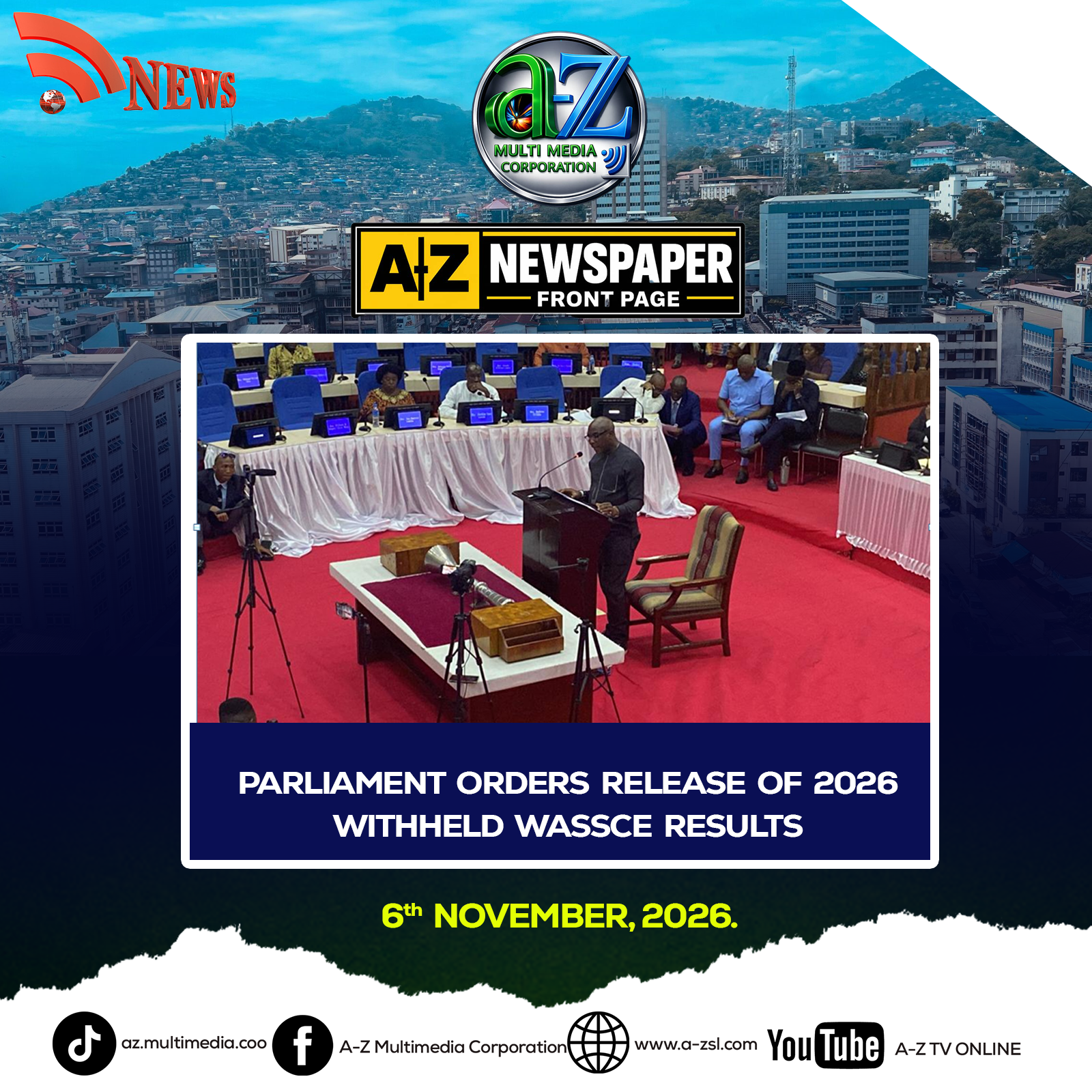
Parliament has ordered the immediate release of withheld 2026 West African Senior School Certificate Examination (WASSCE) results for candidates, against whom there is no credible evidence of examination malpractice, following concerns over the 47,521 results withheld by the West African Examinations Council (WAEC).
The directive was issued by Speaker of Parliament, Hon. Solomon Segepoh Thomas, on Thursday, November 5, 2026, after Members of Parliament questioned the justification for withholding the results and summoned the Minister of Basic and Senior Secondary School Education, Hon. Conrad Sackey, to explain the circumstances surrounding the matter.
In addition to ordering the release of results where no clear evidence of malpractice exists, the Speaker directed Parliament’s Committee on Basic Education to investigate WAEC and the Ministry of Basic and Senior Secondary School Education. The investigation will focus particularly on WAEC’s capacity to conduct public examinations and the Ministry’s role in recruiting examination officers.
The Speaker further directed that representatives of Civil Society Organizations (CSOs) and Parliament’s Committee on Basic Education be included in the committee reviewing the withheld results to strengthen transparency and accountability.
He also instructed the Ministry to provide Parliament, within four working days, with a clear timeline for concluding investigations into the affected results.
Furthermore, WAEC, through the Ministry and the Parliamentary Committee on Basic Education, was directed to submit a post-investigation report explaining the reasons for withholding the results and outlining measures to prevent similar occurrences in future examinations.
The parliamentary intervention followed concerns raised by several MPs over the treatment of affected candidates, the credibility of the examination process and the responsibilities of institutions involved in administering public examinations.
During the debate, MPs questioned the basis for classifying similar answers as plagiarism or collusion, particularly when candidates attend the same schools, use identical textbooks and receive instruction from the same teachers.
One MP argued that reproducing standard textbook definitions, such as describing an atom as the smallest indivisible particle of matter, should not automatically constitute plagiarism or evidence of collusion.
Members also questioned the effectiveness of examination supervision, alleging that repeated inspections at some examination centres had intimidated candidates. Concerns were equally raised over reports that some candidates were prevented from sitting examinations because of their dressing, as well as the deployment of military personnel to supervise examinations.
MPs maintained that responsibility for examination malpractice should not rest solely on students. They called for investigations into teachers, principals, invigilators, examination supervisors and WAEC officials wherever there is evidence of wrongdoing.
One member outlined WAEC’s investigation procedures, which include identifying suspected malpractice, gathering evidence, notifying affected candidates, allowing them to respond, conducting investigations and making final decisions, with provision for appeals.
The MP argued that candidates should not continue to suffer the consequences of allegations that cannot be substantiated, citing the constitutional principles of the presumption of innocence and the right to a fair hearing.
The debate also highlighted concerns about the academic future of affected candidates. MPs urged the Ministry to establish a definite timeline for concluding the investigations before universities reopen, warning that prolonged delays could force qualified candidates to lose an entire academic year through no fault of their own.
Responding to the concerns, Minister Conrad Sackey explained that the Ministry receives examination results from WAEC before technical staff conduct the necessary analysis, through which the large number of withheld results was identified.
He said he subsequently engaged WAEC, leading to measures aimed at improving communication with affected candidates. These include an online application on WAEC’s website through which students can check whether their results have been withheld.
The Minister added that WAEC had also agreed that affected candidates could contact their respective schools to obtain information about why their results were withheld.
Hon. Sackey explained that WAEC operates as a regional organization with its own statutes and established procedures, including the practice of releasing examination results while investigations into suspected malpractice are ongoing. He noted that the Ministry could not unilaterally overturn those procedures.
He assured Parliament that discussions with WAEC were continuing and disclosed that an investigation meeting had initially been scheduled for the following week, with priority cases to be addressed to facilitate the early release of results.
The Minister acknowledged the concerns of parents and affected candidates, assuring MPs that the Ministry was committed to resolving the matter as quickly as possible. He also pledged that accountability would extend beyond students found guilty of malpractice to include individuals responsible for supervising and administering the examinations.
The Speaker’s directives place responsibility on the Ministry, WAEC and Parliament’s Committee on Basic Education to establish the circumstances surrounding the withheld results, ensure fair treatment for affected candidates and strengthen accountability and public confidence in the examination system.