

By: Aminata Sesay
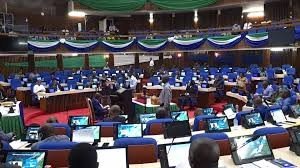
The Parliament of Sierra Leone has passed the National Security and Central Intelligence Act 2026 following extensive deliberations, amendments, and intense debate particularly on provisions relating to the proposed State Protection Service (SPS) and post-office security for former senior government officials.
Presenting the final report from the Committee of the Whole House, the Speaker of Parliament confirmed that the bill had undergone thorough scrutiny and significant revisions before being returned to plenary for its third reading. He described the legislation as a major step forward in strengthening the country’s national security framework.
The Speaker then moved that the bill be read for the third time and passed into law. Members of Parliament overwhelmingly supported the motion, and when the question was put, the “Ayes” prevailed, leading to its formal enactment.
The newly passed Act repeals and replaces existing national security laws, introducing a comprehensive framework for internal and external security coordination, intelligence gathering, and a modernized national security architecture.
A key provision of the Act is the establishment of the State Protection Service (SPS), a specialized unit mandated to provide security for high-profile former state officials. These include former Presidents, Vice Presidents, Speakers of Parliament, and Chief Justices.
During the debate, lawmakers emphasized that individuals who have served at the highest levels of government should continue to receive structured, state-managed protection after leaving office. Several Members noted that such arrangements are consistent with international best practices.
However, discussions became particularly contentious over whether former officials should have a role in selecting or replacing their security personnel.
Some Members argued that the SPS must operate independently and professionally, with all decisions regarding deployment and reassignment remaining under the authority of state security institutions. They stressed that officers should be subject to continuous assessment including medical, disciplinary, and operational evaluations and replaced when necessary without requiring approval from those they protect.
Others, however, cautioned that completely excluding former officials from such decisions could undermine trust and operational effectiveness. They argued that long-standing relationships between protectees and security personnel can be critical to performance and suggested introducing consultation or consent mechanisms to strike a balance.
One Member highlighted the need for a middle-ground approach, noting that security arrangements must combine intelligence-led decision-making with respect for former leaders, warning that abrupt or poorly managed changes could create unnecessary tension.
The debate also extended to broader governance concerns, particularly the need to prevent the politicization of security institutions. Lawmakers across party lines stressed that the SPS must function strictly as a professional and non-partisan body.
Despite differing viewpoints, Parliament reached consensus that the creation of the SPS represents a necessary and timely modernization of Sierra Leone’s security system. Members cited evolving threats including cybercrime, political instability, and transnational security challenges as key drivers behind the reforms.
The passage of the Act marks the culmination of a rigorous and consultative legislative process.
In his closing remarks, the Speaker commended Members of Parliament for their dedication and contributions, noting that the new law not only strengthens national security but also establishes a clear institutional framework for protecting both the state and its former leaders.