

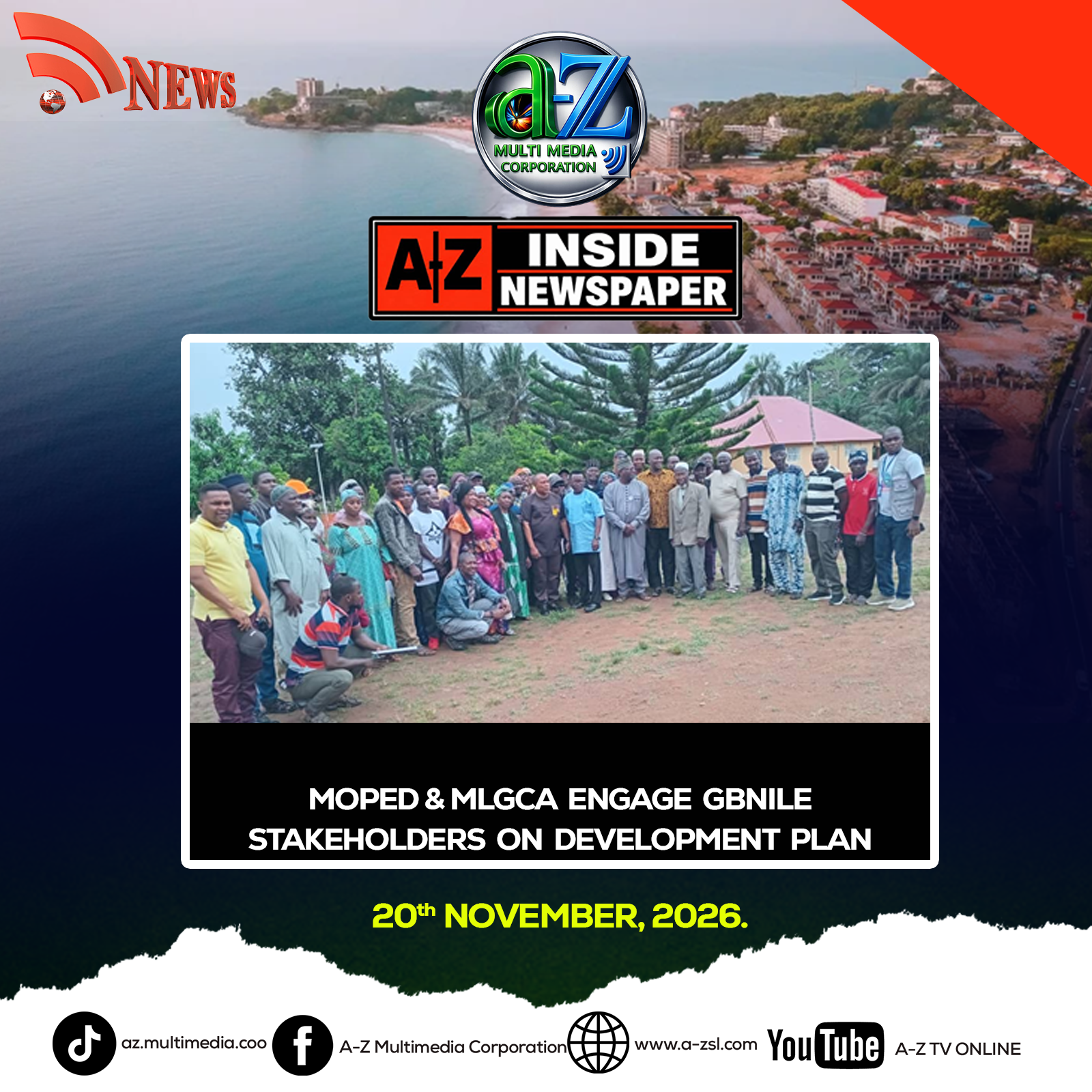
The Ministry of Planning and Economic Development (MoPED), in collaboration with the Ministry of Local Government and Community Affairs (MLGCA), has intensified efforts to promote inclusive grassroots development through stakeholder consultations on the formulation of a Chiefdom Development Plan in Gbinle Tawuya Chiefdom, Kambia District.
The consultation, held in Gbinle Tawuya Town, brought together traditional authorities, local government representatives and community stakeholders to identify pressing development challenges and propose practical interventions that reflect the needs and aspirations of local communities.
The engagement marked the second phase of consultations, following an initial pre-engagement exercise conducted in the chiefdom eight weeks earlier. It provided an opportunity for residents to assess existing development challenges, share their views and identify priority areas requiring government intervention.
The meeting was chaired by Senior District Officer, Mr. Charles Lamin, who emphasised the importance of collective participation, collaboration and community ownership in developing a plan that responds to the needs of local people.
Addressing participants, the Deputy Development Secretary urged stakeholders to take the consultation seriously and provide accurate and relevant information about the challenges confronting their communities. He noted that effective development planning requires the active participation and ownership of the people it is intended to benefit, reaffirming MoPED’s commitment to community engagement throughout the planning process.
In his welcome address, Paramount Chief Alhaji Alimamy Serie Sankoh-Yillah II welcomed the MoPED and MLGCA delegation and encouraged participants to contribute meaningfully to the discussions to ensure that the identified priorities reflect the genuine development aspirations of the chiefdom.
Representing the technical team, Sylvester Macavoray, Senior Programme Officer in MoPED’s Rural Development Directorate (RDD), outlined the key thematic areas guiding the consultation. These included healthcare access, education and social infrastructure, youth and women’s empowerment, environmental sustainability, food security, infrastructure and community services, governance, peace and social cohesion.
Participants were subsequently divided into five working groups to examine development challenges, identify pressing community needs and recommend practical solutions.
The group discussions identified several priorities, including the construction and rehabilitation of schools, provision of school furniture and sanitation facilities, solar electricity, teacher accommodation, and the recruitment and training of more qualified teachers.
On agriculture and food security, stakeholders called for improved access to seeds, fertilizers, warehouses, storage facilities, tractors and other farming equipment to boost agricultural production. They also highlighted the need for livestock support, improved rural roads, safe drinking water, electricity and better mobile network coverage.
Discussions on youth, women and environmental sustainability further underscored the need for employment opportunities, increased support for women, youth empowerment initiatives and stronger environmental protection measures.
Following the group discussions, representatives presented their findings during a plenary session, providing an opportunity for stakeholders to examine common challenges, exchange ideas and agree on priority areas for development intervention.
Presenting the chiefdom’s major priorities, Paramount Chief Alhaji Alimamy Serie Sankoh-Yillah II highlighted three key areas: the establishment of fish ponds to increase local fish production, given the importance of fish in household diets; support for mechanized farming through the provision of tractors and other agricultural machinery; and livestock development to improve household livelihoods and strengthen food security.
The consultation also considered the proposed establishment of a Chiefdom Development Coordination Committee to facilitate coordination, strengthen community participation and monitor progress in implementing identified development priorities.
Contributing to the discussions, MLGCA Director Brima Nyuma Combay emphasised the importance of grassroots participation and collaboration in identifying and coordinating development priorities. Aisha Kabba, District Planning Officer, represented the Kambia District Council.
The consultation brought together a broad cross-section of the community, including traditional leaders, section chiefs, headmen, community health workers, teachers, young people, women, persons with disabilities and other stakeholders.
The programme concluded with the formal submission of four proposed development projects by Paramount Chief Alhaji Alimamy Serie Sankoh-Yillah II on behalf of his people to the Deputy Development Secretary. The proposals were presented for consideration at the chiefdom level and subsequent submission to the Minister of Planning and Economic Development.
The outcomes of the consultation are expected to inform the development of a Chiefdom Development Plan anchored in local priorities and aspirations, providing a framework for coordinated and inclusive development interventions across key sectors in Gbinle Tawuya Chiefdom.