

By: Mamajah Jalloh
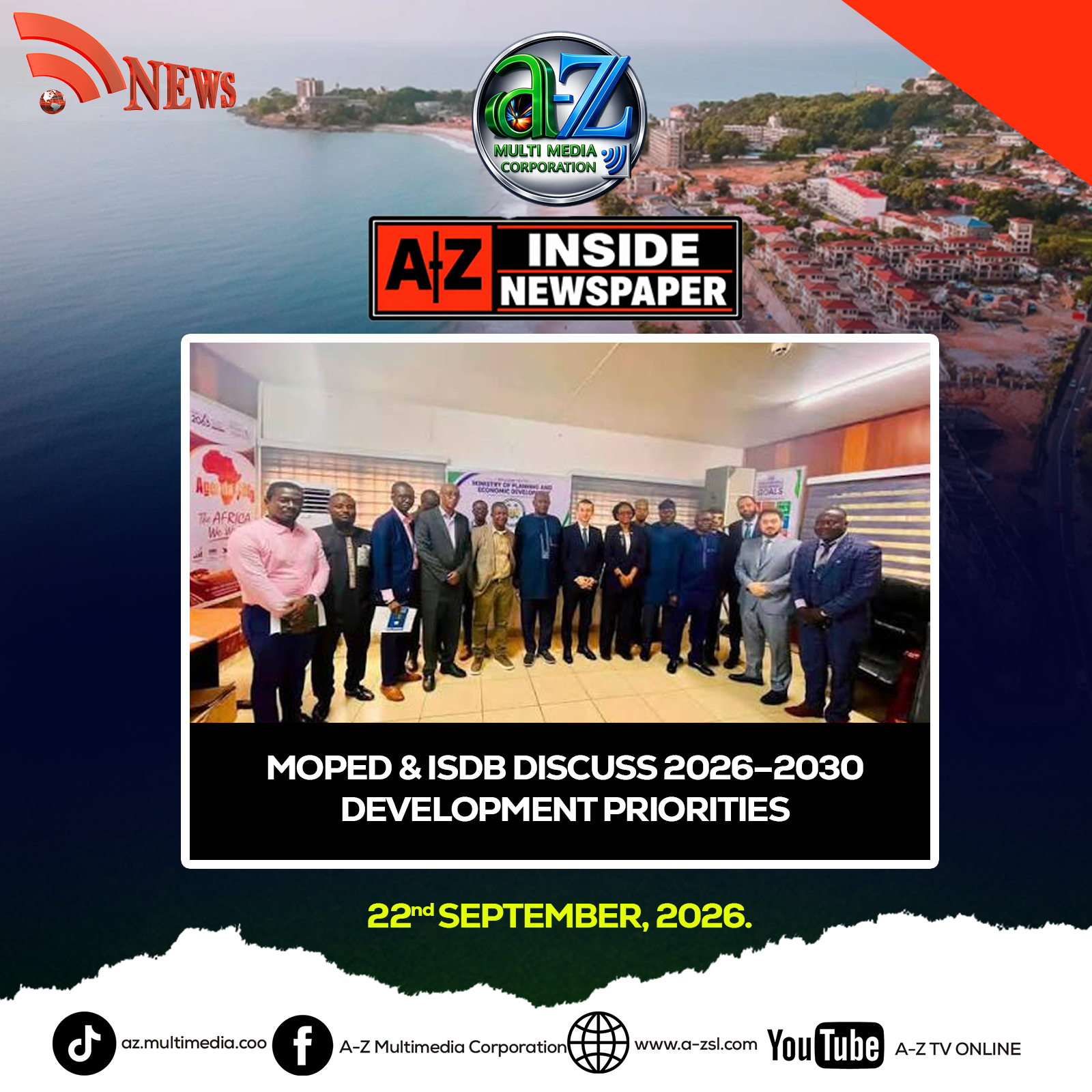
The Ministry of Planning and Economic Development (MoPED) has engaged a delegation from the Islamic Development Bank (IsDB) on Sierra Leone’s 2026–2030 development priorities as part of the Bank’s Country Programming and Portfolio Review Mission.
The engagement held on Monday, September 21, 2026, at the Ministry’s Conference Room in Freetown, formed part of consultations towards the preparation of the Sierra Leone Country Engagement Framework 2026–2028.
The meeting aimed to strengthen development cooperation and align potential IsDB interventions with the country’s national development priorities.
The IsDB delegation was led by Country Manager Kokhorjon Aminov and was received by Deputy Development Secretary I, Usman Cherry Conteh, who led discussions on behalf of MoPED.
Aminov said the Bank was interested in identifying and developing a pipeline of projects aligned with government priorities and capable of attracting financing.
He identified agriculture and value-chain development, energy, transport and infrastructure among the areas being considered, while highlighting opportunities for increased private-sector participation.
He explained that IsDB-supported projects, particularly in agriculture, could incorporate microfinance schemes and lines of finance to provide producers, small and medium-sized enterprises (SMEs) and other private-sector partners with access to funding.
Aminov said similar financing mechanisms could be incorporated into future pipeline projects, particularly priority value-chain initiatives, to enable farmers and businesses to access funding for investment.
He also highlighted opportunities under the Bank’s private-sector operations, including investment, trade and insurance financing, noting that eligible commercial and development finance institutions in Sierra Leone could explore these opportunities to support private investment and trade.
Deputy Development Secretary I Usman Cherry Conteh stressed the importance of ensuring that programmes developed in collaboration with the IsDB are aligned with the Medium-Term National Development Plan (MTNDP) 2024–2030 and other national development priorities.
He said such alignment was essential to ensuring that development cooperation contributes meaningfully to Sierra Leone’s national development agenda.
The Deputy Director of the Development Assistance Coordination Office (DACO), Hassan Conteh, highlighted the importance of effective collaboration in identifying priority interventions and ensuring that development partner support remains aligned with government priorities.
Deputy Director of Planning Joseph Samah identified several areas for consideration, including inclusive and sustainable local-level development, rural financing, health financing, capacity development for bankable project preparation and Chiefdom Development Planning.
He underscored the need for development interventions to respond to priorities at both national and local levels.
The Assistant Director at the Ministry of Finance, Kenneth King, also stressed the importance of continued coordination among the Ministry of Finance, MoPED and development partners in advancing national development priorities.
The engagement forms part of the wider IsDB Country Programming and Portfolio Review Mission, during which the Bank is engaging relevant Ministries, Departments and Agencies (MDAs) to review current economic and development trends, identify priority interventions and develop potential projects for consideration under the Sierra Leone Country Engagement Framework 2026–2028.
The discussions also highlighted the need to strengthen the capacity of MDAs to develop bankable projects. Participants noted that while government institutions have several proposed projects, greater technical capacity is needed to properly prepare, structure and develop them to meet financing requirements and attract private-sector investment.
The engagement concluded with a shared commitment to continued collaboration in identifying and developing pipeline projects, strengthening project preparation capacity and exploring appropriate financing opportunities to support Sierra Leone’s development priorities.