

By: Aminata Sesay
The Ministry of Planning and Economic Development (MoPED) has called for stronger coordination among government institutions, local councils and development partners to prevent duplication of interventions and ensure that development programmes deliver sustainable results in communities.
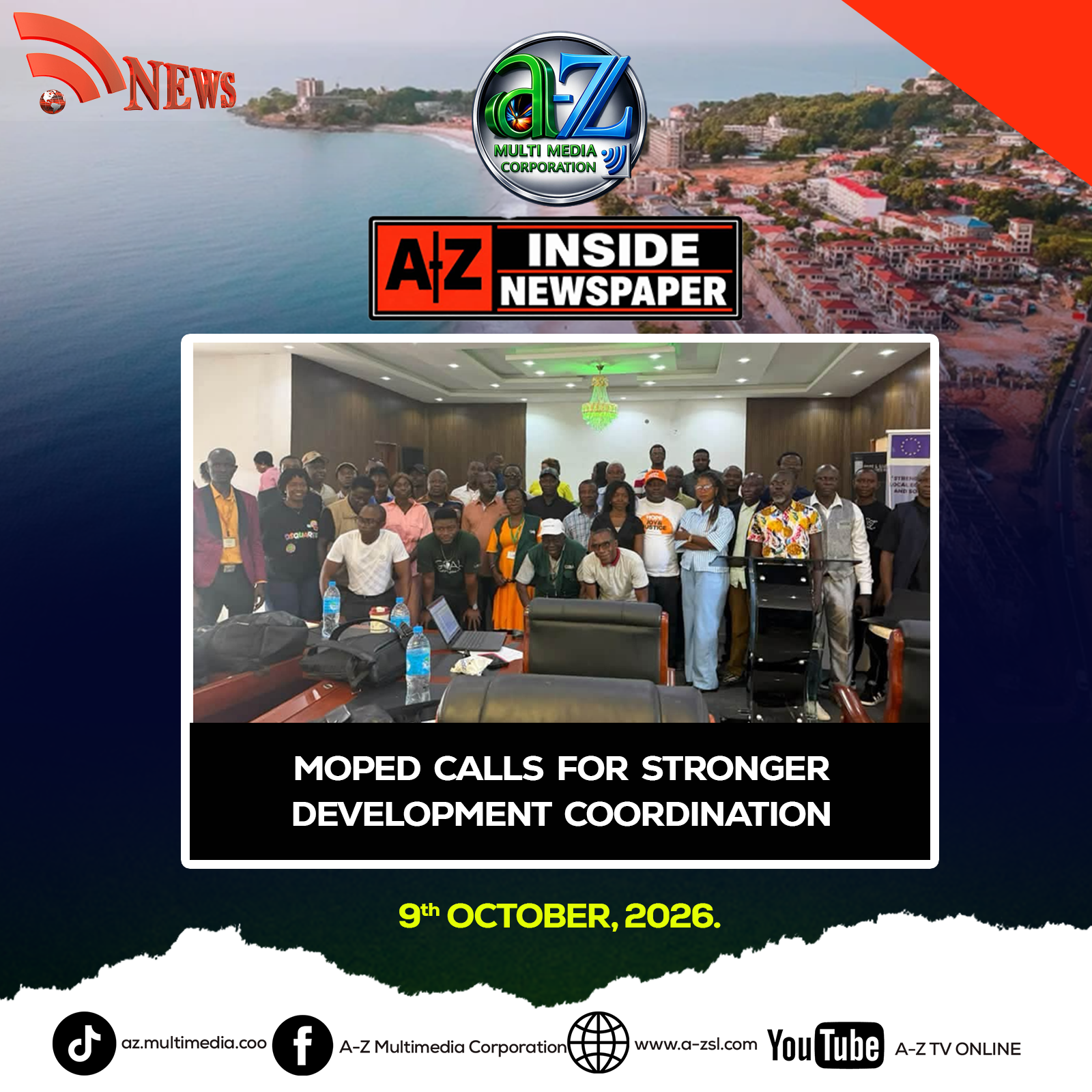
The call was made on Wednesday during a two-day retreat for District Planning Officers and NGO Leads at the Bo District Council. The retreat, which runs from October 8–9, forms part of the Ministry’s Mid-Term Review of the Status of Development Coordination.
The engagement brings together representatives of local councils, government institutions, non-governmental organizations, development partners and other stakeholders to assess existing coordination mechanisms and identify practical measures to improve development delivery across the country.
Speaking during the opening session, the Director of NGO Affairs said the growing number of organizations implementing projects across Sierra Leone makes effective coordination increasingly important.
He noted that weak coordination could result in duplication and fragmentation, with organizations sometimes implementing similar projects in the same communities while other pressing development needs receive limited attention.
He therefore urged stakeholders to strengthen coordination at national, district, sectoral and technical levels, stressing the need for development actors to align their interventions with national priorities and complement existing programmes.
According to him, coordination should not be limited to meetings and discussions but should result in clearly defined actions, assigned responsibilities and regular follow-up to ensure that agreed decisions translate into measurable outcomes.
The importance of local councils in the development process was also highlighted by Alberta Kowa, Deputy Chairperson of the Bo District Council, who officially opened the programme.
Madam Kowa said local councils remain at the frontline of service delivery and therefore require adequate resources, support and collaboration from national institutions and development partners.
She encouraged stakeholders to ensure that development interventions respond to the actual priorities of communities, while calling for open discussions on challenges affecting implementation.
She said identifying gaps and openly addressing challenges would enable stakeholders to develop practical solutions to advance Sierra Leone’s development agenda.
The Director of Rural Development, Madam M’balu Kamara, also emphasized the importance of functional coordination structures in ensuring that development programmes complement rather than duplicate one another.
She called for improved information-sharing and stronger collaboration across sectors, noting that the success of development coordination should ultimately be measured by results achieved in communities rather than the number of meetings held.
The retreat has also provided a platform for participants to review development coordination arrangements at both national and district levels through technical presentations, interactive discussions and group work.
Participants are examining ways to strengthen joint implementation, improve information flow, maximize available resources and promote the sustainability of development interventions at the community level.
Issues including the Community-Based Organization (CBO) Policy, registration and re-districting mechanisms have also featured in discussions as stakeholders consider ways of strengthening the broader development coordination framework.
The second day of the retreat is expected to focus on reporting mechanisms, communication and feedback flows, as well as progress on recommendations from the previous retreat.
The engagement is expected to conclude with recommendations and agreed actions aimed at strengthening accountability, improving joint implementation and ensuring that development interventions are better aligned with national priorities and community needs.
The retreat is part of MoPED’s ongoing efforts to strengthen the link between national development planning, district-level implementation and the work of non-governmental organizations across Sierra Leone.