

By: Mohamed J. Bangura
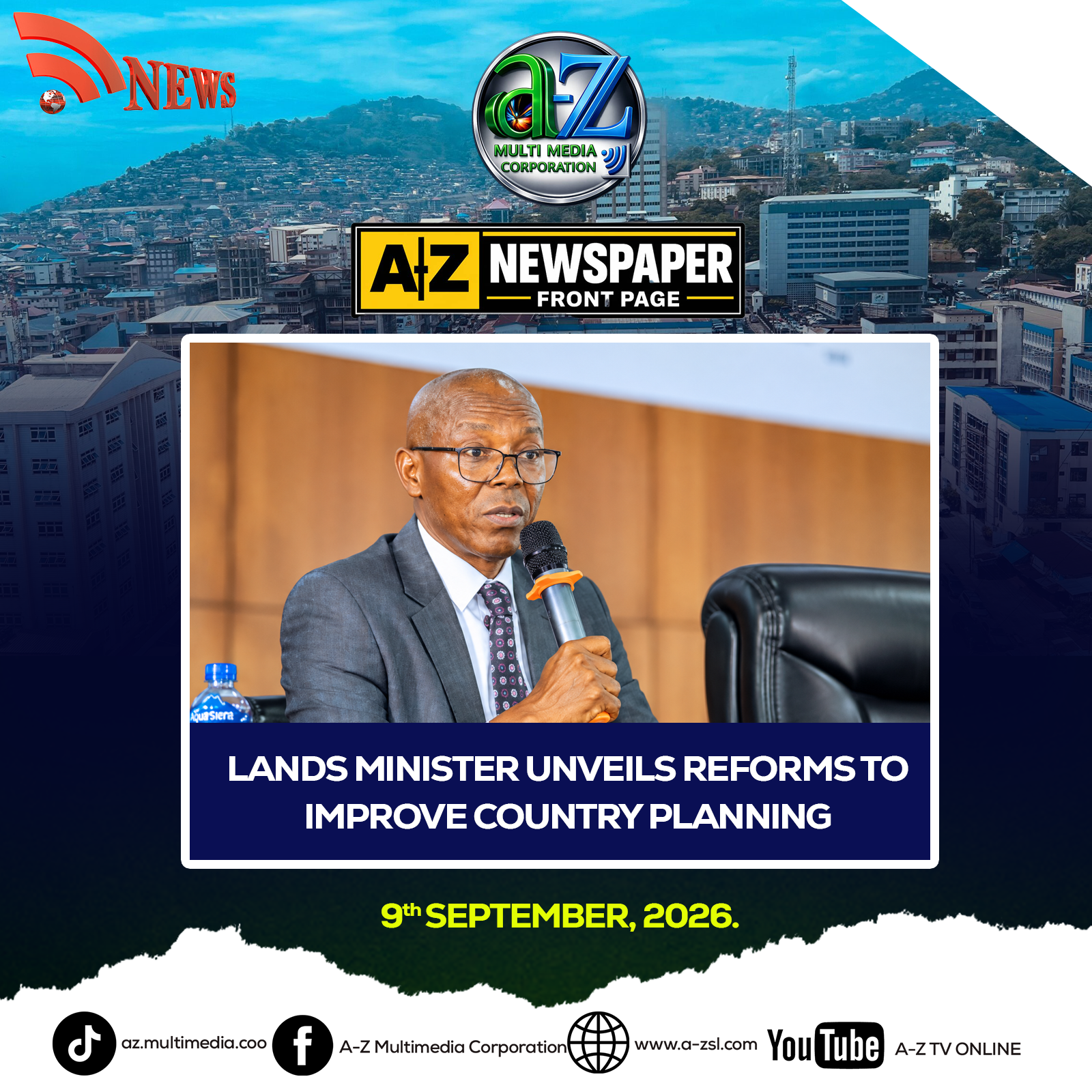
Minister of Lands, Housing and Country Planning, Dr. Turad Senesie, has outlined a series of reforms aimed at improving land administration, strengthening development control and ensuring that buildings and settlements across Sierra Leone are properly planned.
Dr. Senesie made the disclosure on Tuesday, September 8, 2026, during the Ministry of Information and Civic Education’s weekly press conference at the Miatta Conference Centre in Freetown.
The Minister said a key component of the reforms is the strengthening of the building permit system, which forms part of the Government’s broader strategy to promote orderly physical development.
According to him, the absence of effective country planning over the years has resulted in situations where people construct houses without adequate access roads and other essential infrastructure.
He explained that the challenge is partly linked to Sierra Leone’s outdated legal framework, which was established decades ago when Freetown’s population was significantly smaller than it is today.
Dr. Senesie said the Government is therefore working to introduce and implement a modern country-planning law that will provide clearer guidance on where and how buildings should be constructed.
He stressed that building permits must be obtained before construction begins, noting that the system is intended to protect communities, promote orderly development and ensure compliance with approved planning standards.
The Minister also urged property owners to respect the rights of their neighbours, stressing that proper planning should not focus solely on individual property development but must also ensure that communities are safe, accessible and suitable for living.
As part of the reforms, the Government plans to decentralize aspects of country planning by giving greater responsibility to local authorities, which are closer to the communities they serve.
Dr. Senesie said mayors, councillors and council chairpersons will be trained to effectively perform their responsibilities under the new planning framework. He said the move is expected to bring planning decisions closer to residents and improve the monitoring of development activities at the local level.
The Minister further highlighted the importance of land reforms in improving land administration and generating revenue for national and local development.
He explained that the reforms will introduce systematic land registration and the issuance of certificates to provide greater certainty and transparency in land ownership and transactions.
Dr. Senesie noted that land documentation has historically been a major challenge, stressing the need for an organised system in which land is properly registered and documented.
He also called on citizens to take environmental responsibilities seriously, particularly in relation to waste management. He said proper waste disposal should be an integral part of responsible community planning and development.
The Minister also addressed noise pollution, particularly from religious institutions. He urged religious leaders to ensure that sounds generated during prayers and other activities do not unnecessarily disturb neighbouring communities.
He explained that the measures form part of a broader vision to create properly planned communities where development takes place in a manner that protects residents and promotes harmony.
Dr. Senesie appealed to Sierra Leoneans to cooperate with the Government as the reforms are implemented, emphasizing that the changes are intended to benefit communities across the country.
He said the reforms in the lands and country-planning sector are designed to address longstanding challenges associated with unplanned settlements, land administration, building construction, environmental management and development control.
The Government’s proposed changes are expected to modernize the management of land and physical development across Sierra Leone, improve the approval of building projects, strengthen land registration and enhance community planning.
Dr. Senesie maintained that effective country planning requires collective responsibility, urging citizens, local authorities, traditional leaders, religious leaders and other stakeholders to play their part in ensuring that Sierra Leone develops in an orderly and sustainable manner.
The Government’s focus on building permits, systematic land registration, decentralized planning and stronger development control is expected to contribute to safer communities, better infrastructure planning and more effective management of the country’s rapidly growing settlements.