

By: Aminata Sesay
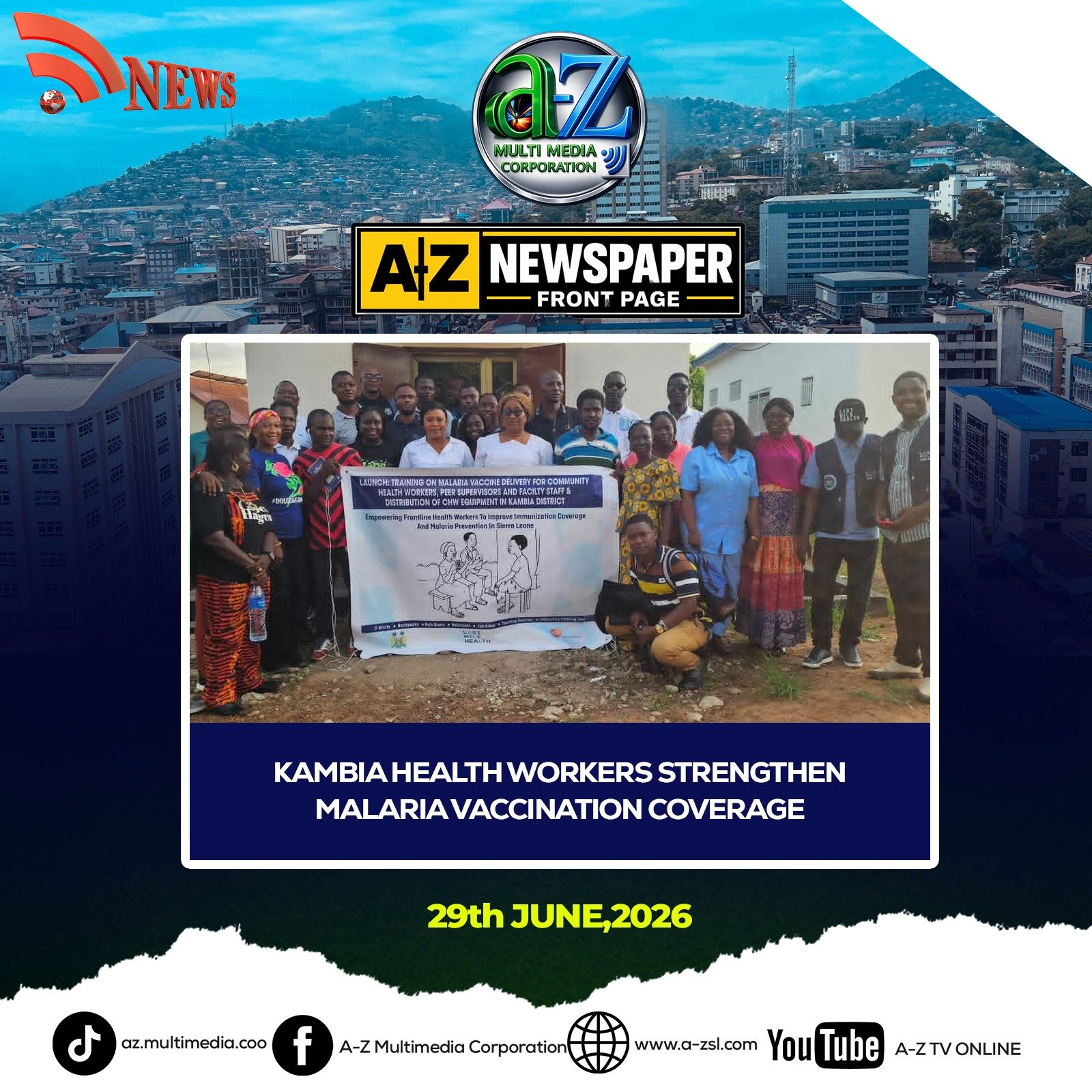
Health authorities in Kambia District have intensified efforts to strengthen childhood protection against malaria following the successful training of health personnel and Community Health Workers (CHWs) on malaria vaccination and community engagement strategies.
The training, held from 22 to 23 June 2026, brought together staff of the Kambia District Health Management Team (DHMT), equipping them with the knowledge and practical skills needed to support effective malaria vaccine delivery and enhance community awareness.
Following the DHMT training, a cascade training programme was conducted from 25 to 27 June 2026, reaching 351 Community Health Workers (CHWs) across the district with support from Last Mile Health.
The initiative was implemented by the Expanded Programme on Immunization (EPI) in collaboration with the Community Health Worker (CHW) Hub, the Health Education Programme, and the National Malaria Programme as part of ongoing efforts to strengthen routine immunization services and improve malaria prevention.
The newly trained Community Health Workers are expected to play a pivotal role in identifying children who have missed their malaria vaccine doses, commonly referred to as vaccine defaulters. They will also support referrals for vaccination and conduct follow-up visits with caregivers to ensure that eligible children receive their vaccines within the recommended schedule.
Health officials said strengthening the capacity of community-based health workers is critical to reaching underserved populations, increasing vaccine uptake, and ensuring that no eligible child is left behind in the fight against malaria.
According to health authorities, Community Health Workers serve as a vital link between health facilities and local communities by promoting health education, mobilising families, tracking missed vaccinations, and encouraging caregivers to access essential health services.
The training forms part of activities under the #300DaysOfActivism campaign, an initiative aimed at improving immunization coverage, reaching zero-dose and under-immunized children, and promoting equitable access to life-saving vaccines across Sierra Leone.
Stakeholders expressed confidence that the knowledge and skills acquired during the training will contribute to stronger community engagement, improved malaria vaccine coverage, and better child health outcomes in Kambia District.
With each trained Community Health Worker serving as a bridge between health facilities and households, the initiative is expected to significantly strengthen malaria prevention efforts, protect more children from the disease, and support Sierra Leone’s commitment to achieving universal immunization coverage and improved public health.