

By: Mamajah Jalloh
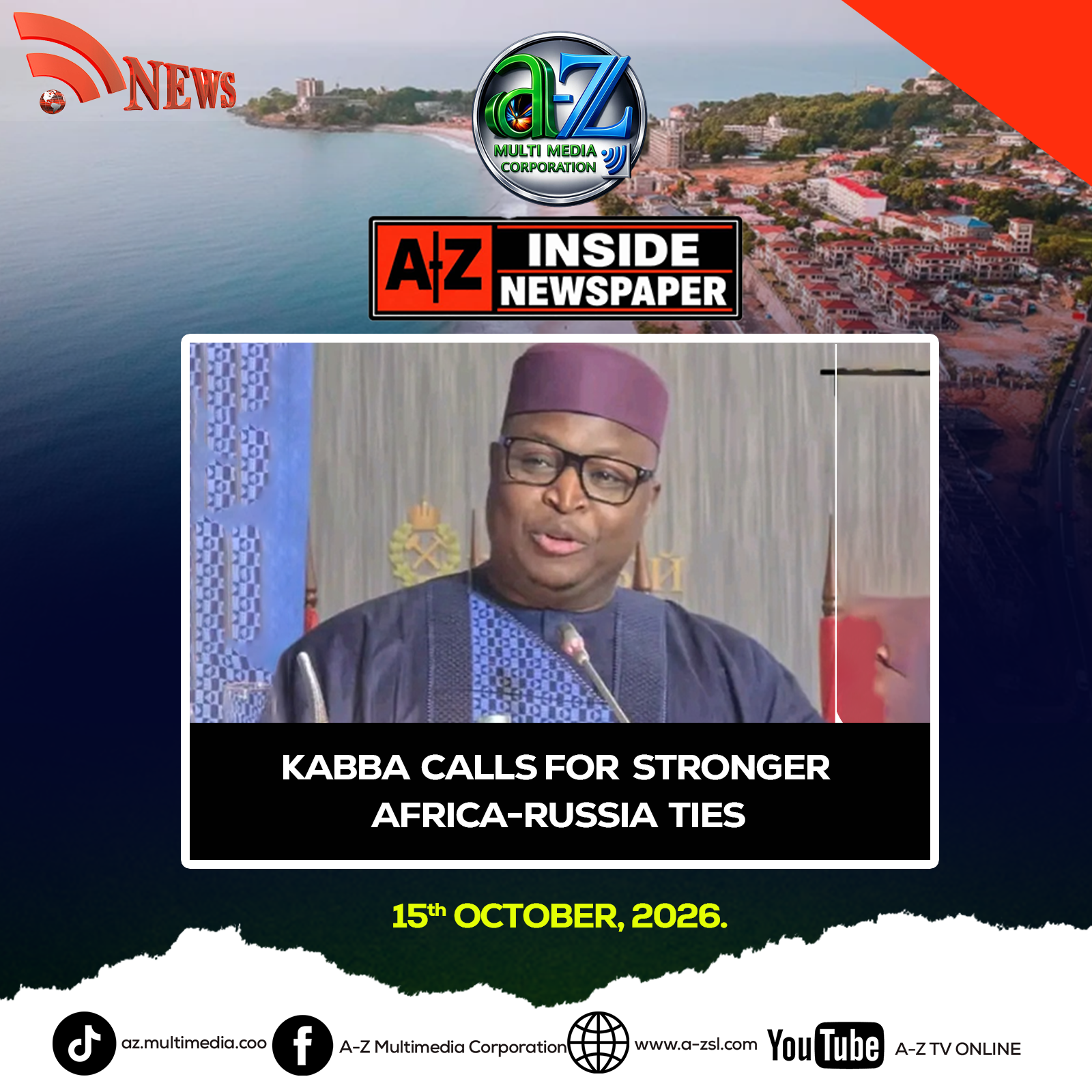
Presidential Adviser Alhaji Timothy Musa Kabba has called for stronger partnerships between Africa and Russia, emphasizing the need for trust, mutual respect and shared interests to unlock Africa’s vast natural resources and accelerate development.
Kabba made the call on Wednesday, 14 October 2026, during a panel discussion at the Second Russian-African Raw Materials Dialogue, held at Empress Catherine II Saint Petersburg Mining University in Russia. He participated alongside senior Russian and African officials, including Tatyana Dovgalenko, Director of the Department for Partnership with Africa at Russia’s Foreign Ministry.
The Sierra Leonean delegation included Ambassador to Russia Mohamed Yongawo, Deputy Minister of Technical and Higher Education Sarjoh Aziz Kamara, Deputy Vice-Chancellor of Eastern Technical University Dr Lawrence Sao Babawo, and Dr. Solomon Augustine Tucker of Fourah Bay College, University of Sierra Leone.
Drawing on his personal experience, Kabba described himself as an example of the opportunities that can emerge from Africa-Russia cooperation. He recounted being conscripted into a warring faction during Sierra Leone’s civil war at the age of 12 before later receiving the opportunity to study in Russia.
He said his education at the university paved the way for a career with Russian energy company Lukoil Overseas, where he worked for more than eight years as a petroleum engineer across Central Asia, the Middle East and West Africa.
Kabba explained that his professional experience subsequently led him into public service, where he served as head of Sierra Leone’s petroleum agency, Minister of Mines and Mineral Resources, and Minister of Foreign Affairs and International Cooperation.
Addressing Africa’s historical and economic challenges, he argued that the continent had often suffered the negative consequences of global technological and economic developments while receiving limited benefits from them.
“As Africans, we must pursue partnerships that are reliable and anchored in trust, mutual respect and common interests,” he said.
Kabba also highlighted what he described as the contradiction between Africa’s abundant natural resources and the persistent poverty experienced by many of its people.
He said the changing global order presents African countries with opportunities to diversify their international partnerships as the world becomes increasingly multipolar. He identified Russia as a potential partner in efforts to expand those relationships.
Reflecting on historical relations between Africa and Russia, Kabba argued that Russia’s historical position outside the colonial partition of Africa provides a different context for contemporary engagement between the two sides.
He urged African countries to prioritize education, technology transfer and investment in their cooperation with Russia. He also called on African governments to establish an enabling business environment by addressing corruption and excessive bureaucracy.
According to Kabba, stronger institutional cooperation, combined with skills development and technology sharing, would help African countries derive greater benefits from their natural resources and translate resource wealth into improved living conditions for their citizens.