

By: Aminata Sesay
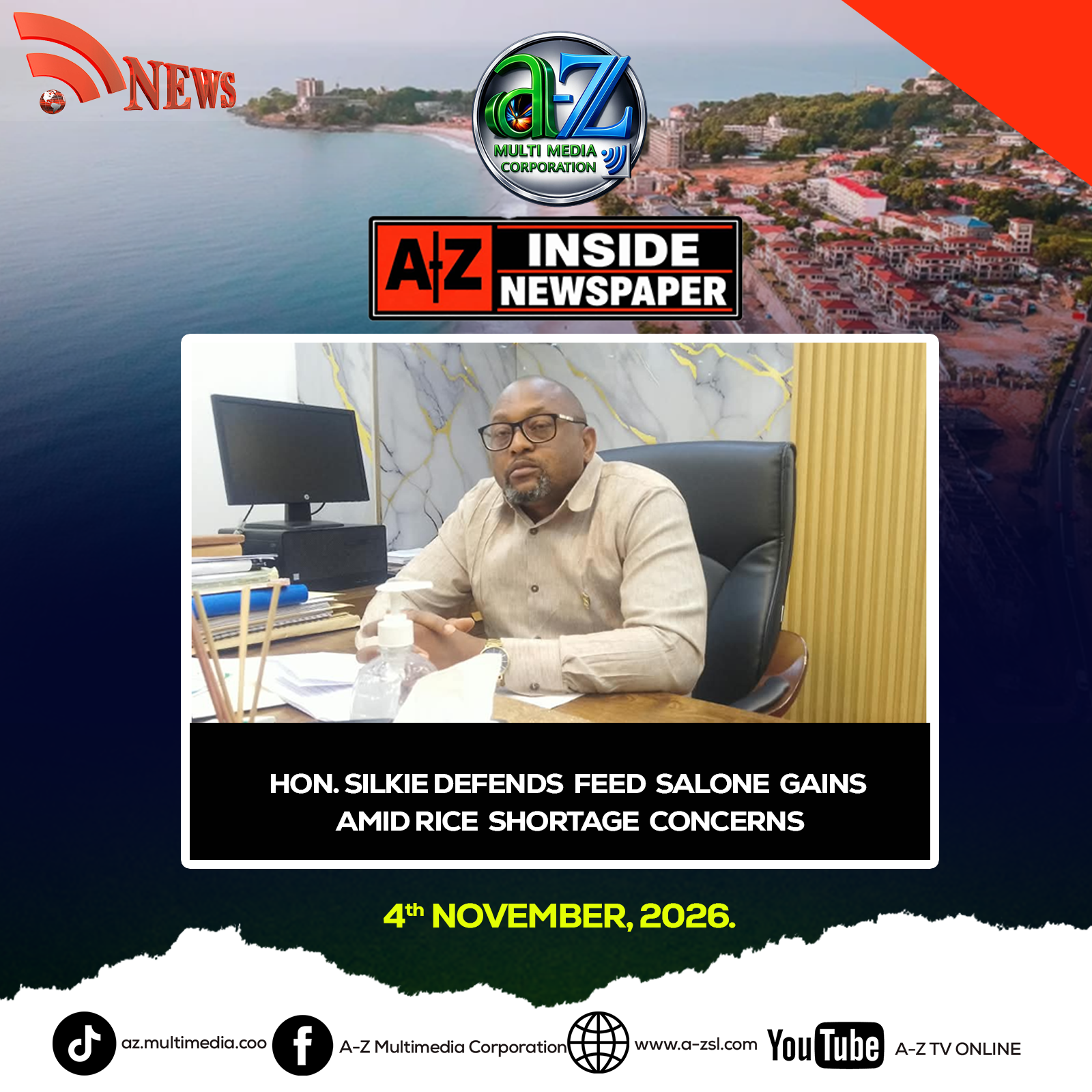
Deputy Leader of Government Business, Hon. Bashiru Silkie, has defended the government’s achievements under the Feed Salone programme, dismissing criticisms from opposition Members of Parliament over rice production and the availability of locally produced rice in the country.
Hon. Silkie made the remarks in an interview with journalists at Parliament on Tuesday, November 3, 2026, following the adjournment of the House after the first day of debate on President Julius Maada Bio’s address delivered during the State Opening of Parliament on August 7.
Responding to concerns raised by opposition MPs about the government’s agricultural performance, particularly questions about where locally produced rice could be found, Hon. Silkie said significant investments had been made in the agricultural sector through government budgetary allocations, donor support and mechanized farming.
He cited figures contained in the President’s address, which indicated that Sierra Leone was producing approximately 1.3 million metric tonnes of rice annually and had attained about 73 per cent rice self-sufficiency.
He also highlighted the use of locally produced rice in the national school feeding programme, describing it as evidence of the government’s efforts to promote domestic agricultural production and consumption.
However, when questioned about complaints that locally produced rice remained difficult to find in markets and was unaffordable for many ordinary citizens, Hon. Silkie acknowledged that Sierra Leone had yet to achieve its desired level of agricultural self-sufficiency.
He explained that farmers must be able to sell their produce at prices that would enable them to recover their investments, sustain their livelihoods and continue farming.
“It will be a matter of time for us to get the pricing right,” he said, expressing confidence that increased domestic production would eventually improve food availability and affordability.
Hon. Silkie called on Sierra Leoneans from all sectors to embrace agriculture, stressing that achieving food self-sufficiency was a collective responsibility that could not be left to government alone.
He said politicians, civil servants, journalists, civil society organizations and private individuals all had important roles to play in strengthening domestic food production.
The debate comes as the government continues to promote Feed Salone as one of its flagship development initiatives, aimed at increasing agricultural productivity, improving food security and reducing the country’s dependence on imported food.
Beyond agriculture, Hon. Silkie also responded to questions concerning mining revenues and payments to communities affected by mining operations.
Addressing issues raised by Hon. Foday Tomkollie during the parliamentary debate, he referred to payments made to communities around Bumbuna and Lunsar, maintaining that government-related payments to mining-affected communities had received considerable media attention.
Although he said he was unclear about the specific concerns raised by Hon. Tomkollie, he insisted that communities had received substantial payments associated with mining operations.
On the growing problem of drug abuse among young people, Hon. Silkie described the situation as a serious national concern that should not be politicized.
He recalled that Parliament had declared a state of emergency on drugs and that task forces had been established, with arrests made as part of ongoing efforts to tackle the problem.
However, he acknowledged that more needed to be done, calling for stronger collaboration among the government, security agencies, the police and other stakeholders.
“Our future is the young people, and if they are involving drugs, then the future is bleak,” he said, urging political parties and the media to approach the issue as a national challenge rather than a partisan matter.
Hon. Silkie further defended the government’s overall performance, pointing to domestic revenue mobilization, improvements in education, social protection programmes, youth employment initiatives and public sector reforms as areas of progress.
He attributed some of the country’s economic challenges, including rising fuel prices, to prevailing global market conditions, while maintaining that the government had continued to make progress despite external pressures.
Meanwhile, he urged Members of Parliament to improve their attendance and participation in parliamentary proceedings following concerns over the low turnout on the opening day of the debate on the President’s address.
He clarified that the House had the required quorum to conduct its business but encouraged MPs to attend sittings regularly and actively contribute to parliamentary debates.