

By: Aminata Sesay
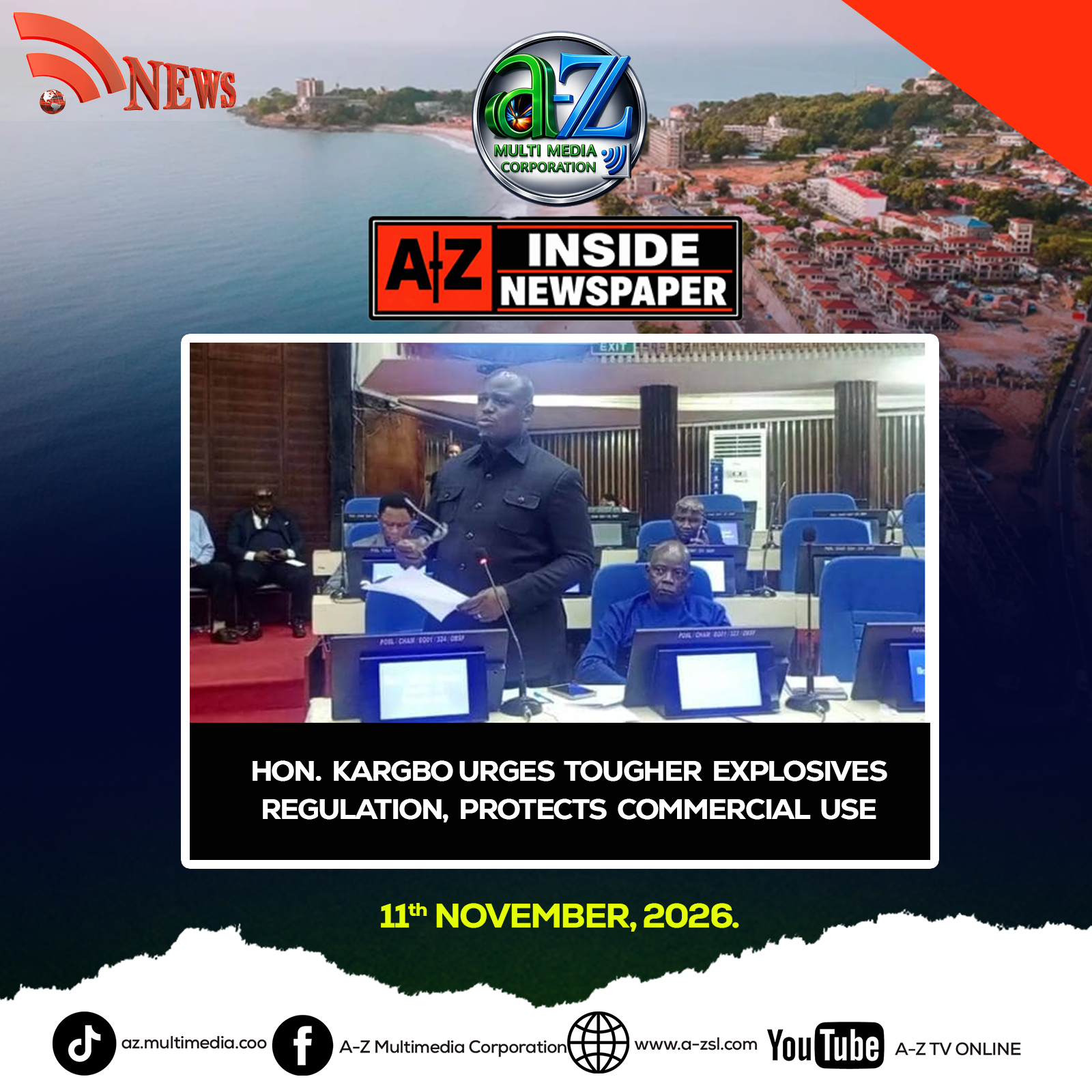
Honourable Member of Parliament Abdul Kargbo has called for stronger regulation of explosives in Sierra Leone, emphasizing the need for accountability, professional training and effective security measures while cautioning against restrictions that could undermine legitimate commercial activities.
Contributing to debate on the Explosives Bill in Parliament, Kargbo said the handling, storage, transportation and distribution of explosives required strict oversight because of the serious risks associated with their misuse.
He called for the establishment of a specialized regulatory body with the technical expertise and institutional capacity to inspect explosives, monitor their distribution and maintain accurate records of their quantities, storage locations and authorized users.
According to him, the proposed body should ensure that authorities know how many explosives are in the country, where they are stored, who is responsible for them and the purposes for which they are being used. He also stressed the need for effective monitoring of explosives entering and leaving the country to prevent them from falling into the wrong hands.
Kargbo further emphasised the importance of professional training for individuals handling explosives, particularly workers in the mining, quarrying and other industries where blasting materials are commonly used.
He warned that allowing untrained personnel to handle explosives could result in serious accidents and loss of lives. He therefore urged that training should cover their proper use, storage, transportation and safety requirements.
The MP also proposed that the regulatory body should periodically report to Parliament on the country’s explosives stock, including their quantities, locations and usage, to strengthen legislative oversight. He further recommended that board members be required to declare potential conflicts of interest to promote transparency and accountability.
While supporting the need for a stronger regulatory framework, Kargbo raised concerns about certain provisions of the proposed legislation that could restrict the lawful importation and commercial use of explosives.
Referring to Clause 32(1)(c)(5), he argued that its wording appeared to limit the importation of explosives to legitimate defence and security purposes, potentially excluding businesses operating in mining, quarrying, construction and fishing.
He cautioned that such restrictions could negatively affect businesses, employment and livelihoods, insisting that the objective of the legislation should be to regulate legitimate commercial activities rather than prevent businesses from operating.
He therefore recommended that commercial users should be permitted to import and use explosives under strict licensing arrangements, professional training requirements and appropriate safety standards.
Kargbo also called for the military to comply with the general safety and transportation standards applicable to other explosives users, except where specific operational circumstances require exemptions.
On enforcement, he expressed concern about the entry, seizure and confiscation powers provided under Clause 22, particularly the absence of explicit provisions requiring a warrant or independent judicial oversight.
He recommended stronger legal safeguards to prevent arbitrary entry into business premises or the confiscation of legally acquired explosives. According to him, appropriate judicial procedures should be established to protect the rights of individuals and businesses while enabling authorities to enforce the law effectively.
The MP also identified what he described as a gap in Clause 41 concerning existing licences and pending applications under the country’s mining and explosives regulations. He urged Parliament to establish clear transitional arrangements to protect existing licence holders and prevent unnecessary disruptions to ongoing business operations.
Additionally, Kargbo proposed that the composition of the regulatory body should include representatives from industries that rely on explosives, particularly mining and fishing, to ensure that their concerns and operational realities are reflected in regulatory decisions.
He warned that explosives left unattended or improperly handled could have devastating consequences, including fatalities long after their initial use, making strict safety procedures and proper accountability essential.
Kargbo maintained that Sierra Leone must strike a balance between national security, public safety and economic interests, stressing that effective legislation should protect lives without undermining legitimate commercial activities.
“Explosives can be a very good servant, but can be a dangerous master. Let us make explosives always a servant, not a master,” he said.