

By: Aminata Sesay
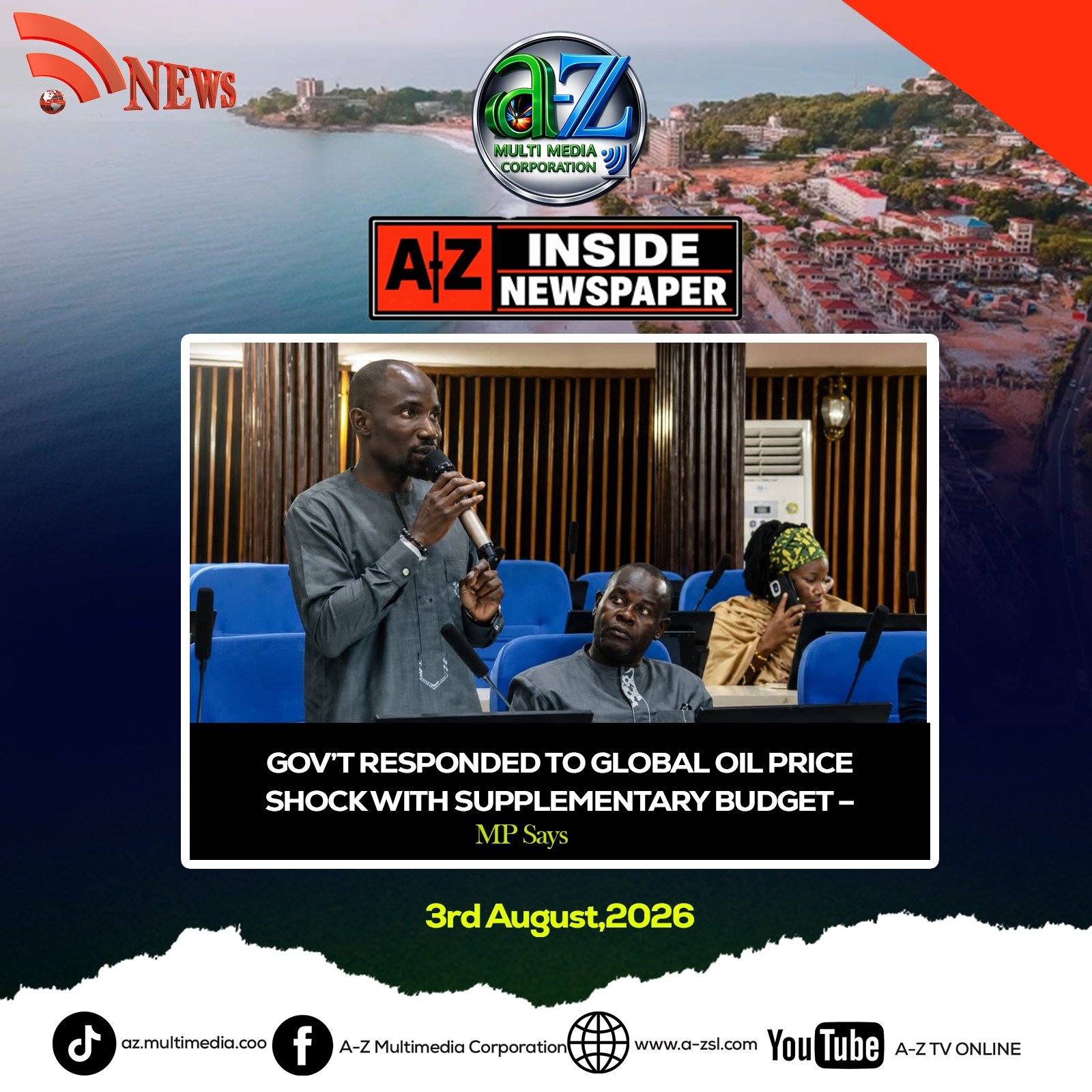
Sierra Leone People’s Party (SLPP) Member of Parliament Hon. Mustapha Sellu has defended the Government’s 2026 Supplementary Budget, describing it as a necessary response to unexpected global economic challenges, particularly the sharp increase in international oil prices caused by conflict in the Middle East.
Contributing to the parliamentary debate on the Supplementary Appropriation Bill, 2026, Hon. Sellu said the original national budget could not have predicted the sudden surge in global fuel prices, which placed significant pressure on government finances through increased petroleum subsidy payments.
He maintained that the supplementary budget was not a reflection of poor planning but rather a practical adjustment to changing international economic conditions.
According to the lawmaker, global oil prices reportedly increased from about US$70 per barrel to approximately US$138 per barrel, creating additional fiscal pressures for Sierra Leone. He explained that the Government intervened through fuel subsidies to prevent disruptions in the supply and affordability of petroleum products.
“There have been no widespread fuel shortages or long queues. Government has continued to subsidize petroleum products to cushion the impact on citizens,” he told Parliament.
Hon. Sellu commended the Ministry of Finance, the Bank of Sierra Leone, and the country’s economic management team for what he described as responsible financial management during a period of global uncertainty.
Using the example of an aircraft facing turbulence, the MP said governments may not be able to prevent external shocks but must take appropriate measures to reduce their impact on citizens and the economy.
The lawmaker also highlighted growing activities at the Port of Freetown, noting that Sierra Leone is increasingly becoming an important regional trade hub for neighbouring Guinea and landlocked Mali.
While acknowledging that increased cargo movement has contributed to congestion at the port, he said the development has also created economic benefits, including increased government revenue.
He disclosed that the Sierra Leone Ports Authority generated approximately US$8 million in revenue, attributing the performance to improved operational efficiency.
Addressing concerns about reduced allocations to the education sector in the supplementary budget, Hon. Sellu rejected claims that the Government was reducing its commitment to education.
He explained that significant investments had already been made in previous budgets, including the construction of classrooms, provision of school buses, teaching and learning materials, and other educational infrastructure. As a result, he said maintaining the same level of capital expenditure in the current period was not necessary.
The MP also highlighted continued government support to the energy sector, noting that electricity consumers are still benefiting from subsidies because tariffs remain below the actual cost of generating and supplying power.
On domestic revenue mobilization, Hon. Sellu welcomed efforts to expand the Goods and Services Tax (GST) base but emphasized that stronger enforcement by the National Revenue Authority (NRA) would be essential to improving tax compliance and increasing government revenue.
He called on public institutions and stakeholders to support the NRA’s efforts, stressing that expanding the tax base alone would not achieve the desired results without effective monitoring, enforcement, and accountability mechanisms.