

By: Saidu Jalloh
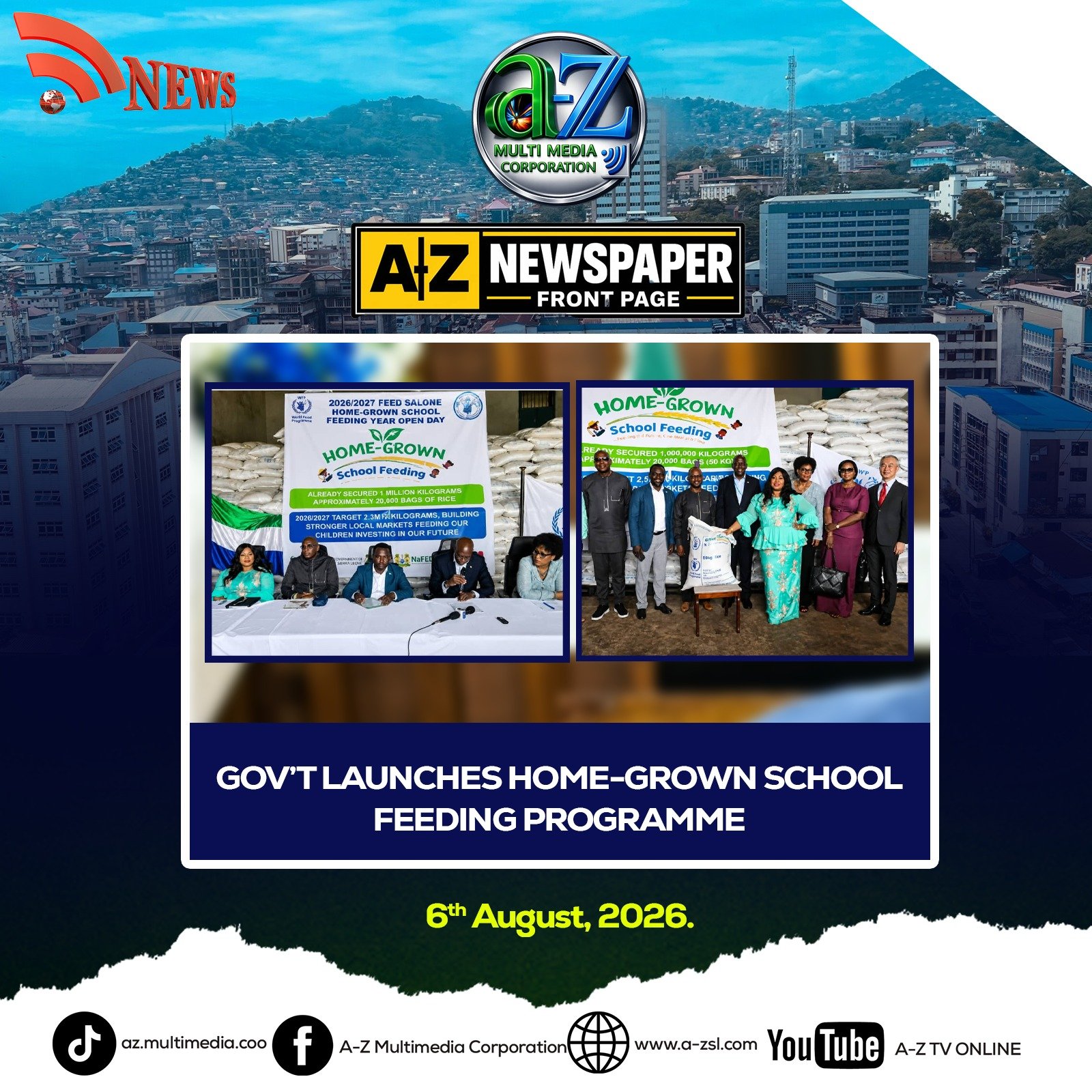
The Minister of Agriculture and Food Security, Dr. Henry Musa Kpaka, alongside the World Food Programme (WFP), the Ministry of Basic and Senior Secondary Education (MBSSE), the Food and Agriculture Organization of the United Nations (FAO), the Minister of State, and the United Nations Development Programme (UNDP), has officially launched the 2026/27 Home-Grown School Feeding Programme.
As part of the launch, Dr. Kpaka handed over 20,000 bags of locally produced rice to the Minister of Basic and Senior Secondary Education, Conrad Sackey, during a ceremony held at the World Food Programme warehouse in Freetown.
Organized by WFP in partnership with the Ministry of Agriculture and Food Security, the event underscored the Government’s commitment to the Feed Salone initiative, which aims to strengthen local food systems by creating sustainable markets for Sierra Leonean farmers while improving food security and school nutrition.
Speaking at the event, Dr. Kpaka described the procurement as “Feed Salone in action,” noting that, with support from the World Bank-funded Food Systems Resilience Programme (FSRP-SL), the Government has enabled WFP to purchase rice directly from local farmers. He said the initiative is increasing agricultural production, boosting rural incomes, and enhancing national food security.
The Minister noted that the latest procurement builds on the achievements of the previous school year, during which WFP purchased more than 2,000 metric tonnes of locally produced food, providing nutritious school meals for over 250,000 children across five districts.
Minister of Basic and Senior Secondary Education, Conrad Sackey, said the Home-Grown School Feeding Programme continues to play a vital role in improving school attendance, enhancing children’s nutrition, and supporting their cognitive development.
WFP Country Representative Andrew Odero announced that one million kilograms of locally produced rice equivalent to 20,000 bags of 50 kilograms each have been procured for the 2026/27 school year. Valued at NLe22 million (approximately US$1 million), the rice will be used to provide school meals for children in five districts while injecting much-needed income into rural farming communities and strengthening the country’s agricultural economy.