

By: Saidu Jalloh
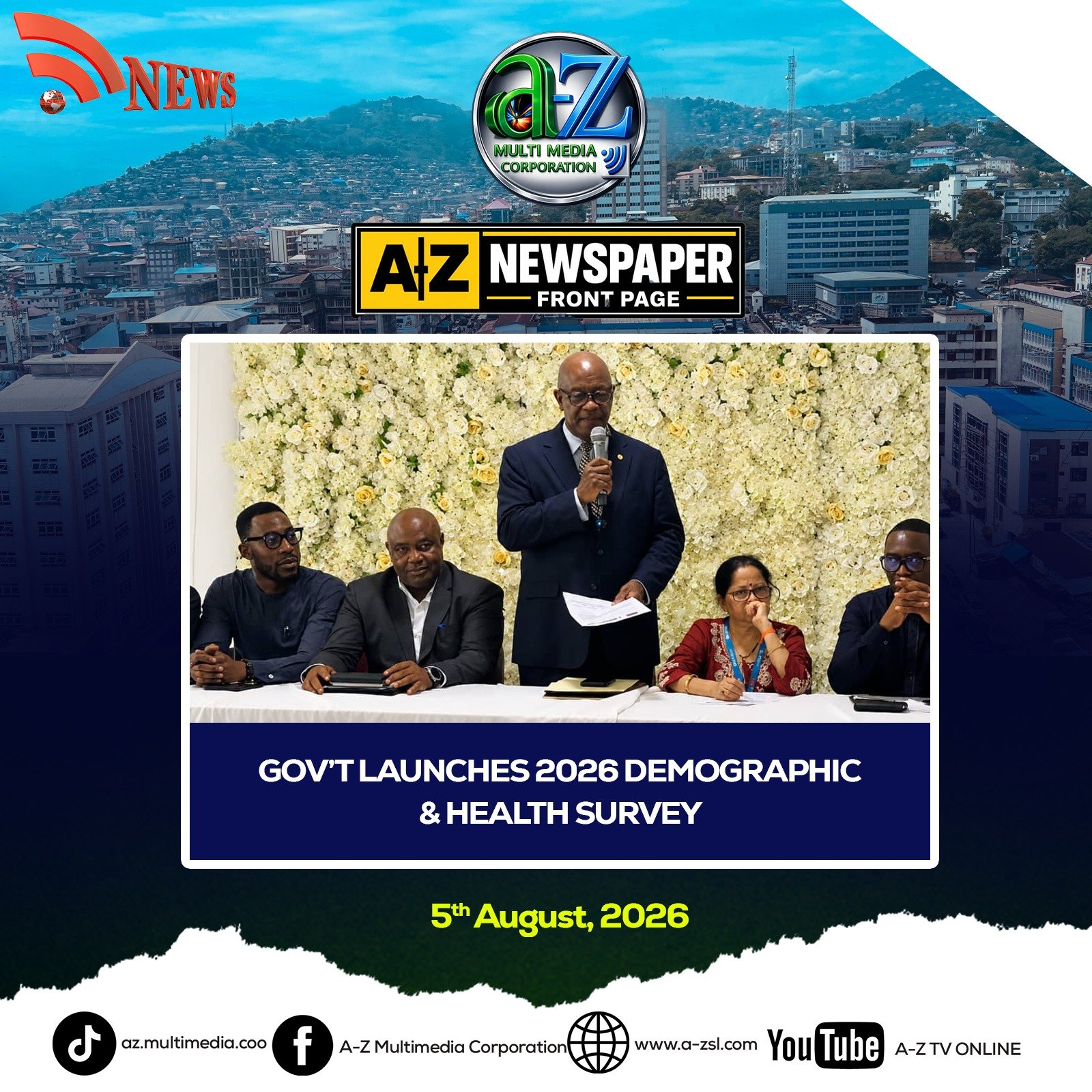
The Government of Sierra Leone, through the Ministry of Health in collaboration with Statistics Sierra Leone, has officially launched the 2026 Sierra Leone Demographic and Health Survey (DHS), a nationwide initiative designed to generate reliable and up-to-date data to strengthen healthcare planning, policy development and resource allocation.
The launch ceremony, held on Tuesday at the Theresa Sesay Hall in Freetown, marked the beginning of a 28-day training programme for field officers, statisticians and health professionals who will participate in the data collection exercise across the country.
The 2026 DHS is being implemented by Statistics Sierra Leone with technical support from ICF International and funding from development partners. The survey will gather critical information on key demographic and health indicators, providing government institutions and stakeholders with evidence-based data to improve decision-making and enhance the delivery of healthcare services.
Speaking at the launch, the Minister of Health, Dr. Austin Demby, described the survey as a vital investment in Sierra Leone’s health sector, emphasizing that accurate data is essential for effective planning, budgeting and resource allocation.
“The importance of this health survey is that we want to know the true status of health issues in Sierra Leone so that the government will know how much money to invest in the health sector,” Dr. Demby stated.
He stressed that a proper understanding of the country’s health challenges requires direct engagement with communities and healthcare stakeholders rather than relying on assumptions or incomplete information.
“If you want to understand the health sector, you must go into the field and talk to stakeholders and the people. Please don’t sit in a corner and give data. This work requires patience, good character and ethics,” he advised the trainees.
The Minister urged field officers to conduct their duties with professionalism, honesty and confidentiality, noting that the credibility and usefulness of the survey depend largely on the integrity and commitment of those responsible for collecting the data.
In his remarks, the Statistician General of Statistics Sierra Leone, Andrew Bob Johnny, described the launch as a significant achievement following months of preparation involving the Ministry of Health, Statistics Sierra Leone, development partners and technical experts.
He explained that the survey tools had been carefully reviewed and adapted to reflect Sierra Leone’s specific context. He also disclosed that a blood pressure measurement module had been introduced for the first time in the country’s Demographic and Health Survey.
Mr. Johnny further revealed that household listing and mapping of selected enumeration areas had already been completed nationwide, while the final pre-test of the survey instruments was successfully conducted with technical support from ICF International.
According to him, the 28-day training programme will equip field officers with the necessary technical skills, ethical standards and practical knowledge required to collect accurate and high-quality data.
“Reliable demographic and health data are the backbone of effective planning. They guide us in understanding population trends, maternal and child health outcomes, and the pressing challenges that demand our attention,” he said.
He reminded participants that every data point collected represents the experiences and realities of citizens, and must therefore be gathered with accuracy, professionalism and respect.
Providing an overview of the survey, the Director of Demographic Statistics at Statistics Sierra Leone, Mohamed Kablo Kamara, explained that the 2026 DHS will generate updated information on fertility, family planning, maternal and child health, nutrition, immunization, mortality rates and socio-economic conditions.
He noted that the survey will cover both urban and rural communities using internationally recognized scientific sampling methods to ensure that the findings accurately represent the country’s population.
Mr. Kamara said the survey results will support government efforts to design effective health programmes, track progress towards national development priorities and the Sustainable Development Goals (SDGs), identify regional and socio-economic inequalities, and ensure that resources are directed to areas with the greatest need.
He described the exercise as more than a statistical activity, noting that it will provide essential evidence for improving governance, strengthening healthcare systems and enhancing the overall well-being of Sierra Leoneans.
The Director of Demographic Statistics called on community leaders, stakeholders and citizens across the country to support the exercise by cooperating with field teams and providing truthful and accurate information during the survey process.
The 2026 Sierra Leone Demographic and Health Survey is expected to provide a comprehensive picture of the country’s health and demographic situation, serving as a key reference point for future health policies, programmes and development interventions.