

By: Aminata Sesay
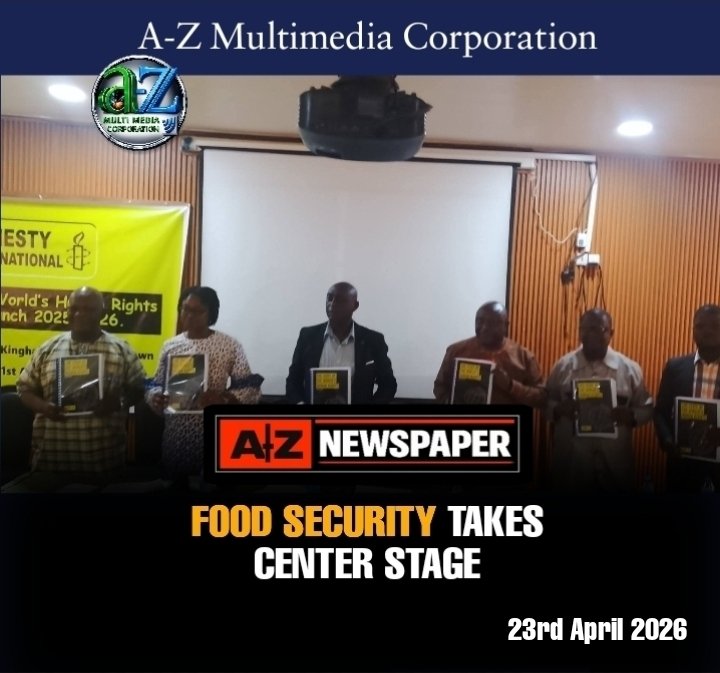
Food security has emerged as a pressing human rights issue in Sierra Leone, with renewed calls for accountability and action following the launch of Amnesty International’s State of the World Human Rights Report 2026.
At the event, Sierra Leone’s Human Rights Commissioner, Hassan Samba Yarjah, emphasized the urgent need to address hunger, framing access to food as a fundamental right that must be protected and fulfilled. His remarks highlighted the widening gap between policy commitments and the everyday realities faced by many citizens.
While acknowledging the government’s efforts to strengthen agricultural productivity and achieve food self-sufficiency, Yarjah pointed out that these initiatives have yet to fully translate into improved living conditions for vulnerable populations. He stressed that systemic challenges, rather than a lack of resources or potential, continue to hinder progress.
The Commissioner also drew attention to global trends, noting that hundreds of millions of people remain affected by severe food insecurity. Against this backdrop, he urged Sierra Leone’s stakeholders to adopt a more coordinated and inclusive approach to addressing hunger, particularly in rural communities where access to food remains inconsistent.
A central theme in his message was the role of civil society organizations, which he described as essential in ensuring accountability and amplifying the concerns of marginalized groups. He stressed the importance of involving women farmers, youth, smallholder producers, and persons with disabilities in decision-making processes, warning that their exclusion could undermine national food security goals.
Yarjah also highlighted a significant gap in public awareness, noting that many citizens are unaware that access to adequate food is enshrined in international human rights law. He called for expanded civic education efforts, encouraging the use of local languages and community-based engagement to empower citizens to demand their rights.
Beyond advocacy, he underscored the need for stronger collaboration between the government, private sector, and international partners. Innovations in climate-smart agriculture, improved storage systems, and better market access were identified as key areas in need of investment and partnership.
Importantly, Yarjah framed food security as an issue that goes beyond production, stressing the need for fairness in distribution and dignity in access. He noted that during crises such as climate shocks or economic disruptions civil society often plays a frontline role in supporting affected communities.
The launch of the report ultimately served as a platform for renewed dialogue and reflection, with a clear message: achieving food security will require sustained commitment and collective responsibility.
As stakeholders reflect on the findings, the call is clear: translating policy into tangible impact will be crucial to ensuring that every Sierra Leonean has access to adequate food with dignity.