

By: Aminata Sesay
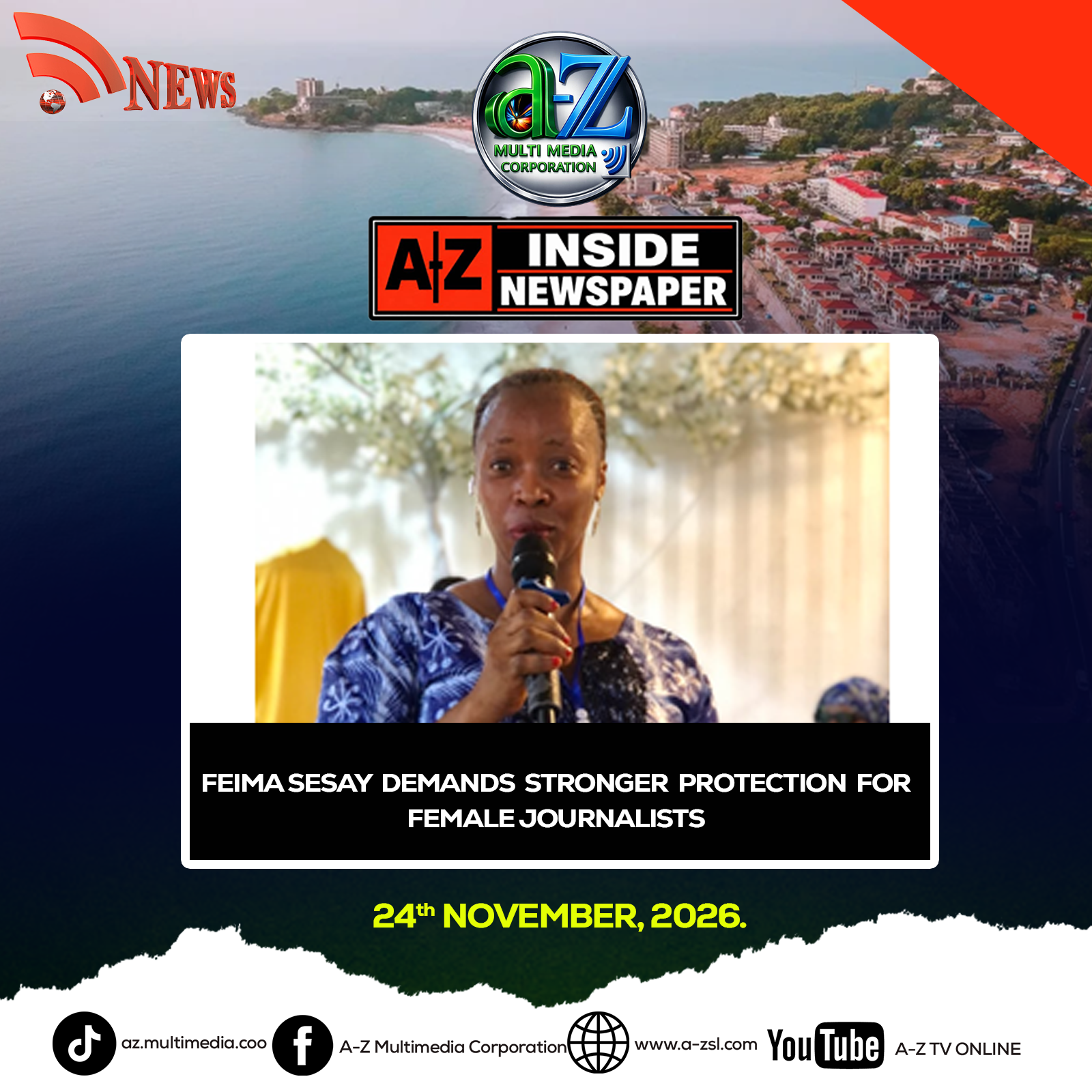
The Interim President of the Parliamentary Press Gallery–Sierra Leone, Madam Feima K. Sesay, has called for stronger protection mechanisms for female journalists, urging media institutions to move beyond issuing statements and take concrete action against intimidation, harassment and threats targeting women in the media.
She made the call at the Annual General Meeting (AGM) of Women in the Media Sierra Leone (WIMSAL), held under the theme, “Strengthening Women’s Leadership in the Media for an Inclusive and Sustainable Sierra Leone.”
Sesay said strengthening women’s leadership in the media must go beyond providing opportunities for them to occupy leadership positions. She stressed that female journalists must also be protected as they carry out their professional responsibilities.
She noted that empowering women requires recognizing their capabilities, creating opportunities for them to lead and ensuring their voices are represented in decisions that shape society.
Quoting former United States Supreme Court Justice Ruth Bader Ginsburg, Sesay said, “Women belong in all places where decisions are being made,” adding that the statement was particularly relevant to the media, where journalists play a critical role in shaping public discourse and determining whose stories are told and whose voices are heard.
She highlighted the growing presence of women in leadership positions across Sierra Leone’s media landscape, citing women leading the Sierra Leone Reporters Union (SLRU), the Parliamentary Press Gallery–Sierra Leone and WIMSAL, as well as the former Chairperson of the Sierra Leone Association of Journalists (SLAJ) Eastern Region.
According to her, their leadership experiences, commitment and administrative abilities demonstrate that women are capable of building strong institutions, strengthening professional associations and driving meaningful change when given equal opportunities.
She also welcomed the increasing number of women transitioning from journalism employment into media ownership, publishing and management, describing the development as an important step towards genuine empowerment.
Sesay said women who own media platforms are increasingly using them to amplify the voices of marginalized communities, promote truth, demand accountability and advance empowerment. She emphasised that women’s empowerment should extend beyond representation to include ownership, influence and decision-making.
On the contribution of female journalists to national development, she noted that women in the media play significant roles through investigative journalism, public-interest reporting, advocacy and accountability journalism, helping to shape public opinion, expose injustice and promote good governance.
She maintained that sustainable national development cannot be achieved without respecting women, providing equal leadership opportunities and ensuring their meaningful participation in decision-making processes.
However, Sesay expressed concern over reports of intimidation involving female journalists Kadijah and Mabel, allegedly by political supporters while they were carrying out their professional duties.
She said such incidents should concern the entire media fraternity, stressing that female journalists must be free to question those in authority, participate in national discussions and advocate for the public without fear for their safety.
“Intimidation must never become a weapon for silencing female journalists,” she said, adding that such incidents should strengthen collective efforts to defend press freedom and protect journalists.
She further called on SLAJ and WIMSAL to move beyond issuing press releases whenever female journalists face harassment, threats or intimidation. Instead, she urged the institutions to establish stronger protection mechanisms, intervene promptly and provide legal assistance where necessary.
According to her, sustained advocacy for a safer working environment is essential to ensuring that female journalists can investigate report, question and criticize without fear of retaliation.
Sesay also encouraged female journalists to remain courageous, professional and ethical in the discharge of their duties, noting that credibility remains their greatest asset.
She urged them to uphold the Independent Media Commission (IMC) Code of Ethics and remain committed to responsible journalism while reporting issues of public interest, challenging injustice and promoting accountability.
“Women must not only be given the microphone; they must also be protected when they use it,” she emphasised.
Concluding her remarks, Sesay described women’s empowerment in the media as an investment in journalism, democracy and national development. She said women’s leadership strengthens institutions, promotes inclusive societies and contributes to a more resilient democracy.
She wished WIMSAL a successful AGM and encouraged the organization to continue championing women’s leadership, professional development and advancement in Sierra Leone.