

By: Fatmata Grace Okekearu, Bo City
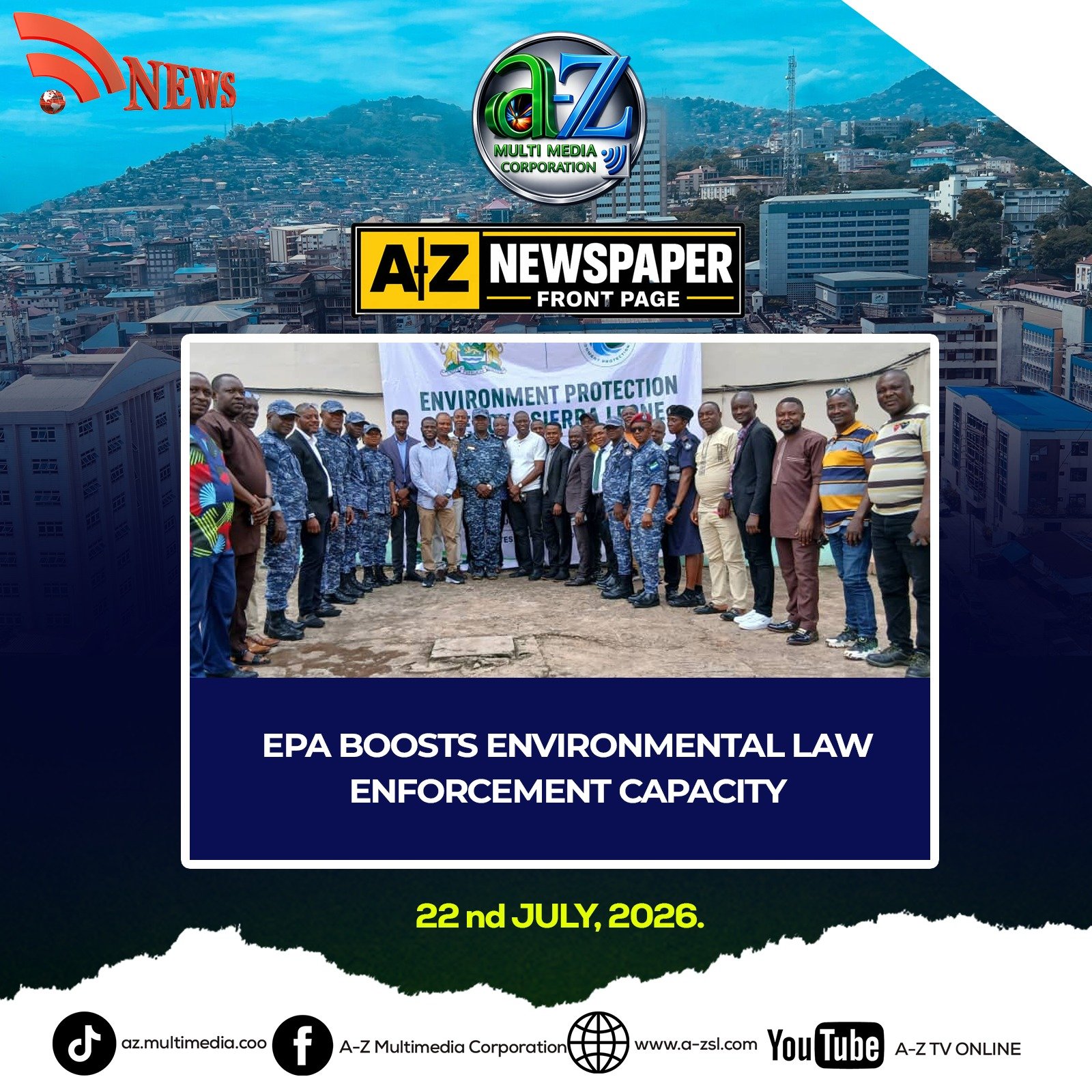
The Environment Protection Agency Sierra Leone (EPA-SL), under the Ministry of the Environment, has intensified efforts to strengthen environmental governance by training law enforcement officers in the South-Eastern Region on environmental laws, enforcement procedures, and legal processes.
The one-day capacity-building workshop, held on Friday, July 17, 2026, at the Bintumani Hotel in Bo, brought together officers from various security institutions to enhance their understanding of environmental legislation and improve the enforcement of laws aimed at protecting Sierra Leone’s natural resources.
Speaking during the opening session, the Director of Legal Affairs at the Environment Protection Agency, Tamba Sangbah, said the training was designed to equip law enforcement personnel with the legal knowledge and practical skills required to effectively interpret, apply, and enforce environmental laws across the country.
He noted that environmental crimes, including illegal mining, deforestation, pollution, illegal wildlife trafficking, indiscriminate sand mining, and improper waste disposal, continue to pose serious threats to Sierra Leone’s environment and sustainable development.
According to Sangbah, law enforcement agencies remain critical partners in safeguarding the country’s natural resources, emphasizing that effective environmental protection largely depends on the ability of officers to investigate offences, collect evidence, and support successful prosecutions.
He reaffirmed the Government of Sierra Leone’s commitment to environmental protection and climate action through national policies and international environmental agreements. He explained that the EPA is the statutory institution responsible for coordinating, monitoring, and enforcing environmental management standards throughout the country.
Highlighting the importance of the Environment Protection Agency Act No. 15 of 2022, Sangbah described the legislation as a comprehensive framework that consolidates and strengthens previous environmental laws enacted in 2008 and amended in 2010.
He explained that the Act introduces mechanisms to promote inter-agency collaboration, public participation, environmental compliance, and accountability. He added that it serves as an important guide for policymakers, legal practitioners, law enforcement officers, and community leaders involved in environmental protection.
“In a time when environmental challenges are becoming increasingly complex, it is essential that those entrusted with enforcing the law fully understand the legal frameworks guiding responsible environmental management,” Sangbah stated.
He further emphasized that Sierra Leone’s commitment to several international environmental conventions and protocols makes it necessary for law enforcement institutions to play an active role in ensuring compliance with both national laws and global environmental obligations.
Sangbah expressed confidence that the training would broaden participants’ knowledge and strengthen collaboration between the EPA and security institutions in tackling environmental crimes through effective investigation, arrest, and prosecution of offenders.
Delivering his remarks, the newly transferred Police Regional Commander South, Assistant Inspector General (AIG) Joseph Ibrahim Lahai, commended the EPA for organizing what he described as a timely and relevant Training of Trainers (TOT) programme.
He encouraged participants to maximize the knowledge gained and share it with colleagues within their respective institutions to improve environmental law enforcement and policing standards.
AIG Lahai also urged police officers to properly document the training through detailed reports and operational updates, stressing that continuous learning and knowledge sharing are essential for effective service delivery.
Meanwhile, State Counsel East, Andrew Fafay Kamara Esq., who also made a presentation during the workshop, underscored the importance of strengthening collaboration among law enforcement institutions in addressing emerging environmental crimes.
He highlighted key areas such as illegal logging, illegal sand mining, wetland degradation, hazardous chemical use, poor waste management, environmental offences, investigative procedures, and prosecution processes. He stressed that stronger inter-agency coordination remains vital for effective environmental protection and sustainable management of Sierra Leone’s natural resources.
Participants welcomed the initiative and called for regular refresher training programmes to keep law enforcement officers updated on evolving environmental laws and enforcement strategies.
They noted that continuous capacity building would improve compliance monitoring, reduce environmental violations, and strengthen the prosecution of offenders, ultimately contributing to a cleaner, safer, and more sustainable Sierra Leone.