

By: Precious Miracle Kargbo Snr
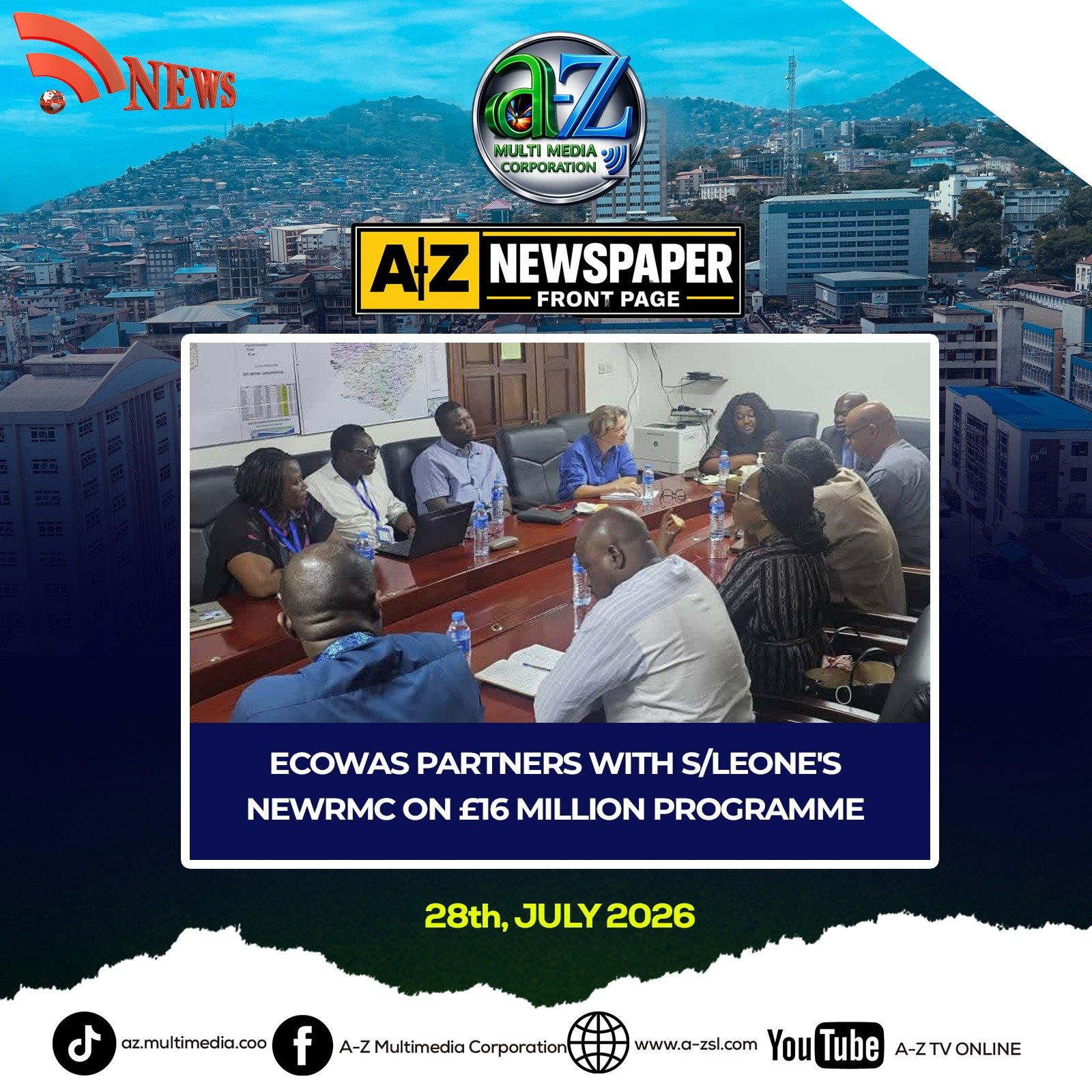
The Economic Community of West African States (ECOWAS) has commenced the technical phase of its Regional Stabilization and Development Fund (RSDF) in Sierra Leone, with the National Early Warning and Response Mechanism Centre (NEWRMC) expected to play a critical role in supporting vulnerable communities and strengthening evidence-based interventions.
The engagement forms part of ECOWAS’ broader Fragility and Resilience Support in ECOWAS Member States (FRSD) programme, a €16 million initiative targeting five countries: Sierra Leone, The Gambia, Guinea-Bissau, Togo, and Benin. Sierra Leone is the latest beneficiary country to receive support under the programme, and the technical mission marks the beginning of preparations for implementing interventions at community level.
According to ECOWAS, the initiative aims to promote political, social, and economic stability through targeted investments, capacity building, and community-focused interventions in areas affected by fragility. The programme is designed to address specific local challenges while improving resilience, coordination, and sustainable development at national and regional levels.
Salami Raouf, Executive Assistant to the Vice President of the ECOWAS Commission, explained that the technical mission will help strengthen the verification and analysis of information needed to guide investment priorities identified during the planning process.
To support this process, ECOWAS has engaged NEWRMC, a member of the National Advisory Committee, because of the centre’s expertise in data analysis and its mandate to provide independent assessments on human security and development-related issues.
The FRSD was established by the ECOWAS Commission in partnership with the German Federal Ministry for Economic Cooperation and Development (BMZ). The programme combines financial support, technical assistance, and direct ECOWAS investment to promote sustainable socio-economic stabilization across member states.
The fund focuses on four key priority areas: promoting private-sector development and job creation; improving access to basic services and strengthening community resilience; advancing social cohesion and good governance; and enhancing implementation capacities at regional, national, and local levels.
Executive Director of NEWRMC, Mrs. Francess Nyuma, assured the ECOWAS delegation of the centre’s commitment to supporting the initiative. She pledged the institution’s cooperation and welcomed the programme’s focus on improving the lives of vulnerable populations.
During the engagement, Lead Analyst of NEWRMC, Lieutenant Colonel (Rtd.) Musa Fuad Kanneh provided an overview of the centre’s mandate and operations. He explained that NEWRMC is responsible for initiating, coordinating, and monitoring response activities related to human security and peacebuilding.
He noted that the centre operates across five thematic areas: security; crime and criminality; good governance and human rights; health; and the environment.
Lt. Col. Kanneh further highlighted NEWRMC’s achievements since its establishment, including its expanding role in supporting evidence-based decision-making, early warning analysis, and coordinated responses to emerging human security challenges in Sierra Leone.
The collaboration between ECOWAS and NEWRMC reflects the growing importance of partnerships between regional bodies and national early warning institutions in ensuring that development programmes are guided by reliable information, local realities, and the needs of vulnerable communities.