

By: Mohamed J. Bangura
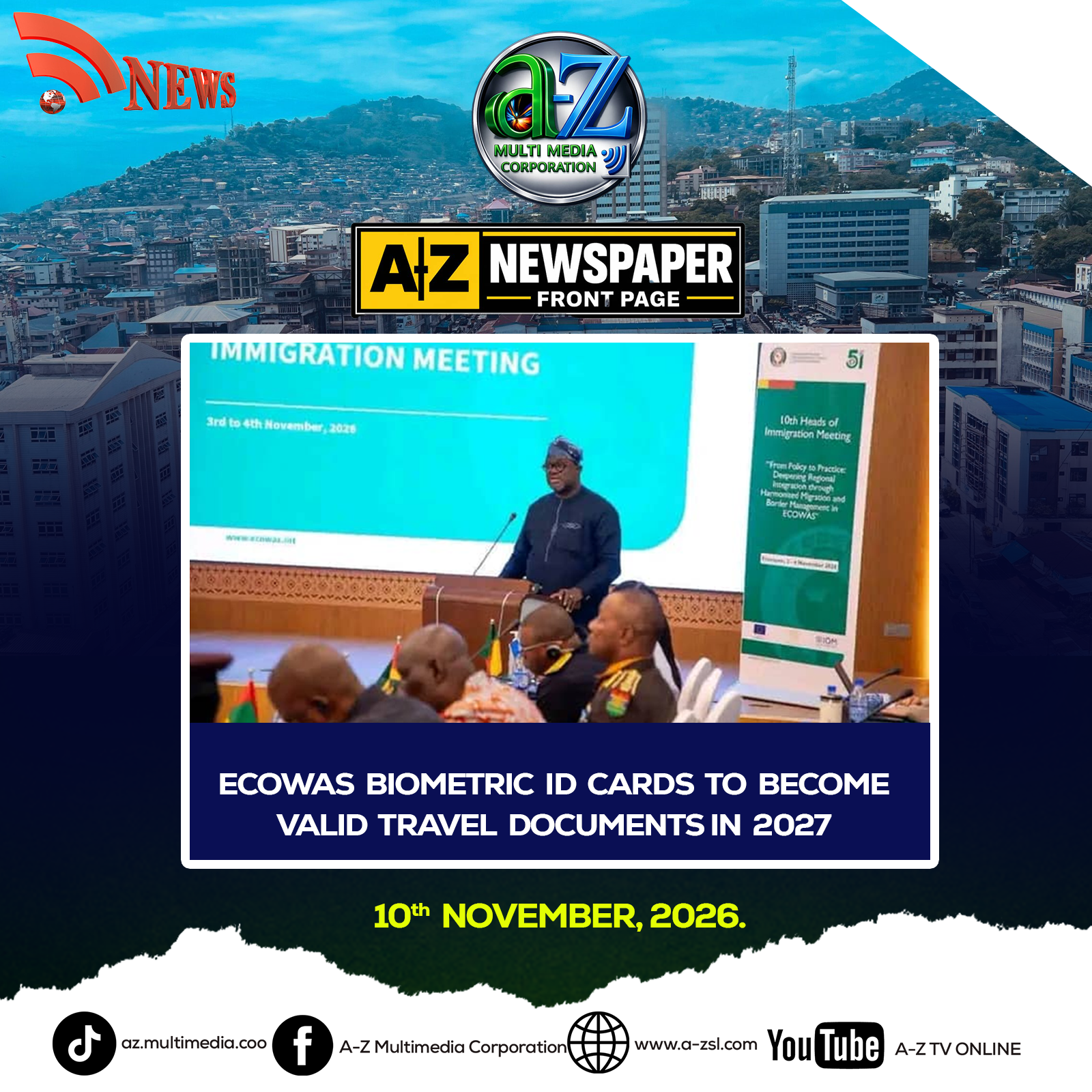
Citizens across West Africa will be able to use the ECOWAS National Biometric Identity Card (ENBIC) as a recognized travel document within the region from 1 January 2027, following the adoption of the Freetown Declaration by the Economic Community of West African States (ECOWAS).
The decision was reached at the 10th Annual Meeting of ECOWAS Heads of Immigration, held in Freetown, Sierra Leone, from 3 to 4 November 2026. The meeting brought together immigration authorities from member states to discuss measures to strengthen regional integration, improve border management and facilitate the movement of people across national borders.
Under the Freetown Declaration, all ECOWAS member states are required to recognize and accept valid ECOWAS National Biometric Identity Cards issued by any member country at official border crossing points across the region.
The agreement establishes the biometric identity card as sufficient proof of identity and Community citizenship for regional travel, regardless of whether the issuing member state has commenced its national rollout of the document.
Consequently, holders of valid ENBICs issued by any ECOWAS member state will be entitled to present the cards as recognized travel documents when crossing official borders within the Community from the effective date.
The decision marks an important step towards strengthening the implementation of the ECOWAS Protocol on Free Movement of Persons, which guarantees citizens of member states the right to move, reside and establish themselves within the region, subject to applicable regulations.
By harmonising the recognition of national biometric identity cards, ECOWAS aims to improve identification procedures at border crossing points and make regional travel more convenient and accessible to citizens.
The biometric cards are also expected to enhance the identification of travellers through the use of biometric information while strengthening cooperation among immigration authorities responsible for managing cross-border movement.
The meeting was convened by the ECOWAS Commission through its Directorate of Free Movement of Persons and Migration. It provided a platform for member states to explore practical measures to improve regional mobility, strengthen border security and advance cooperation in migration management.
The adoption of the Freetown Declaration reflects the collective commitment of ECOWAS member states to address challenges associated with cross-border movement and promote greater regional connectivity.
Free movement remains one of the central pillars of ECOWAS integration, supporting trade, tourism, employment, education and other economic and social activities across West Africa.
The recognition of the biometric identity card is expected to provide travellers with an additional officially recognized document, potentially reducing their dependence on other travel identification documents when moving within the Community.
For Sierra Leone, hosting the 10th Annual Meeting and facilitating the adoption of the Freetown Declaration represents an important contribution to regional cooperation and efforts to make free movement more practical across West Africa.
With the arrangement scheduled to take effect on 1 January 2027, member states are expected to recognize valid ECOWAS National Biometric Identity Cards at their official border crossing points, marking another significant step towards strengthening regional integration and facilitating the movement of West African citizens.