

By: Mamajah Jalloh
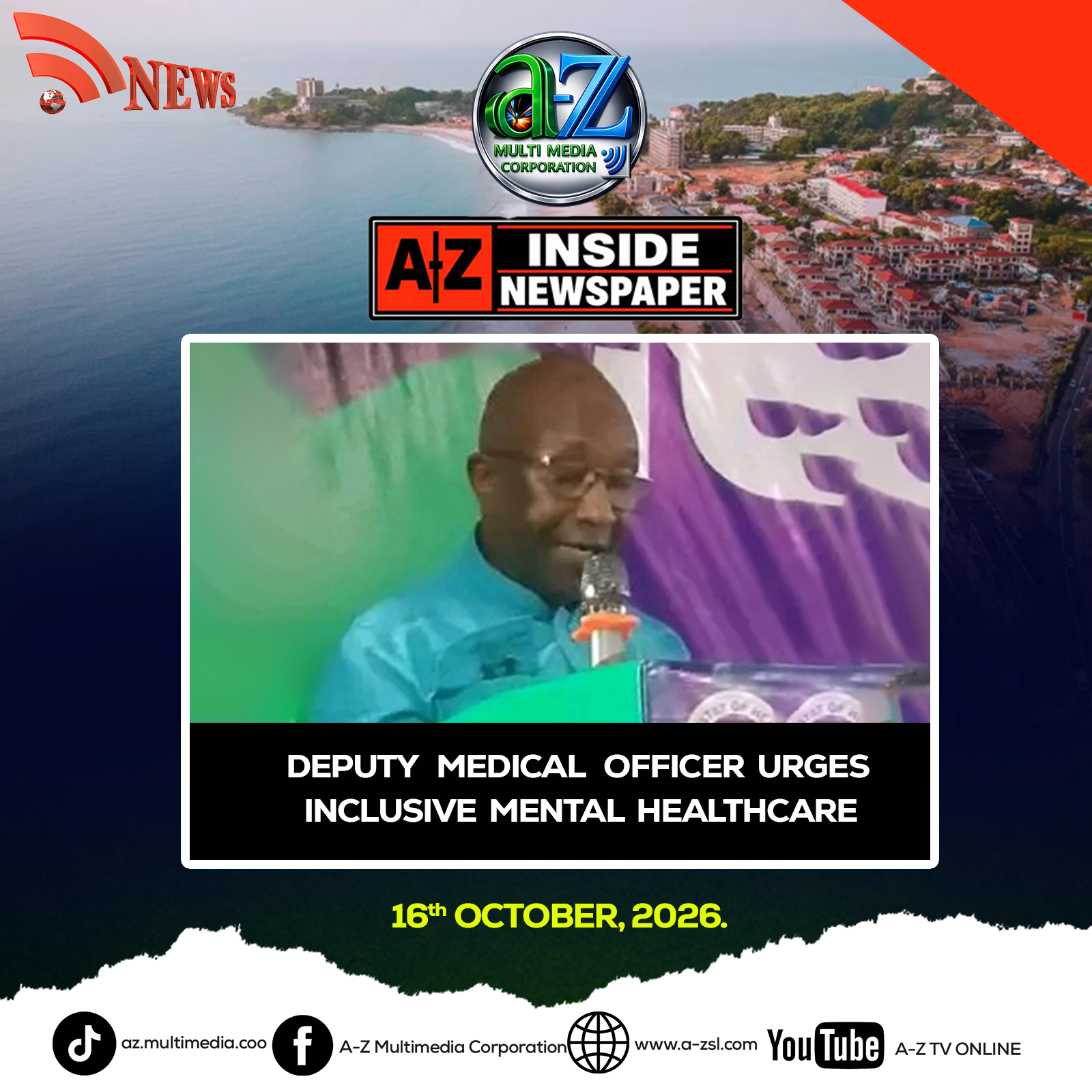
The Deputy Chief Medical Officer for Public Health at the Ministry of Health, Dr. Ali H. Wurie, has called for mental health services in Sierra Leone to be accessible, inclusive and people-centred, urging greater integration of mental healthcare into primary healthcare and other essential health services.
He made the call during the National Mental Health Symposium held at the Miatta Civic Centre, Youyi Building, on Thursday, 15 October 2026, to commemorate World Mental Health Day 2026.
Dr. Wurie emphasised the importance of involving people with lived experience of mental health conditions in shaping policies, designing services and evaluating interventions.
He noted that the experiences of patients, families and caregivers provide valuable insights into whether mental health services are accessible, respectful and responsive to the needs of those who depend on them.
“People with lived experience are essential partners in shaping mental health policies and services,” he stated, stressing that listening to their concerns must translate into meaningful participation in the design, delivery and evaluation of healthcare services.
He described mental health as fundamental to overall well-being and national development, noting that it affects people’s ability to learn, work, care for their families and contribute to their communities.
The Deputy Chief Medical Officer called for mental healthcare to be integrated into primary healthcare, emergency services, maternal and child healthcare, the management of non-communicable diseases and healthcare delivery at all levels.
According to him, integration would ensure that mental health conditions are recognized and addressed within the broader healthcare system rather than treated as isolated concerns
Despite growing awareness of mental health issues, Dr Wurie observed that many people continue to face significant barriers to accessing care, including shortages of trained personnel, financial and geographical constraints, inadequate services, and fear of stigma and discrimination.
He stressed the need to address these challenges to enable people to seek help early and receive appropriate care closer to their homes.
He further noted that healthcare workers at every level must be equipped with the knowledge and skills to recognize mental health conditions, provide appropriate initial support and refer patients for specialized care when necessary.
Dr. Wurie also emphasised that mental health services must protect patients’ fundamental rights, including their privacy, dignity and autonomy, while ensuring freedom from discrimination.
On prevention and early intervention, he highlighted the important roles of schools, workplaces, families and communities in promoting mental well-being, recognizing signs of distress and helping people access appropriate support.
He added that families and caregivers must receive practical information and assistance to help them manage their caregiving responsibilities effectively.
The Deputy Chief Medical Officer maintained that the Ministry of Health could not address the country’s mental health challenges alone. He therefore called for stronger collaboration among government institutions, Parliament, healthcare professionals, development partners, civil society organizations, religious and community leaders, educators, businesses and the media.
He described the symposium as an important opportunity for stakeholders to assess progress, identify gaps in service delivery and agree on practical priorities for strengthening mental healthcare.
Dr. Wurie expressed hope that panel discussions on service delivery and policy reform would produce practical recommendations, clearly defined responsibilities and stronger coordination among stakeholders.
He also highlighted the need for sustained investment, improved institutional coordination and greater public engagement to build a mental healthcare system that is accessible, responsive and respectful of human rights.
He concluded that meaningful progress requires more than raising awareness; it also demands a commitment to ensuring that people experiencing mental health challenges receive timely, appropriate and dignified care without fear of stigma or discrimination.