

By: Mamajah Jalloh
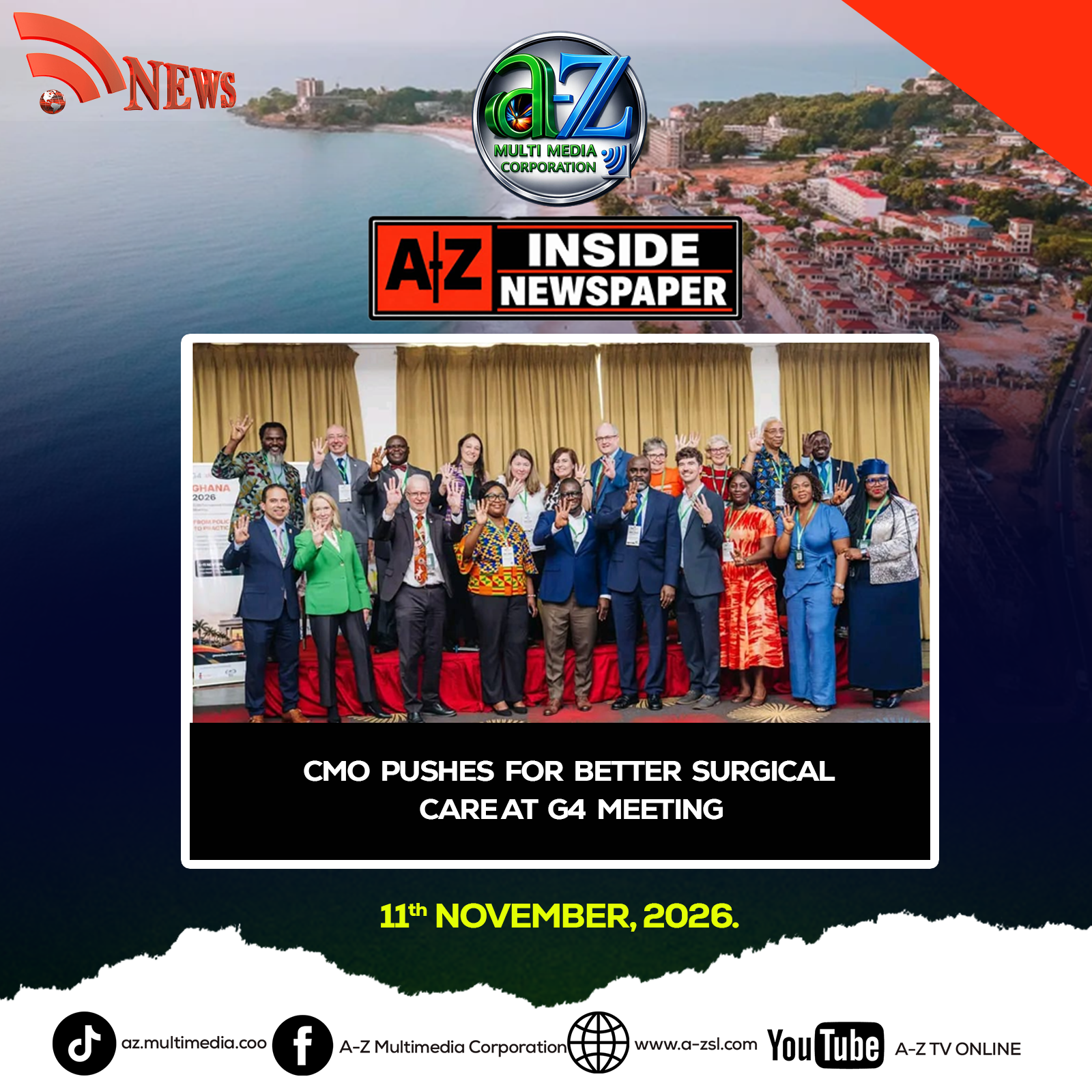
The Chief Medical Officer (CMO) at the Ministry of Health, Dr. Mustapha Kabba, has joined health leaders from Ghana, Tanzania, Kenya and the Southern African Development Community (SADC) region at the G4 Alliance Ghana Meeting in Accra, where he advocated stronger investment and sustainable implementation of surgical care services.
Dr. Kabba participated in a panel discussion on Monday, 9 November 2026, titled “National Surgical Planning: What Are the Barriers?” during which he shared Sierra Leone’s experiences and lessons in strengthening surgical, obstetric and anaesthesia care, emphasizing the need to move beyond policy formulation towards effective and sustainable delivery.
“When surgery is planned, funded and brought closer to communities, a mother in labour in a remote village can get an emergency C-section in time. A child with a treatable condition grows up healthy instead of disabled. A farmer injured at work recovers and goes back to feeding his family, without selling his land to pay for treatment,” Dr. Kabba said.
He noted that for many families in Sierra Leone, complications during childbirth, road accidents and conditions such as hernia continue to pose serious health risks, not necessarily because they are untreatable, but because access to safe surgical services remains limited, expensive or unavailable due to shortages of trained medical personnel.
The CMO highlighted several challenges affecting surgical care in the country, including inadequate numbers of surgeons, anaesthetists and obstetric specialists, most of whom are concentrated in urban hospitals. He also pointed to the unreliable availability of operating theatres, medical equipment and essential supplies in district hospitals, as well as high out-of-pocket costs that force vulnerable families to delay treatment or fall into debt.
He further noted that these challenges contribute to preventable deaths, particularly among mothers and newborns.
“Surgical care isn’t a luxury. It is a basic part of a resilient health system and a key step towards Universal Health Coverage,” he stressed.
Dr. Kabba explained that Sierra Leone’s surgical healthcare landscape has undergone significant changes in recent years, particularly following the launch of the country’s first-ever National Surgical, Obstetric and Anaesthesia Plan (NSOAP) 2026–2030 in October 2025.
The five-year plan is designed to strengthen surgical healthcare delivery through increased investment in health workforce training, improved healthcare infrastructure across the country, and enhanced interventions to improve maternal and child health while reducing preventable deaths.
He explained that the NSOAP provides a coordinated framework for investment across eight key pillars: workforce, service delivery, infrastructure, supply chain, information management, sustainable financing, community engagement and governance.
However, Dr. Kabba emphasised that the success of the plan would depend on effective implementation, strong government leadership, sustainable domestic financing, coordinated partnerships and accountable institutions.
“A national plan is only as meaningful as its implementation. Success requires strong government leadership, sustainable domestic financing, coordinated partnerships, accountable institutions and measurable improvements in the lives of people who need surgical care,” he concluded.
Sierra Leone, he reaffirmed, remains committed to building a stronger, more equitable and sustainable surgical healthcare system that ensures access to quality surgical services for all, regardless of location or economic status.