

China is strengthening international health partnerships through medical missions, disease prevention, specialist treatment and training programmes aimed at improving healthcare delivery and building local medical capacity in developing countries.
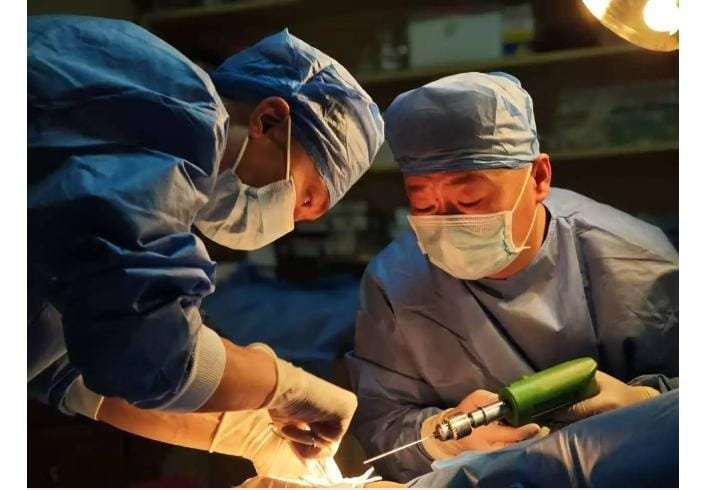
In Lokossa, a city in southwestern Benin, Chinese obstetrician Tu Jinzhi and her local colleagues successfully performed a high-risk Caesarean section on an HIV-positive pregnant woman whose fetus had a severe congenital skull malformation.
The operation, conducted on August 8, 2026, at Lokossa Central Hospital in Mono, required strict infection-prevention measures and careful clinical management to minimise risks to the mother, child and medical team.
The successful procedure highlights China’s longstanding medical cooperation with Benin. Since 1978, 28 Chinese medical teams comprising a total of 662 personnel have served in the West African country. The teams were dispatched by northwest China’s Ningxia Hui Autonomous Region to support local healthcare services.
Beyond emergency treatment, Chinese medical teams are increasingly working alongside local healthcare professionals to improve clinical skills, strengthen hospital services and support long-term healthcare development.
In Seychelles, a six-member Chinese medical team specialising in orthopaedics, surgery, neurology, radiology and acupuncture arrived in July 2025 for a two-year assignment.
“We work closely with local staff across departments, from routine orthopedic care to laparoscopic surgeries,” team leader Dr. Du Daodong told China Media Group (CMG).
The team collaborates with local doctors to improve diagnosis and emergency response. During a night shift, a patient who had been injured by ocean waves arrived at a hospital in severe pain and appeared pale. Radiologist Dr. Yang Hongsheng recommended an urgent contrast-enhanced computed tomography (CT) scan, which revealed a ruptured spleen with active bleeding, allowing doctors to proceed quickly with life-saving surgery.
In another case, neurologist Dr. Wang Kaixin treated a 56-year-old man who developed sudden paralysis. After confirming that the patient met the criteria for thrombolytic treatment, Dr. Wang initiated intravenous therapy while monitoring his vital signs. The patient subsequently recovered and was able to walk out of the hospital independently.
The continued presence of Chinese medical personnel has also helped build relationships with local communities. One patient who had previously undergone an appendectomy performed by a Chinese surgeon returned two years later with severe abdominal pain. After diagnosing a peptic ulcer, a Chinese medical team surgeon adjusted his medication, resolving the condition without surgery.
Acupuncture and other traditional Chinese medicine services have also attracted local residents seeking treatment for chronic pain and headaches.
China is also extending its international health cooperation beyond hospitals through initiatives targeting malaria and preventable blindness.
After reducing its malaria burden from approximately 30 million cases annually in the 1940s to zero indigenous cases, China received World Health Organization (WHO) certification for malaria elimination in 2021.
The country has shared its artemisinin-based treatments with other nations, particularly those facing high malaria burdens. Its “1-3-7” surveillance strategy requires malaria cases to be reported within one day, investigated within three days, and followed by further investigation of transmission risks and appropriate public health measures within seven days.
The strategy has been incorporated into WHO technical guidance. According to WHO estimates cited in the report, approximately 240 million people in sub-Saharan Africa have benefited from artemisinin-based combination therapies.
China is also supporting efforts to address preventable blindness through specialist medical missions. Under the guidance of China’s National Health Commission, medical teams have travelled to Central Asian countries, including Uzbekistan, Tajikistan and Kyrgyzstan, to perform free cataract surgeries.
Kyrgyz Deputy Health Minister Nurbolot Usenbaev told CMG that the initiatives have helped restore sight to people with visual impairments, including citizens of Kyrgyzstan.
China’s international medical cooperation also focuses on knowledge sharing, specialist training and the development of sustainable healthcare systems.
According to China’s National Health Commission, the country has dispatched approximately 31,000 medical personnel to 77 countries and regions over the past six decades, treating an estimated 300 million patients. Hospital partnership programmes have also supported the establishment of 26 key clinical specialty centres across Africa.
The cooperation is backed by China’s medical research, manufacturing and innovation capabilities, including the development of medicines, vaccines and other medical products.
Martin Taylor, WHO representative to China, highlighted the importance of these capabilities in an interview with China Global Television Network (CGTN).
He said collaboration focused on serving local populations could remain effective regardless of wider geopolitical developments.
In Zimbabwe, Chinese medical specialists have supported efforts to strengthen respiratory and critical care services at Parirenyatwa Group of Hospitals, one of the country’s major public healthcare institutions.
Dr. Tan Jianlong, who led a Chinese medical team at the hospital, returned in 2025 to support the development of respiratory and critical care services.
“We assisted in building Zimbabwe’s most advanced respiratory and critical care specialty, establishing a rescue center, skills training center, and telemedicine platform,” Dr. Tan said.
Through these programmes, more than 180 local medical personnel were trained in one year.
Fambai Nash, nursing supervisor of the hospital’s intensive care ward, said the collaboration had helped improve intensive care management and staff capacity.
“With the help of Chinese experts, we are continuously improving our ICU management and working toward a full-fledged ICU,” Nash said.
He added that most nursing staff had received training, improving ventilator care and the prospects of recovery for patients with respiratory conditions.
Through emergency interventions, specialist treatment, disease-control initiatives and professional training, China’s medical missions are contributing to healthcare delivery and skills development in partner countries. The emphasis on working with local professionals is intended to strengthen existing health systems and support more sustainable improvements in patient care.