

By: Mohamed Sahr
Across the busy streets of China’s commercial cities and the growing digital spaces connecting millions of people, a new chapter in China-Africa relations is unfolding one shaped not only by trade and investment but also by culture, technology, creativity, and shared opportunities.
From coffee farms in Africa to Chinese consumer markets, from media cooperation to digital storytelling platforms, African countries are exploring new ways to strengthen their presence in one of the world’s largest economies.
Recent engagements in China have highlighted a growing message: Africa’s future partnership with China must move beyond traditional trade patterns and focus on innovation, value addition, skills development, and stronger people-to-people connections.
MEDIA AS A BRIDGE FOR SHARED UNDERSTANDING
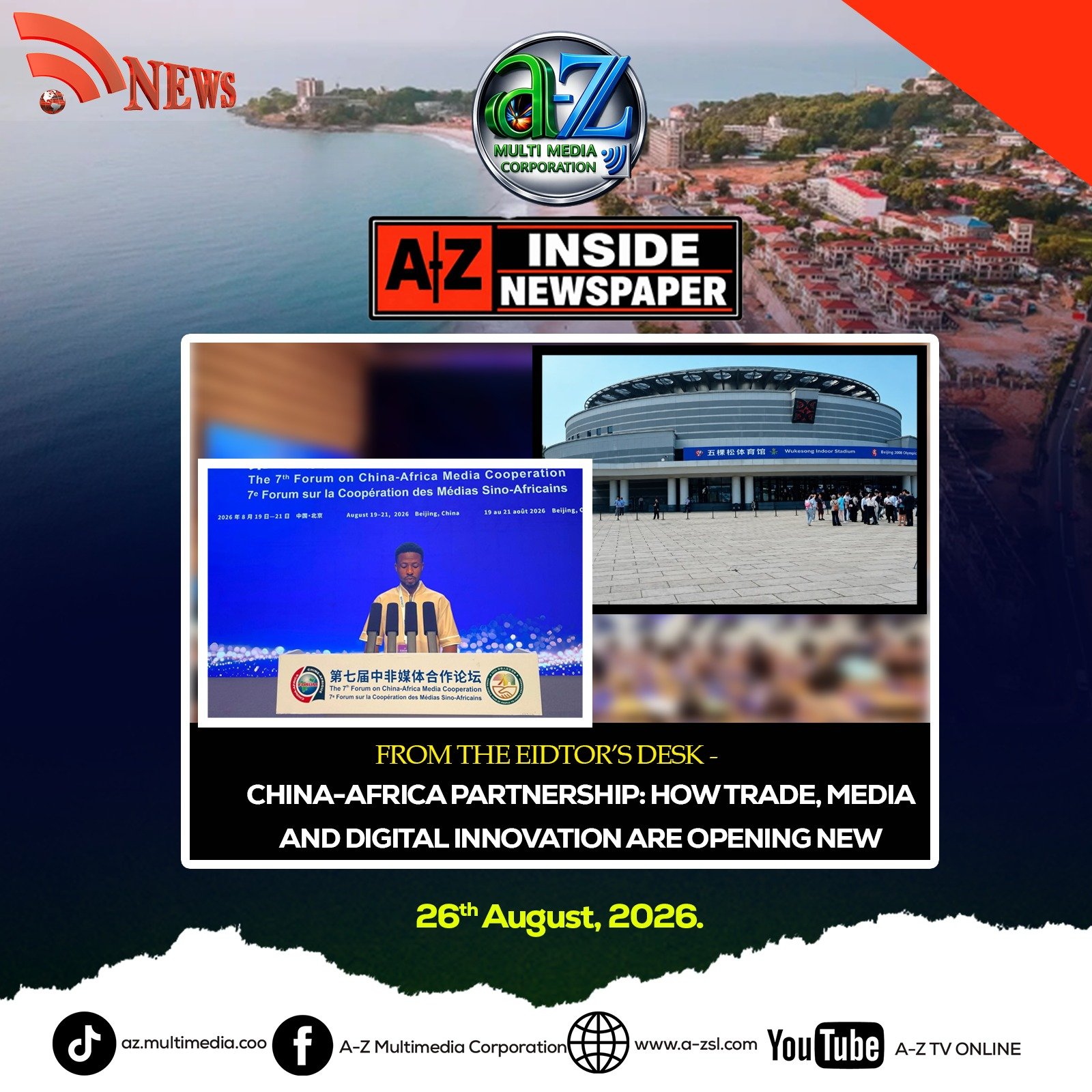
At the 7th Forum on China-Africa Media Cooperation held in Beijing, African Information Ministers and media leaders emphasized the important role of communication in shaping the future of Africa-China relations.
The forum, organized by China’s National Radio and Television Administration (NRTA), focused on the theme “Share Development Opportunities, Shape the Audio-visual Future.”
Participants highlighted how radio, television, and audiovisual platforms can promote cultural exchange, support economic growth, and empower young people.
The Permanent Representative of the African Union to China, Alhaji Mohamed Sarjoh Bah, said Africa’s creative economy has the potential to become one of the continent’s most dynamic sectors, driven by the energy and imagination of its youthful population.
He stressed that cooperation between Africa and China should move beyond traditional content exchange and develop stronger value chains in film production, broadcasting, animation, gaming, digital content creation, and cultural entrepreneurship.
According to Bah, Africa must ensure that its stories are told from its own perspective, reflecting the continent’s diversity, achievements, and aspirations.
Sierra Leone’s Minister of Information and Civic Education, Hon. Chernor Bah, also highlighted the importance of responsible artificial intelligence, media innovation, professional training, and digital transformation.
He said Africa and China can benefit from stronger cooperation among media institutions, including joint reporting, knowledge sharing, and capacity building for journalists, broadcasters, filmmakers, and digital creators.
AFRICA’S COFFEE FINDS A GROWING MARKET IN CHINA
Beyond media cooperation, Africa’s agricultural products are also finding new opportunities in China, particularly in the growing coffee industry.
Cafebreak, one of China’s leading coffee producers, has expressed interest in expanding its sourcing of coffee beans from Africa to meet increasing demand for quality and specialty coffee products.
The company’s E-Commerce Manager, Yinghao Tang, said African coffee is valued because of its unique flavours and diversity.
Countries such as Ethiopia, Uganda, Kenya, and Tanzania are already contributing to China’s coffee supply chain, with Cafebreak importing beans from several African producers.
The company believes stronger cooperation with African coffee-growing countries could create opportunities for farmers, exporters, and businesses while introducing more African coffee varieties to Chinese consumers.
Industry representatives in Kunshan, Jiangsu Province, encouraged African countries to invest in large-scale coffee cultivation, processing, and export systems to build a more competitive supply chain.
The message was clear: Africa should not only export raw materials but also strengthen production capacity and value addition.
ZERO-TARIFF POLICY OPENS NEW TRADE OPPORTUNITIES
China’s expanding zero-tariff policy is also creating new opportunities for African exporters seeking access to the Chinese market. The General Administration of Customs of the People’s Republic of China (GACC) said the policy, expanded in 2026, now covers 53 African countries. Deputy Director-General Zhang Xiaohui said China-Africa trade continues to grow, reaching more than US$348 billion last year.
He encouraged African businesses to explore opportunities beyond traditional exports such as coffee and expand into other agricultural products.
Already, products including Kenyan avocados and Ethiopian coffee have entered the Chinese market under the preferential trade arrangement.
However, Zhang stressed that African exporters must meet China’s health and safety standards to ensure quality and consumer protection. He also encouraged African media to play a role in educating businesses about opportunities available in China’s large consumer market.
INTEGRATION: AFRICA’S KEY TO GLOBAL COMPETITIVENESS
While opportunities are increasing, business leaders say Africa must become more united if it wants to compete effectively in China and other global markets.
Dr. Ntsane Lepholisa, Director of Overseas Business at China Africa Building in Yiwu, Zhejiang Province, said African countries cannot succeed by operating individually.
He called for stronger regional cooperation through blocs such as ECOWAS and SADC, as well as full implementation of the African Continental Free Trade Area (AfCFTA). According to him, Africa needs integrated production systems, logistics networks, and payment platforms similar to those that have supported China’s economic growth.
He argued that even Africa’s largest economies cannot navigate international markets alone and must collaborate to create competitive supply chains.
Meanwhile, Zhu Sun, Founder and Chief Executive Officer of China Africa Holding Group, noted that China-Africa trade is changing.
He said Chinese buyers are increasingly travelling to Africa to source high-quality products, moving away from the traditional pattern where African entrepreneurs mainly travelled to China to purchase goods.
The shift, he said, represents a more balanced partnership where African products can gain greater access to Chinese consumers.
DIGITAL PLATFORMS GIVE AFRICA A NEW VOICE
The digital revolution is also creating fresh opportunities for Africa to tell its story. Rednote, a Chinese social media platform, is becoming a space where African creators are promoting culture, tourism, entrepreneurship, and lifestyle content to global audiences. Chang Xinbo, General Manager of Rednote’s Department of Public Policy, encouraged more Africans to explore the platform to promote cultural exchange and creativity.
African content creators such as Uganda’s Timothy Kiwalabya and entrepreneur Cabrel Domche are already using Rednote to showcase Africa’s tourism, cuisine, music, and cultural identity. Domche urged Africans to use digital platforms to change outdated narratives about the continent and promote African products and talents globally.
A PARTNERSHIP BEYOND TRADE
The growing engagement between Africa and China reflects a partnership that is expanding beyond traditional commerce. From coffee exports and tariff-free trade opportunities to media cooperation and digital innovation, Africa is seeking new pathways to participate in global markets.
However, the success of this relationship will depend on Africa’s ability to invest in production, strengthen regional integration, embrace technology, and tell its own story.
As Africa and China continue to deepen their cooperation, the future may not only be about what Africa exports to China, but also about how both regions can create shared opportunities, innovation, and prosperity for generations to come.