

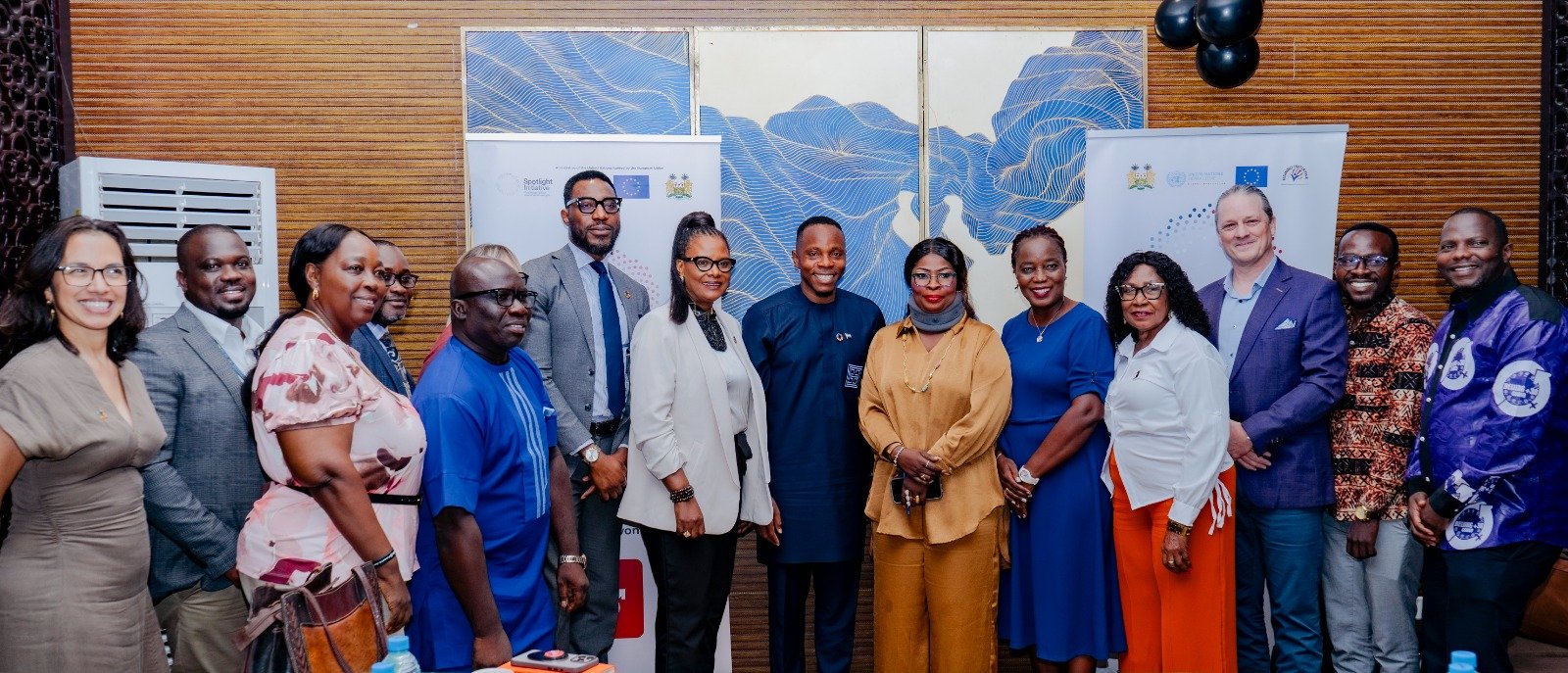
Sierra Leone’s Chief Minister, Dr. David Moinina Sengeh, has called on UN agencies implementing the European Union-funded Spotlight Initiative 2.0 to “over-deliver” to maximize impact in the fight to end all forms of violence against women and girls, while also improving how results are communicated to drive further progress.
He made the remarks in his role as Co-Chair of the National Steering Committee (NSC), which he convened jointly with the UN Resident Coordinator, Dr. Seraphine Wakana, at Atlantic Hall in Freetown. The meeting focused on reviewing and endorsing key governance documents, including the 2026 Spotlight Initiative Results Framework and work plans, as well as assessing progress and agreeing on next steps for implementation.
Dr. Sengeh emphasized the importance of collaboration, noting that meaningful and lasting impact can only be achieved when all partners work together toward shared goals.
The UN Resident Coordinator described the Spotlight Initiative in Sierra Leone as a truly joint effort involving a whole-of-government and whole-of-society approach, bringing together the Government of Sierra Leone, the European Union, and the United Nations system.
She highlighted the strong spirit of collaboration already evident among UN agencies, civil society organizations, and government institutions working collectively to eliminate violence against women and girls.
Dr. Wakana also stressed the importance of aligning the Spotlight Initiative’s governance structure with existing national coordination mechanisms, such as the National Action Plan Committee on Gender-Based Violence (GBV) and the Gender Development Reference Group. She noted that this alignment is essential for sustainability, as it helps leverage existing expertise, resources, and partnerships across sectors.
The Head of the European Union Delegation to Sierra Leone, H.E. Jacek Jankowski, welcomed the establishment of the NSC as the highest decision-making body for the initiative, responsible for providing strategic leadership, oversight, accountability, and ensuring sustainability in line with its Terms of Reference. These priorities include financial stewardship, risk management, and alignment with national priorities.
He reaffirmed the EU’s commitment to ensuring that progress is measured not only by laws and policies but also by the safety and dignity experienced by women and girls, stating that the work of the NSC strengthens that commitment.
Ambassador Jankowski further reiterated that the Spotlight Initiative remains one of the EU’s flagship global partnerships and that Sierra Leone continues to be a priority country for demonstrating impact, innovation, and sustainability. He also encouraged continued focus on strategic direction, financial management, risk mitigation, and the meaningful inclusion of civil society, particularly women’s rights organizations.
The NSC’s Terms of Reference, Results Framework, and costed work plan were all endorsed following deliberations involving heads of implementing UN agencies—UNFPA, UN Women, UNDP, and UNICEF as well as the Minister of Gender and Children’s Affairs, the Acting Minister of Basic and Senior Secondary Education, and civil society representatives.
The four-year programme, which began in 2025 with a total budget of USD 12.47 million (including USD 11.3 million from the EU and USD 1.14 million from UN agencies), is being implemented nationally with a strong focus on districts such as Falaba, Moyamba, and Kailahun.
The initiative aims to strengthen legal and institutional frameworks, prevent gender-based violence by addressing harmful social norms, improve survivor-centered response services, and amplify advocacy efforts led by civil society and women’s movements.