

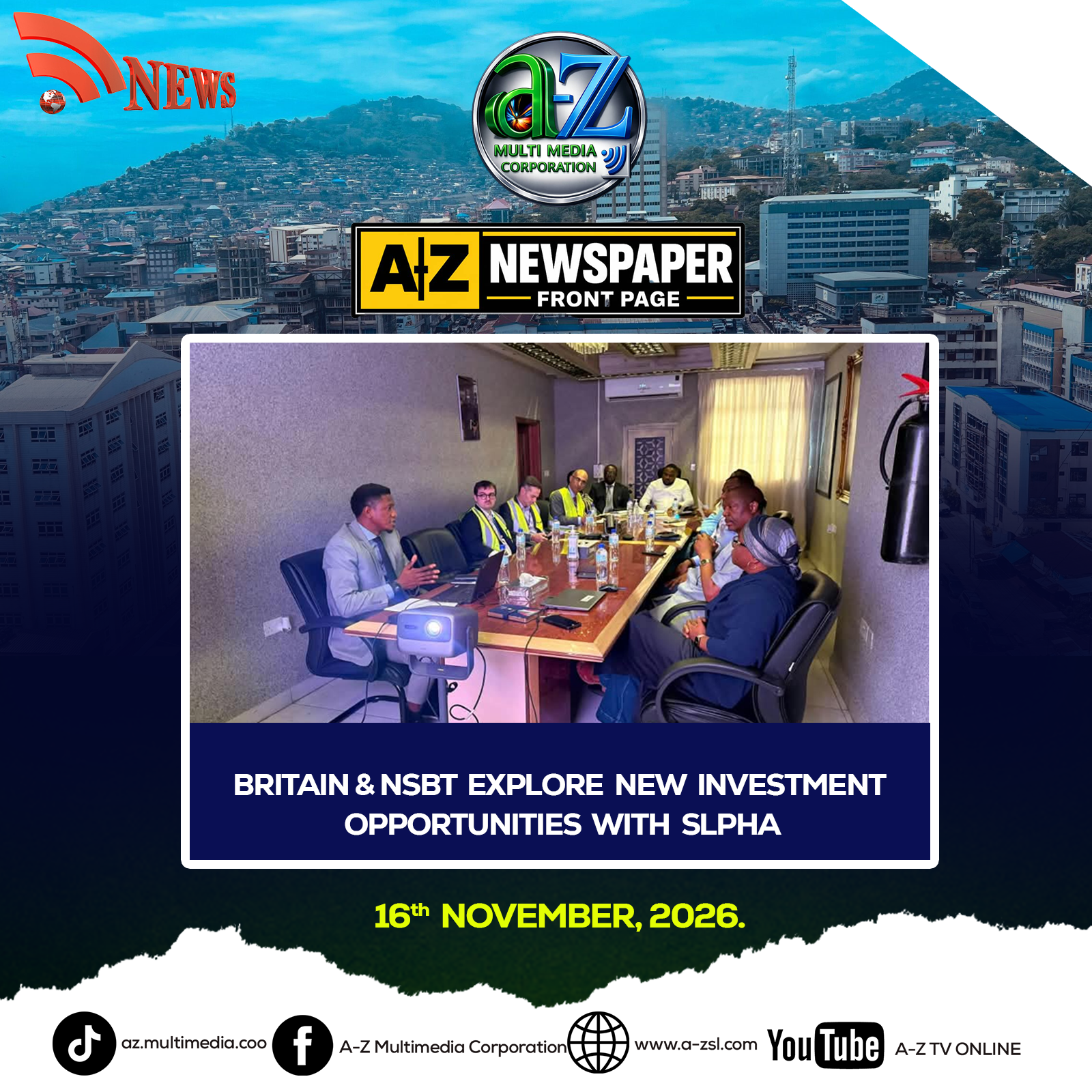
The British High Commission in Freetown, in collaboration with Nectar Sierra Leone Bulk Terminal (NSBT), has engaged the leadership of the Sierra Leone Ports and Harbours Authority (SLPHA) to explore potential investment opportunities, infrastructure development and areas of mutual collaboration to strengthen the country’s port sector.
The high-level engagement, held on Thursday, 12 November 2026, brought together the Deputy High Commissioner of the British High Commission, Mehdi Hussain; the High Commission’s Economic Adviser, Tyler Reddin; NSBT’s General Manager, Siamba Kamara; and senior officials of SLPHA.
During the meeting, Deputy High Commissioner Mehdi Hussain sought clarification on the impact of squatter settlements and encroachment on SLPHA-owned properties. His inquiry followed a presentation by the Authority’s Director of Research and Planning, Abu Bakarr Kamara Esq., who outlined the challenges posed by the unauthorized occupation of port lands.
In response, the meeting was informed that the Government was making significant efforts to address the situation and remove unauthorized occupants from port properties, particularly individuals without legitimate business interests within the port premises. However, participants acknowledged the challenges associated with resettlement demands and the need for an appropriate and sustainable solution.
On investment prospects, Mark Smithson emphasised the need to raise awareness of investment opportunities within Sierra Leone’s port sector. He noted that port infrastructure and related development projects were attracting growing interest in the United Kingdom, adding that increased investment could stimulate economic growth and strengthen the country’s maritime industry.
He referenced recent British investment in the Port of Lagos, Nigeria, where he is based, as an example of the growing investment potential in the region. He also requested that SLPHA identify and submit a list of priority projects requiring investment support to facilitate further discussions and possible collaboration.
Meanwhile, NSBT’s General Manager, Siamba Kamara, highlighted the company’s role and contributions as a key stakeholder in port operations. She provided an overview of NSBT’s activities and infrastructure within the port, disclosing that the company operates three berths, including one that was recently constructed. Her presentation underscored the contribution of private concessionaires to expanding port infrastructure and strengthening operational capacity.
In his remarks, SLPHA Director General, Yankuba Askia Bio, outlined the Authority’s major operational concerns, particularly the negative implications of encroachment on port properties. He warned that the unauthorized occupation of port lands could disrupt operations, compromise efficiency and undermine revenue generation.
He also clarified SLPHA’s responsibilities under the landlord-port model, explaining that the Authority primarily provides the infrastructure and enabling environment within which concessionaires and other port stakeholders conduct their activities.
The Director General further highlighted the Authority’s contribution to national development through regular dividend payments to the Government of Sierra Leone. He reaffirmed the strategic importance of the country’s ports as gateways for international trade and major contributors to economic activity.
The engagement provided an opportunity for constructive dialogue on investment prospects, infrastructure development and institutional collaboration. It also reaffirmed the shared commitment to addressing operational challenges, attracting new investments and positioning Sierra Leone’s port sector for greater efficiency, competitiveness and sustainable economic growth.