

By: Fatmata Grace Okekearu | Bo City
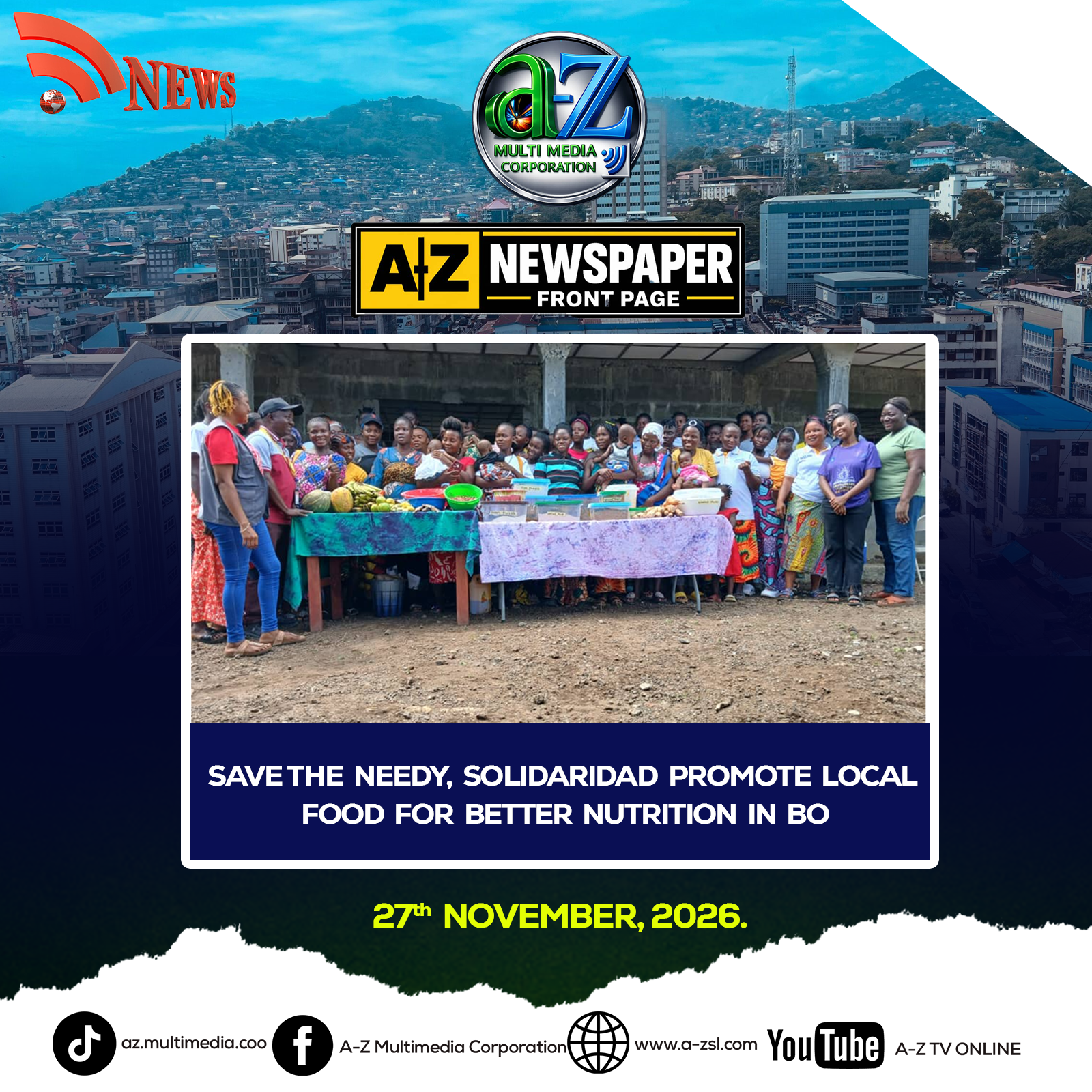
Save the Needy Sierra Leone, in collaboration with Solidaridad, has organised a community-based food demonstration exercise at Sembehun Koko-Fele Community in Tikonko Chiefdom, Bo District, to promote healthy eating habits and strengthen food and nutrition security among rural women and vulnerable households.
The exercise, held on Thursday, forms part of Solidaridad’s Resilient Food and Nutrition Security Project, which seeks to improve household nutrition, encourage the consumption of locally produced foods and equip women farmers with practical skills to prepare nutritious meals for their families.
The demonstration specifically targeted project beneficiaries, including pregnant women, lactating mothers and their babies. It provided participants with practical lessons on preparing nutritious complementary foods for babies and healthy family meals using locally available agricultural produce.
During the exercise, participants used locally cultivated crops, including cassava, benni, soya beans, sweet potatoes and various vegetables, to prepare nutritious meals. The demonstration highlighted how communities can maximize the use of locally available food resources to improve maternal and child nutrition.
Speaking at the event, Madam Violet Lenga Fofanah, Founder and Executive Director of Save the Needy Sierra Leone and Solidaridad’s Women Farmer Coordinator, disclosed that the project is funded by the Church of Jesus Christ of Latter-day Saints.
She explained that a major objective of the initiative is to reduce dependence on imported baby food products by encouraging mothers to prepare nutritious complementary foods for their children using locally grown agricultural produce.
According to Madam Fofanah, locally prepared meals are not only nutritious but also affordable and sustainable; as mothers can make use of crops they cultivate themselves rather than spending additional money on commercially processed baby foods.
She noted that crops such as cassava, benni, soya beans, sweet potatoes and vegetables contain essential nutrients that, when properly prepared and combined, can support healthy growth and development among children.
She therefore encouraged women farmer groups to adopt the practice of preparing their children’s meals from locally available food products and incorporate the knowledge gained into their daily household activities.
Also speaking, Madam Magdalene Kanneh, Senior Nutritionist at the Ministry of Health in Bo reaffirmed the Ministry’s collaboration with Solidaridad in providing women farmer groups with nutritional education and practical skills to prepare healthy meals for their babies and families.
She described the demonstration as an important intervention that could help reduce household food expenditure while improving the understanding of pregnant women and lactating mothers about proper food preparation and nutrition.
Madam Kanneh encouraged beneficiaries to embrace the principle of “Eat What You Grow and Grow What You Eat,” emphasizing that locally produced foods, when properly selected and prepared, can provide essential nutrients for children’s healthy growth and development.
She further urged participants to apply the knowledge acquired in their homes, noting that improved maternal and child nutrition begins with informed food choices and the effective use of available local resources.
Meanwhile, Madam Aminata Bah, Solidaridad’s Senior Programme Officer and Project Lead, explained that the Resilient Food and Nutrition Security Project is designed to strengthen the capacity of women farmer groups by supporting the cultivation of different food crops, including vegetables, rice, cassava, potatoes and other essential agricultural produce.
She said the food demonstration was organised to equip beneficiary women with the practical knowledge and skills needed to transform their farm produce into nutritious meals for their families.
According to Madam Bah, the project goes beyond supporting women in agricultural production, as it also seeks to ensure that the food they cultivate contributes directly to improve household nutrition and overall family well-being.
She added that acquiring appropriate food preparation skills would enable mothers to reduce household spending on imported baby food products while making better use of nutritious crops available within their communities.
She maintained that promoting the consumption of locally grown foods would improve children’s nutritional intake, strengthen household food security and encourage sustainable agricultural practices among rural women.
The food demonstration also forms part of a follow-up capacity-building initiative aimed at strengthening the knowledge and practical skills of beneficiary group members.
Under the initiative, selected participants are expected to serve as community nutrition ambassadors by sharing the knowledge and skills acquired with other women in Sembehun Koko-Fele Community.
The approach is intended to extend the project’s benefits beyond direct beneficiaries, ensuring that more women, particularly pregnant women and lactating mothers, gain practical knowledge of preparing affordable and nutritious meals from locally available food products.
The initiative underscores the importance of collaboration between development organizations, government institutions and community-based groups in promoting sustainable agriculture, improving maternal and child nutrition and strengthening food security at the community level.