

By: Fatmata Grace Okekearu, Bo City
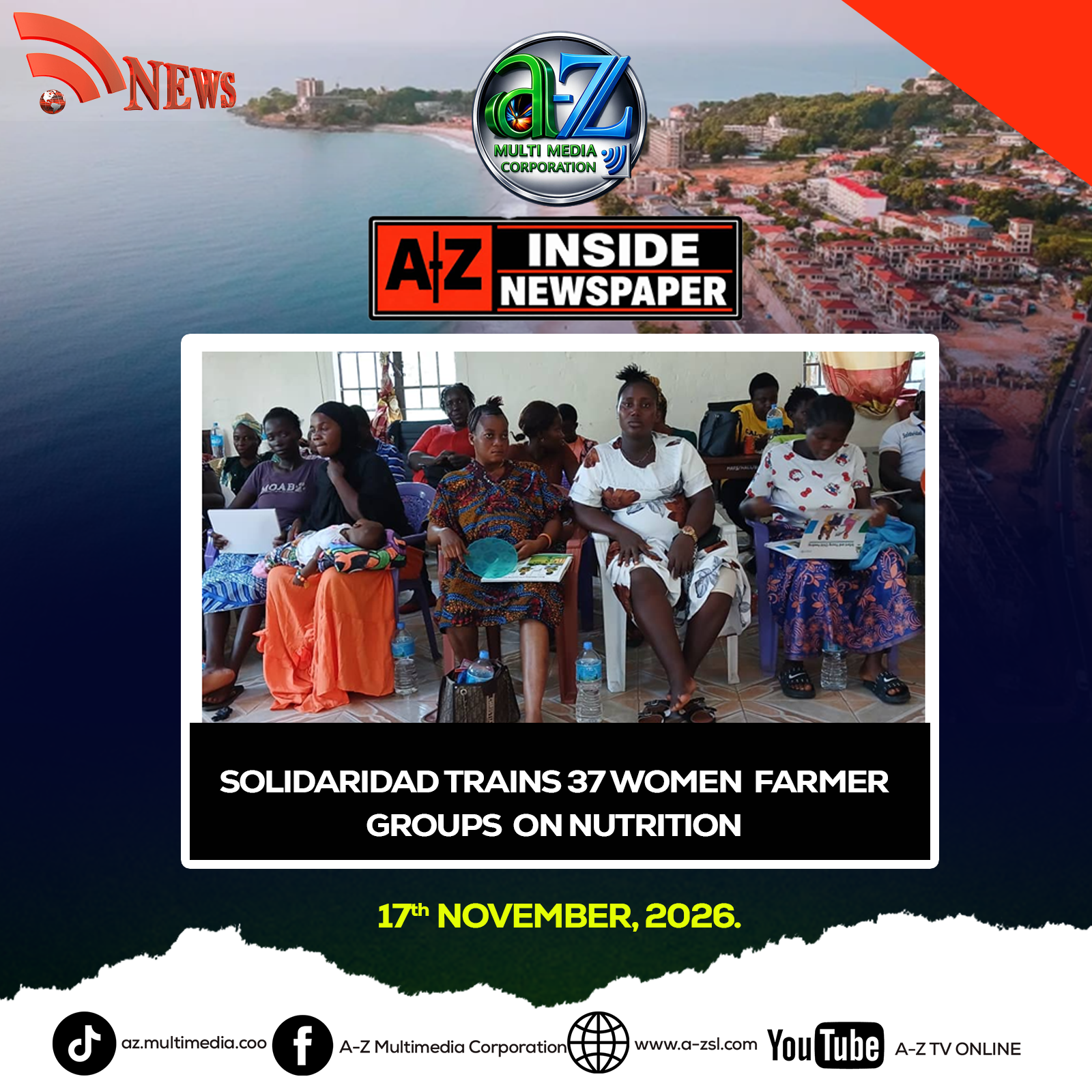
Thirty-seven (37) smallholder women farmer groups in Bo District have benefited from a food and nutrition security training organised by Solidaridad under its Resilient Food and Nutrition Security Project, with funding support from The Church of Jesus Christ of Latter-day Saints.
The training, held at the Ministry of Agriculture and Food Security compound along the Bo-Taiama Highway in Bo City, was organised in collaboration with the District Health Management Team (DHMT), through its Nutrition Unit. It aimed at equipping women farmers with practical knowledge and skills to improve household nutrition, promote healthy feeding practices and strengthen food security in their communities.
Speaking on the rationale behind the initiative, Madam Aminata Bah, Senior Programme Officer and Project Lead at Solidaridad, explained that the project supports women farmer groups to cultivate a variety of food crops, including vegetables, rice, cassava, potatoes and other nutritious agricultural produce.
She said that while the project encourages women to engage in agricultural production to improve their livelihoods, it also promotes the consumption of locally produced food to enhance the nutritional wellbeing of their families.
According to Madam Bah, the training was designed to bridge the gap between food production and proper nutrition, particularly among women caregivers and households with children under five.
She emphasised that women should not focus solely on cultivating and selling their produce but should also reserve a reasonable portion for household consumption to ensure that their families benefit from the nutritional value of the food they grow.
Madam Bah further disclosed that participants were trained in preparing nutritious complementary foods for babies from six months of age, following the recommended six-month period of exclusive breastfeeding.
She explained that the training introduced participants to practical ways of using locally available agricultural produce to prepare healthy meals for their children, reducing dependence on expensive imported food products.
She noted that locally grown crops, when properly prepared and consumed, can provide essential nutrients needed for children’s growth, development and overall wellbeing.
The Project Lead also highlighted that the training covered appropriate dietary practices for women, particularly pregnant mothers. Participants were educated on the types of food they should consume to maintain good health, prevent nutrition-related illnesses and support healthy pregnancies and childbirth.
Beyond household nutrition, Madam Bah disclosed that Solidaridad’s intervention also extends to community school gardens, which complement the government’s school feeding programme.
She explained that teachers involved in the project receive training in school gardening, food varieties and their nutritional components to help them understand the importance of providing children with balanced meals.
According to her, the initiative seeks to ensure that schoolchildren have access to nutritious food to improve their health, support physical development and enhance their concentration and academic performance.
She added that the project recognizes the strong connection between good nutrition, children’s development and educational achievement.
At the end of the training, participants acquired practical knowledge of food preparation, vegetable cultivation, the nutritional benefits of different food crops and the importance of balancing agricultural production with household consumption.
Participants expressed appreciation to Solidaridad for what they described as a timely intervention, while also acknowledging the Ministry of Health, particularly nutritionists from the District Health Management Team, for their technical support and contributions to the training.
They pledged to apply the knowledge gained by ensuring that they reserve part of their agricultural produce for household consumption instead of selling everything they harvest.
The women also acknowledged that consuming nutritious food would help them maintain good health, remain productive in their farming activities and ensure that their children grow healthy and strong.
Facilitators expressed optimism that the initiative would make a meaningful contribution to improving food and nutrition security in Sierra Leone, particularly in communities where Solidaridad operates.
The Resilient Food and Nutrition Security Project represents an effort to promote sustainable agriculture, strengthen women’s capacity, improve household feeding practices and encourage communities to make better use of locally available food resources.
The initiative reinforces the message that food security is not only about producing enough food or generating income through farming, but also about ensuring that families consume nutritious meals for healthier lives and stronger communities.