

By: Mohamed J. Bangura
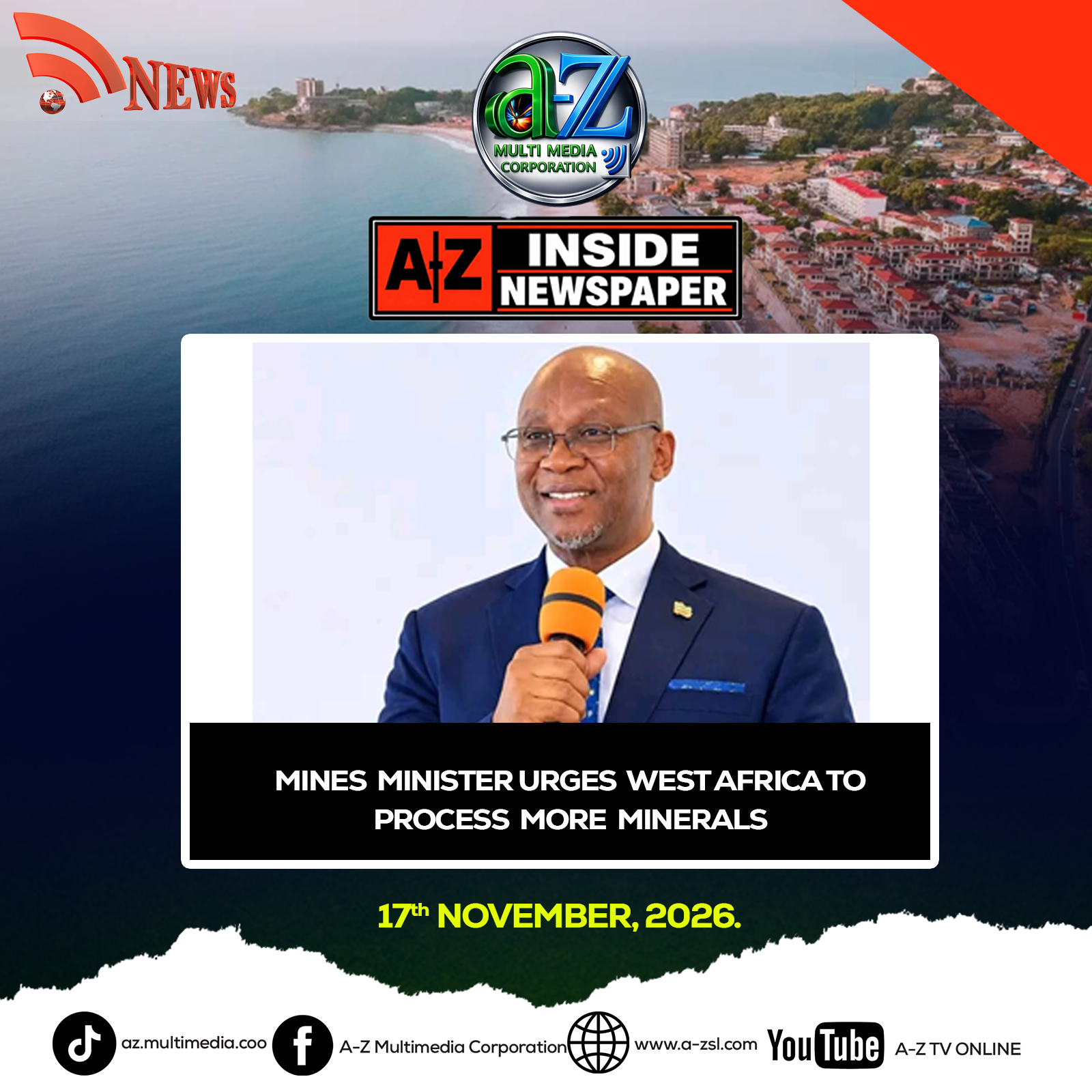
Sierra Leone’s Minister of Mines and Mineral Resources, Julius Daniel Mattai, has called on West African countries to strengthen mineral governance, invest in geological exploration and expand local mineral processing to ensure that the region derives greater economic benefits from its abundant natural resources.
He said Africa must move beyond exporting raw minerals and invest in local industries capable of processing raw materials and manufacturing finished products. According to him, this will create employment, attract investment and promote sustainable economic growth across the continent.
Minister Mattai made the call on 15 November 2026 while delivering the opening address at the West Africa Integration and Investment Summit (WAIIS) Expert Exchange on Strategic Minerals, held at the Bintumani International Conference Centre in Freetown.
The four-day expert engagement forms part of the preparatory activities for the main WAIIS 2026 Summit in Lungi. It brings together government officials, technical experts and development partners to explore opportunities for regional cooperation and investment in the mining sector.
Welcoming delegates on behalf of President Julius Maada Bio, Minister Mattai described the gathering as an important opportunity for West African countries to rethink their approach to mineral resource management and strengthen regional economic integration.
He noted that although Africa holds approximately 30 per cent of the world’s mineral reserves, the continent accounts for less than two per cent of the value generated from global mineral processing.
According to him, this disparity underscores the urgent need for African countries to invest in local processing and manufacturing industries rather than continue exporting raw materials for value addition elsewhere.
“Resource abundance without industrial strategy will leave Africa supplying the future while others manufacture it,” he warned.
The Minister identified lithium, bauxite, rutile, iron ore, gold, manganese, graphite and rare earth minerals as resources offering significant economic opportunities for Sierra Leone and the wider West African region.
However, he emphasised that possessing mineral resources alone does not guarantee national prosperity. He explained that effective governance, adequate infrastructure, technical expertise, investment and sound industrial policies are essential to transforming natural wealth into sustainable development.
Drawing on his 34 years of experience as a geologist, Mattai highlighted the importance of investing in geological exploration and improving access to reliable mineral data to strengthen the region’s negotiating position with international investors.
He said countries must have a clear understanding of the value and potential of their mineral resources before entering into investment negotiations.
“A country that does not finance discovery bargains from hope instead of evidence,” he stated.
He further urged governments to strengthen their technical capacity to assess mining projects, scrutinize investment proposals and negotiate agreements that protect national interests.
“A government that cannot appraise a project will sign whatever is placed in front of it. Capacity is sovereignty,” Mattai said.
The Expert Exchange was designed by the United Nations Industrial Development Organization (UNIDO), through its Global Alliance for Responsible and Green Minerals, in collaboration with the ECOWAS Commission, PI-CREF, ACEN and the WAIIS Secretariat.
The engagement focuses on strengthening technical expertise and promoting responsible mineral development across West Africa. Discussions cover environmental, social and governance standards, project preparation and appraisal, financial and economic analysis, industrial policy, local content development and regional infrastructure corridors.
The Minister also stressed the importance of ensuring that mining activities deliver tangible benefits to communities hosting mining operations.
He said the contribution of the mining industry should not be measured solely by production and export figures but also by its ability to create employment opportunities for young people, increase women’s participation, support local businesses and improve community infrastructure.
“What lies beneath our soil must rise what stands above it: schools, roads, clinics, skills, enterprises and dignity,” he said.
Looking ahead to the main WAIIS Summit in Lungi, Mattai encouraged regional governments, investors and development finance institutions to strengthen partnerships in mineral processing, shared infrastructure and local content development.
He expressed hope that the technical discussions in Freetown would translate into practical commitments and investments capable of transforming the region’s mining sector.
The Minister concluded by urging stakeholders to move beyond discussions and commit resources to geological exploration and industrial development.
“Let us finance discovery, not merely discuss it. Let us process more, not just produce more,” he urged.
The Expert Exchange concludes on 16 November 2026, ahead of the main WAIIS Summit, which is expected to bring together regional leaders, investors and development partners to explore investment opportunities, strengthen economic cooperation and develop strategies for unlocking West Africa’s economic potential.