

By: Mamajah Jalloh
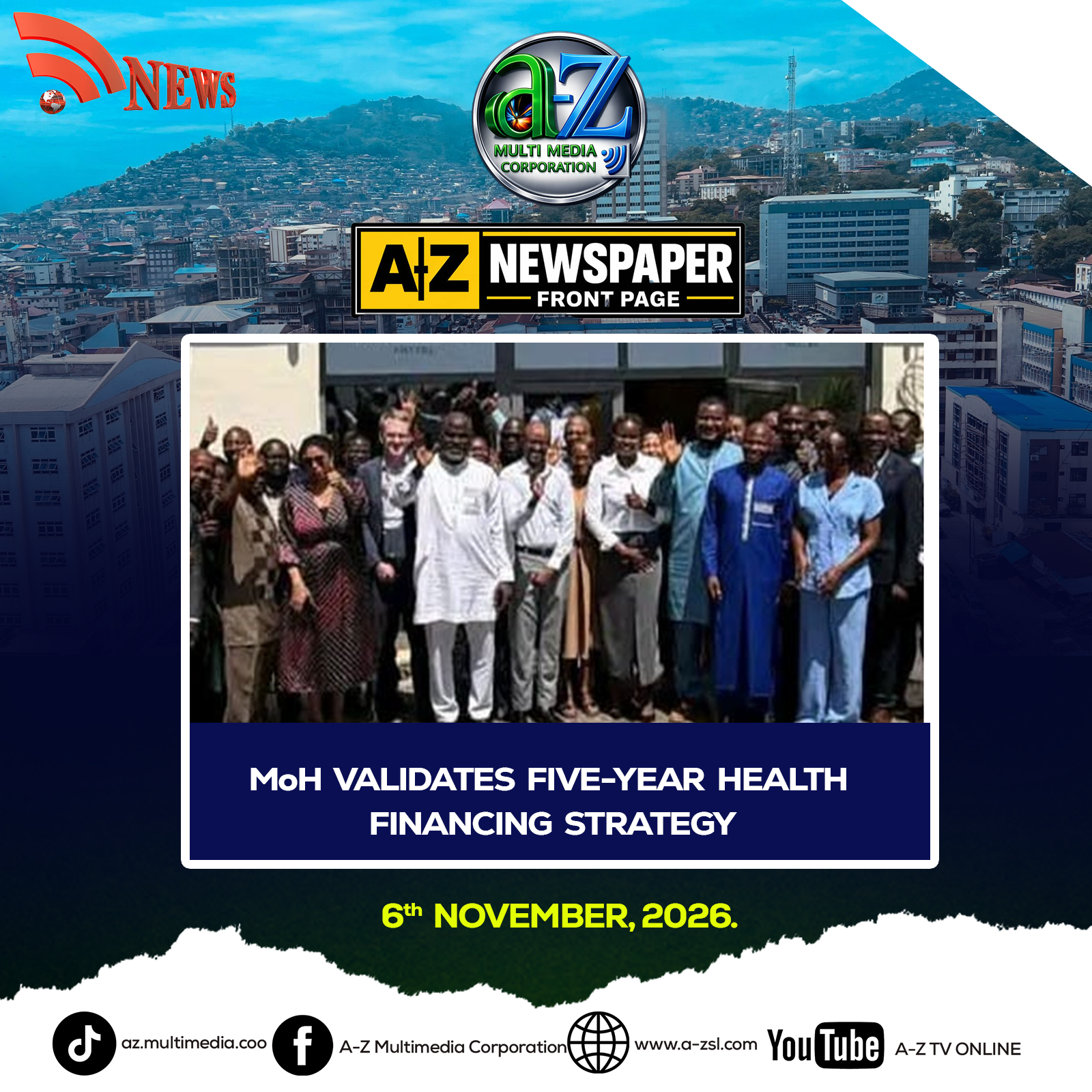
The Ministry of Health, through its Directorate of Policy, Planning and Information, has validated the National Health Financing Strategy 2026–2030, aimed at establishing a sustainable, equitable and resilient health system that guarantees access to quality healthcare for all Sierra Leoneans.
The validation took place on Wednesday, 4 November 2026, at the New Brookfields Hotel in Freetown, bringing together representatives of government institutions, development partners, civil society organizations and other key stakeholders.
The validation marks a significant milestone in Sierra Leone’s efforts to strengthen healthcare financing and ensure the long-term sustainability of essential health services.
The strategy comes at a critical time as the country builds on progress made through the 300 Days of Activism, particularly in reducing maternal and child mortality and improving immunization coverage. It also supports the implementation of the National Health Compact and the National Health Sector Strategic Plan amid growing global health financing constraints and declining external assistance.
The five-year strategy provides a roadmap for strengthening domestic resource mobilization, improving efficiency in public health expenditure, reducing dependence on external funding and ensuring predictable and sustainable financing for essential healthcare services.
Speaking at the event, Chief Medical Officer, Dr. Mustapha Sundifu Kabba, emphasised the need for a practical, inclusive and sustainable financing framework that addresses financial barriers to healthcare, particularly for vulnerable populations.
He called for stronger health insurance mechanisms, increased government support and strategic partnerships to reduce out-of-pocket healthcare expenditure. He also stressed the importance of ensuring adequate resources for primary healthcare facilities, medicines, diagnostics, oxygen, blood supplies and emergency services.
Emphasizing that “access to healthcare should not depend on an individual’s ability to pay,” Dr. Kabba urged stakeholders to establish realistic priorities that reflect Sierra Leone’s economic conditions and healthcare needs.
The strategy prioritizes increased domestic investment, stronger financial risk protection, strategic purchasing, improved accountability and equitable distribution of health resources.
It also aligns with the National Health Compact and provides a foundation for developing a National Health Financing Policy, a Health Financing Bill for Universal Health Coverage, and two complementary health benefit packages: a publicly financed Universal Healthcare Package and a National Health Insurance Package.
These proposed reforms are expected to establish a coordinated health financing framework that reduces financial hardship among households and improves access to essential healthcare services throughout the life course.
Dr. Kabba further stressed that successful implementation would require sustained political leadership, coordinated action and shared accountability among government institutions, development partners, civil society organizations and other stakeholders.
He cautioned that the benefits of the strategy would not automatically follow its validation, noting that meaningful progress would depend on collective commitment, effective implementation and sustained stakeholder engagement.
As Sierra Leone continues to navigate global health financing challenges, the National Health Financing Strategy 2026–2030 represents a significant step towards strengthening the sustainability of the health system, protecting households from financial hardship and ensuring that no one is denied essential healthcare because of their inability to pay.