

By: Mohamed J. Bangura
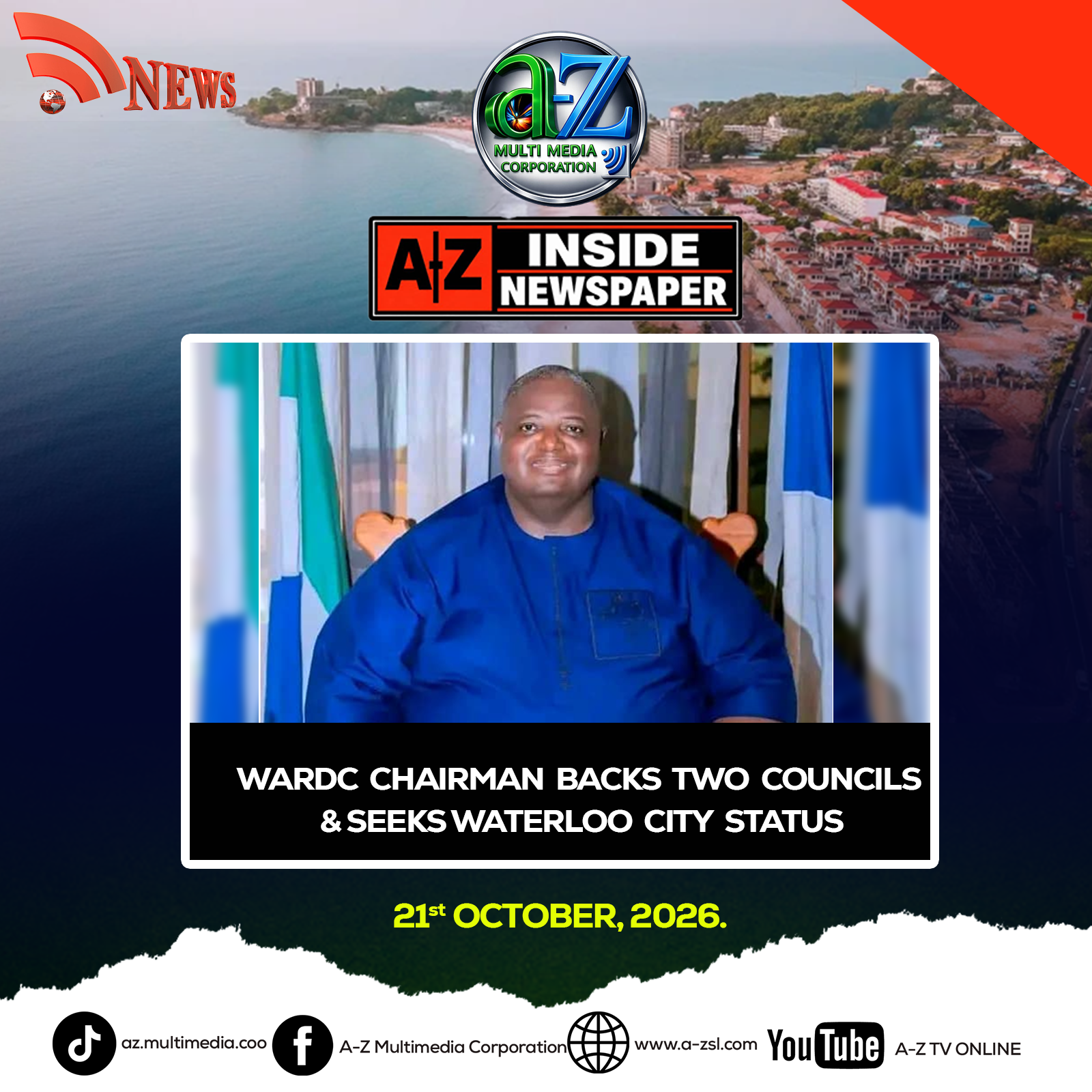
The Chairman of the Western Area Rural District Council (WARDC), Kasho Joseph Holland-Cole, has expressed support for the creation of two councils in the Western Area Rural District and called for Waterloo to be granted city status, citing its growing population, expanding infrastructure and increasing demand for effective local governance.
Speaking during the Waterloo Civic Day Series at the WARDC Council Hall on Tuesday, 20 October 2026, Holland-Cole said Waterloo had developed significantly over the years and possessed many of the features associated with a city.
He cited the town’s population, which he put at more than 400,000, its growing youth population, schools, markets and expanding public infrastructure as reasons for its elevation to city status.
According to him, Waterloo’s rapid growth requires a stronger local government structure capable of responding more effectively to residents’ needs.
“We get all what it takes for a city. Youths man plenty, schools, market structure and other things. We need a mayor now,” Holland-Cole said, emphasizing the need for a mayoral administration to oversee the town’s development.
He noted that Waterloo’s expanding residential communities, commercial activities and educational institutions had increased the demand for essential public services, including roads, sanitation, drainage, healthcare facilities and improved market infrastructure.
Holland-Cole’s call for city status reflects broader discussions about how local government structures can keep pace with population growth and urban development. If approved under the appropriate legal framework, the proposed change could provide an opportunity for more focused urban planning, improved coordination of public services and stronger local leadership.
The WARDC chairman also expressed support for the creation of two councils in the Western Area Rural District, indicating his willingness to back changes to the existing local government arrangements.
The proposal comes amid discussions on redistricting and local governance in Sierra Leone. The creation of additional councils could bring public administration closer to communities, depending on the boundaries, responsibilities and resources assigned to the proposed authorities.
However, any restructuring of the existing council system, as well as Waterloo’s proposed elevation to city status, would require consideration by the relevant authorities and compliance with the necessary legal and administrative procedures.
The Waterloo Civic Day Series provides a platform for residents, local authorities and government institutions to discuss national issues and examine their implications for communities. The programme, organised through collaboration involving the Ministry of Information and Civic Education and other relevant institutions, has addressed issues including redistricting and the 2026 Population and Housing Census.
Both issues are significant to national development, as reliable population data and clearly defined administrative boundaries help inform development planning, resource allocation and the delivery of public services.
Holland-Cole’s position adds to the ongoing debate about the future of Waterloo and the need to align local governance arrangements with the town’s growing population and development needs.
As discussions on redistricting and local government reform continue, Waterloo’s quest for city status is likely to remain an important issue in conversations about the future administration and development of the Western Area Rural District.