

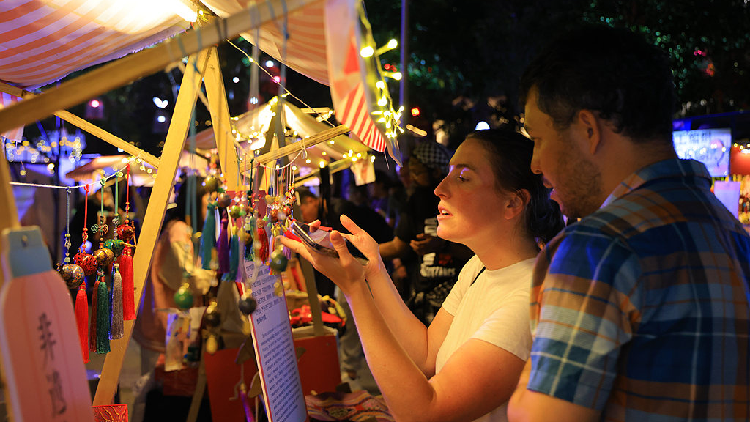
China is gaining popularity among international visitors not only as a tourism destination but also as a shopping hub, with foreign travelers increasingly exploring Chinese brands, buying local products and sharing their experiences online.
The trend, popularly known as “China Haul,” has seen foreign visitors film shopping trips, unboxing videos and product reviews, showcasing everything from electronics and fashion to traditional Chinese goods and customized souvenirs.
YouTube creators Kinjal and Sushi, who have about 479,000 subscribers, recently highlighted the trend in a shopping guide filmed in Shenzhen. The couple took viewers through different shopping locations for electronics, clothing and other products, describing China as a “shopper’s paradise.”
The video has attracted about 194,000 views, reflecting growing interest in China’s shopping and consumer culture among international audiences.
During this year’s Mid-Autumn Festival and National Day holidays, major ports across China also recorded increased inbound and outbound passenger traffic.
According to the Beijing Municipal Culture and Tourism Bureau, Beijing recorded 8.783 million tourist visits during the Mid-Autumn Festival holiday, generating 11.54 billion yuan (US$1.72 billion) in tourism spending. Inbound tourists accounted for 83,000 visits and contributed 780 million yuan (US$116 million) in spending.
In Kunshan, east China’s Jiangsu Province, American music agent James Yin showed reporters some of the products he had purchased during his trip, including a drone, a handheld gimbal and a wireless microphone.
Other products increasingly purchased by foreign visitors include action cameras, digital devices, goji berry drinks, moxibustion boxes, trendy toys, silk products and customized souvenirs.
A widely shared comment under the “China Haul” hashtag captures the enthusiasm: “Bring an empty suitcase when you travel to China, because you’ll shop until you’re exhausted.”
The growing popularity of Chinese products overseas is also being supported by efforts to make shopping more convenient for international visitors.
Shanghai, for instance, has introduced seven measures aimed at making mobile payments easier for foreign visitors, particularly in key consumption areas. Authorities have also worked to streamline tax-refund services for departing travelers and improve multilingual signs and visitor information.
These measures are designed to create a more visitor-friendly shopping environment and make it easier for international tourists to purchase Chinese products.
A Two-Way Flow between China and The World
The increasing movement of people between China and other countries is creating greater opportunities for tourism, cultural exchange and consumption.
While international visitors are traveling to China to explore, shop and experience everyday life, Chinese tourists are also traveling abroad in growing numbers.
During the 2026 National Day holiday, Chinese tourists were widely seen at destinations across the world, including beaches in Australia, trains in Italy and restaurants in the United Kingdom.
Data from third-party platforms showed that Chinese tourists traveled to more than 3,800 cities worldwide during the holiday period, with more than 1.21 million outbound flight tickets booked, an increase of about 4% year on year.
The growth in outbound travel has been attributed to factors including rising household purchasing power, improvements to paid-leave arrangements and the growing practice of combining public holidays with annual leave.
According to China’s Ministry of Culture and Tourism, the country recorded 148 million outbound tourist trips in 2025, an increase of 20.8% year on year. Inbound tourism reached 154 million trips during the same period.
The growth in both inbound and outbound tourism highlights China’s expanding role in global travel and reflects increasingly close connections between China and the rest of the world through tourism, trade, culture and consumer experiences.