

By: Aminata Sesay
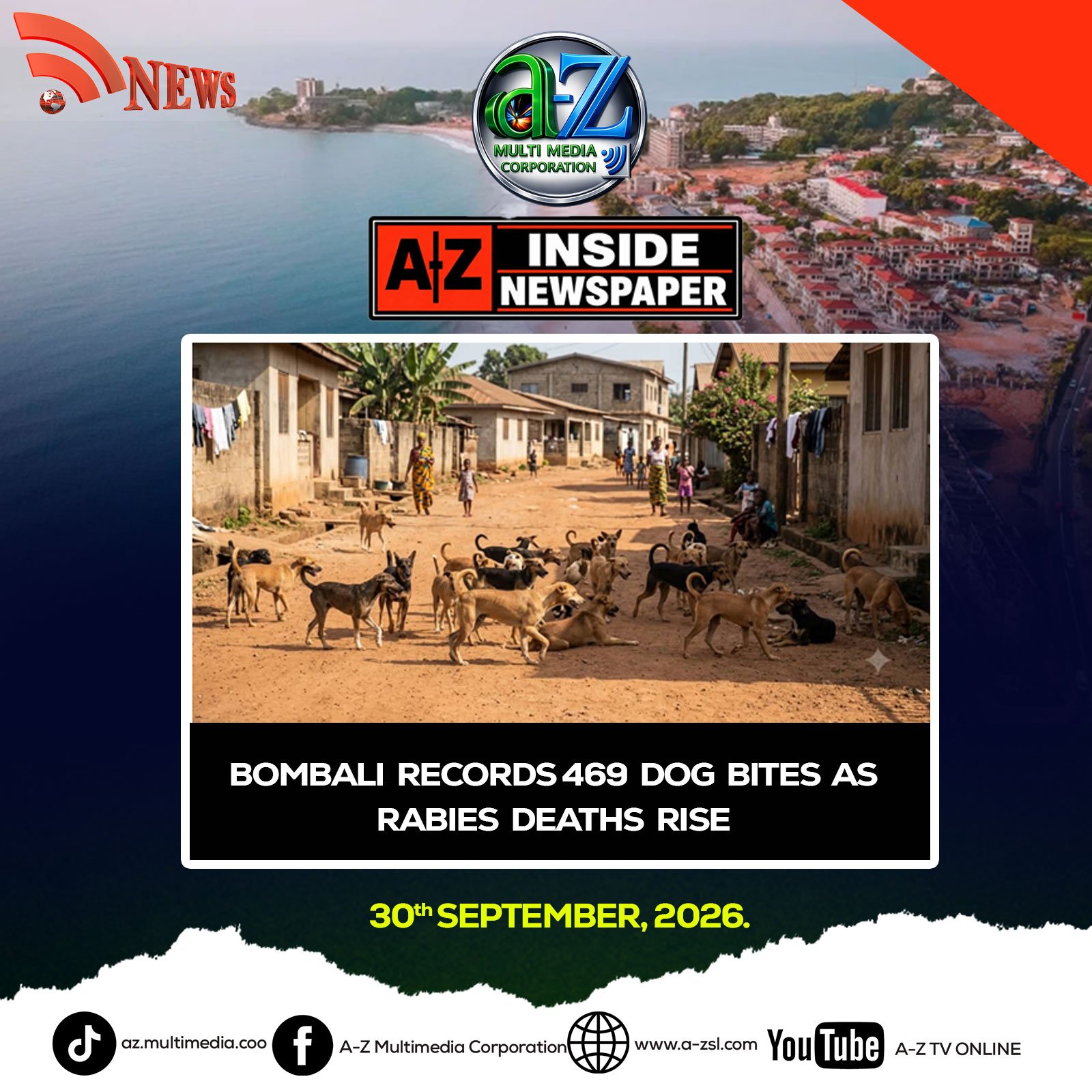
Bombali District recorded 469 dog-bite cases between epidemiological Week 1 and Week 38 of 2026, up from 383 cases recorded during the same period in 2025, amid concerns over rabies infections and deaths.
The figures were disclosed by the Assistant Director of Livestock and ISAVET National Coordinator, Salam Saidu, during the commemoration of World Rabies Day held in Bo on September 28.
Saidu said Bombali also recorded 12 suspected rabies-related deaths between January and August 2026, describing the situation as alarming and calling for stronger coordination among institutions responsible for rabies prevention and response.
He stressed the importance of accurate and reliable data, noting that fragmented efforts could undermine the country’s ability to effectively monitor and respond to rabies cases.
The disclosure comes as the Government, through the Ministry of Agriculture and Food Security (MAFS) and its partners, reaffirmed its commitment to achieving zero human deaths from dog-mediated rabies by 2030.
Deputy Minister II of MAFS, Ing. Bryan Smart-Kanu, said rabies is almost invariably fatal once clinical symptoms develop but can be prevented through vaccination, timely treatment and responsible animal ownership.
He said the Government would continue supporting mass dog vaccination campaigns, strengthening veterinary services and improving disease surveillance under the One Health approach.
“Government cannot do it alone. Vaccinate your dogs and cats,” Smart-Kanu urged.
He also advised anyone bitten by a dog to immediately wash the wound with soap and running water for 15 minutes and seek medical attention.
The Director of the Livestock Veterinary Services Division, Saidu Bamayange, said rabies affects both domestic animals and wildlife. He noted that deforestation and human encroachment into wildlife habitats could increase contact between people and potentially infected animals.
Bamayange called for increased wildlife surveillance, greater public awareness in communities around forest areas and stronger campaigns promoting responsible dog ownership.
“No one should die from a disease we know how to prevent,” he said, urging communities and relevant institutions to strengthen vigilance, reporting and coordinated action.
The World Rabies Day commemoration was held at the De Wizzard Conference Hall in Bo under the theme “Stronger Together.” It brought together representatives from MAFS, the Ministry of Health, the National Public Health Agency, the Ministry of Environment, Climate and Change, Population Services International and other stakeholders.
The stakeholders reaffirmed the need for a coordinated One Health response involving human health, animal health and environmental authorities to reduce rabies transmission and support the national target of eliminating human deaths from dog-mediated rabies by 2030.