

By: Mohamed J. Bangura
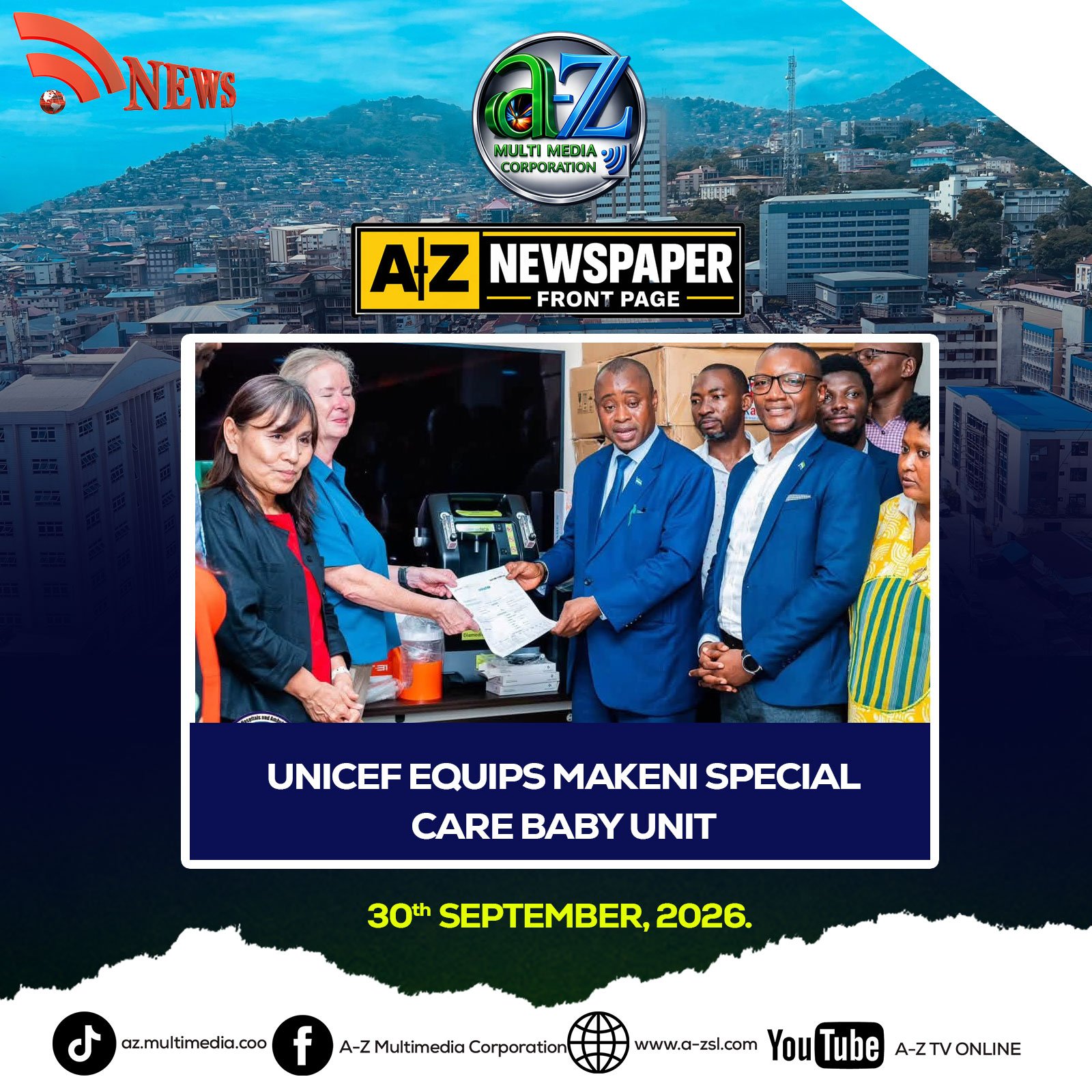
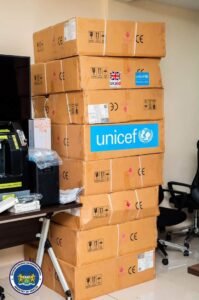
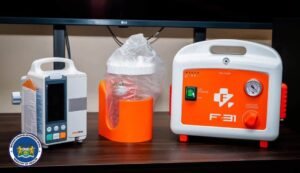
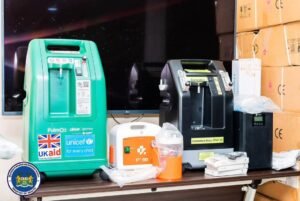
UNICEF has provided medical equipment valued at approximately £32,000 to support the restoration of the Special Care Baby Unit (SCBU) at Makeni Regional Hospital following a fire that disrupted specialized care for small and sick newborns in the Northern Region.
The equipment, funded by the United Kingdom Government through the Foreign, Commonwealth and Development Office (FCDO), is expected to strengthen the hospital’s capacity to provide lifesaving care to premature, low-birth-weight and critically ill newborns.
The handover took place on September 29, 2026, at the UNICEF office in Freetown, bringing together officials from the Ministry of Health, UNICEF, the British High Commission and other development partners.
Speaking at the ceremony, UNICEF Representative Mariko Kagoshima said the fire at the Makeni SCBU had disrupted an essential service for families whose babies required specialized care.
She said the equipment would help health workers provide safer and higher-quality care to newborns in Makeni and communities across the Northern Region.
Kagoshima highlighted progress in newborn healthcare in Sierra Leone, noting that the number of SCBUs had increased from four in 2017 to 17 across 14 of the country’s 16 districts.
She said annual admissions of small and sick newborns had also increased from just over 1,000 in 2017 to more than 14,000 currently, while survival rates among newborns admitted to SCBUs had risen from approximately 78 percent to around 90 percent.
However, she stressed that equipment alone cannot save lives, noting the importance of trained health workers, reliable oxygen and electricity supplies, essential medicines, equipment maintenance and strong clinical practices.
Alex Madean, Development Director at the British High Commission in Sierra Leone, described the intervention as an important achievement for the Government of Sierra Leone and its development partners.
He said the UK’s support extended beyond the provision of medical equipment to include post-basic training for nurses responsible for caring for premature and vulnerable babies.
Madean said the combination of funding, technical expertise, training and government leadership had contributed to improved survival rates among premature babies.
Deputy Minister of Health Professor Sir Senessie welcomed the donation, describing it as timely support for Sierra Leone’s efforts to improve newborn and child survival.
He said progress in the health sector had been supported by continuity in decision-making and consideration of the factors affecting people throughout their lives.
Professor Senessie said the country had made significant progress in reducing maternal and child mortality, while access to services for zero-dose children had also increased.
He explained that quality healthcare depends on several factors, including infrastructure, human resources, medical equipment and supply-chain management.
According to him, the Ministry of Health has invested in infrastructure and trained health workers in the management of small and sick newborns, with some SCBUs recording survival rates of around 95 percent.
He said the equipment was particularly important at a time when child mortality remained a major challenge.
Professor Senessie also recalled UNICEF’s longstanding partnership with Sierra Leone, noting that the organization had supported medical education and capacity building for health workers for decades.
He expressed appreciation to the UK Government, FCDO, UNICEF and other development partners for their continued support to the health sector.
“On behalf of His Excellency the President, I want to express my sincere appreciation for this wonderful donation,” he said, while calling for a stronger and longer-term partnership to improve healthcare delivery.
He added that investing in newborn health was an investment in Sierra Leone’s future, as healthier children would have greater opportunities to survive, develop and contribute to national development.
The support is expected to accelerate the restoration of the Makeni SCBU and improve access to specialized newborn care for families across the Northern Region.