

By: Aminata Sesay
Sierra Leone is taking steps to translate recommendations from its African Peer Review Mechanism (APRM) Country Review into concrete governance reforms and development actions through the validation of its National Programme of Action (NPoA).
The draft NPoA is expected to provide a practical framework for addressing governance challenges identified during the country’s APRM review, with clear responsibilities, timelines, resources and institutional support for implementing the recommended actions.
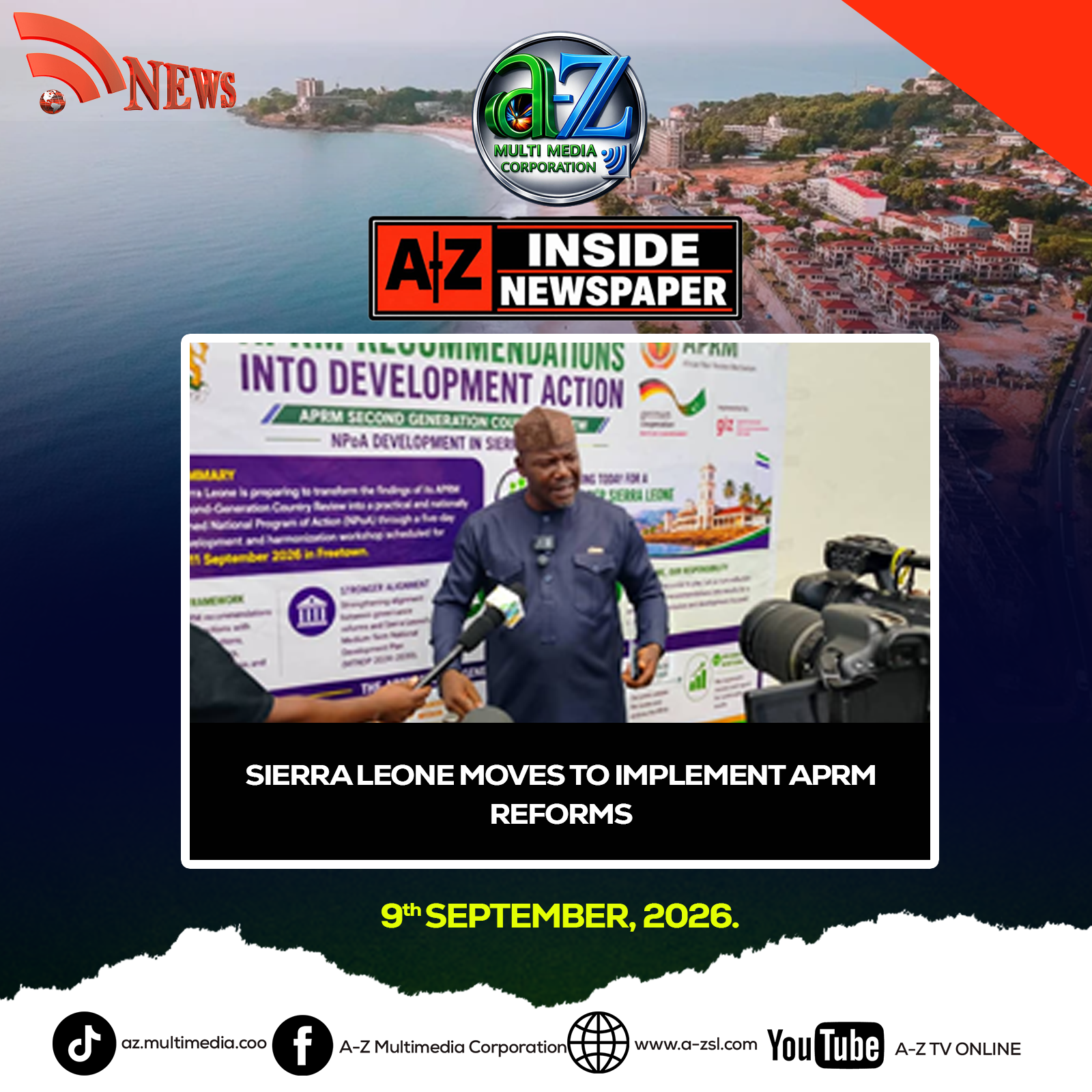
Speaking at a validation workshop held at Newport Hills Hotel, Executive Secretary of the APRM National Secretariat, Mohamed Sheshu Sheriff, said the process is intended to ensure that recommendations from the Country Review do not remain mere policy statements but are translated into tangible actions.
Sheriff explained that Sierra Leone’s APRM process began with a national self-assessment conducted by local experts, followed by an independent review by consultants from the APRM Continental Secretariat.
The process culminated in the presentation of the Country Review Report to President Julius Maada Bio by the Minister of Planning and Economic Development in November 2025.
According to Sheriff, the National Secretariat subsequently worked with local consultants and the APRM Continental Secretariat to develop the draft NPoA, which is now being subjected to stakeholder validation.
He said the NPoA is designed to address a major challenge often encountered in implementing APRM recommendations: translating broad recommendations into specific, measurable and achievable programmes.
“The National Programme of Action bridges that gap,” Sheriff said, explaining that the document identifies institutions responsible for implementation, timelines, financial requirements, logistical support and capacity-building needs.
He said the approach would enable government and other stakeholders to move beyond identifying challenges and establish practical measures to address them.
Among the issues arising from previous APRM recommendations is the need to strengthen democratic institutions, including the National Commission for Democracy. Sheriff said the NPoA seeks to identify the resources and institutional support required to enable such institutions to effectively perform their mandates.
He stressed that the success of the programme would depend on more than the APRM National Secretariat and the Ministry of Planning and Economic Development, which serves as Sierra Leone’s APRM Focal Point.
Instead, he called for broad national ownership of the implementation process, involving government institutions, Parliament, civil society organizations, development partners, the private sector and the media.
“This is a national responsibility,” Sheriff said, urging stakeholders to work collectively to ensure that the recommendations result in tangible improvements in the lives of citizens.
Sheriff also highlighted the importance of the media in promoting good governance and accountability. He said the APRM review identified areas requiring greater attention, including media capacity, professionalism and press freedom.
He encouraged journalists and media institutions to actively participate in shaping the NPoA by providing recommendations that could contribute to strengthening the media sector and democratic governance.
“The media are indispensable partners in governance,” he said, noting that a stronger media environment would contribute to a more vibrant democratic society.
The proposed implementation framework will cover areas including governance, democracy, gender equality, social welfare, justice, correctional services, internal affairs and economic planning. Responsibilities will be assigned to relevant ministries, departments and agencies based on the nature of each recommendation.
Sheriff expressed optimism that, once validated and adopted, the NPoA would provide Sierra Leone with a comprehensive roadmap for implementing governance reforms and supporting inclusive socio-economic development.
The validation workshop brought together government representatives, civil society organizations, development partners, media practitioners and other stakeholders to review the draft and propose further improvements ahead of its formal adoption and implementation.
The APRM is an African Union initiative through which participating member states voluntarily undergo peer reviews of their governance and development systems, with the aim of promoting democracy, political stability, good governance, sound economic management and sustainable development.