

By: Aminata Sesay
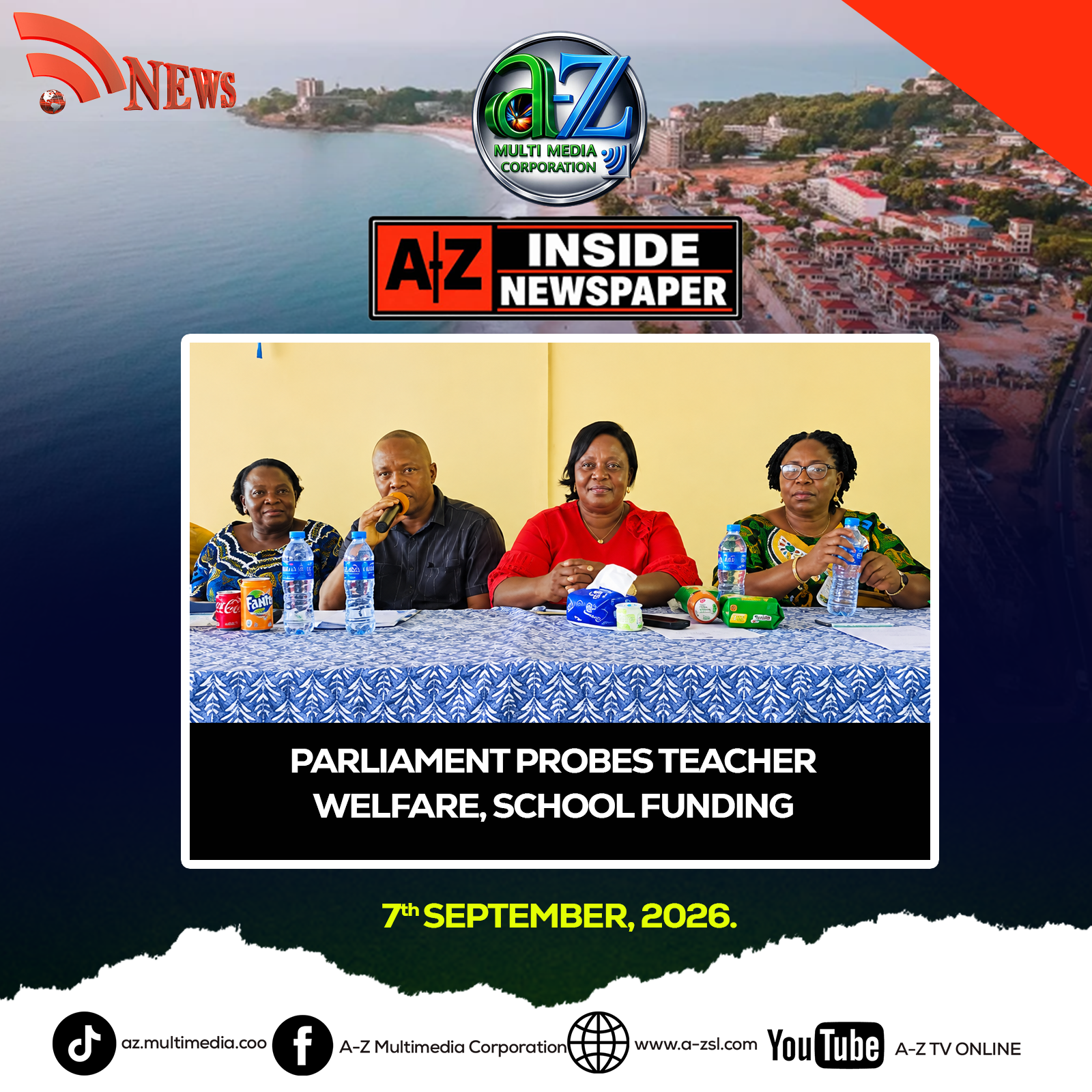
The Parliamentary Committee on Basic and Senior Secondary Education has engaged school heads, teachers and education officials in the Western Rural District over concerns surrounding teacher welfare, delayed school subsidies, inadequate staffing and shortages of teaching and learning materials.
The oversight engagement, chaired by the Committee’s Chairperson, Hon. Rebecca Yei Kamara, was held at Lezonto School in Waterloo on Wednesday, 2 September 2026.
Addressing participants, Hon. Kamara outlined the roles and responsibilities of Parliament, particularly its oversight mandate to ensure that government policies and programmes are effectively implemented.
She commended teachers and school administrators for their dedication to providing education despite the difficult conditions under which many of them operate.
Representing the Sierra Leone Teachers Union (SLTU), Mr. Sullaiman Tarawally raised concerns over what he described as worsening teacher welfare and cases of underpayment.
He said the SLTU was collaborating with the Ministry of Basic and Senior Secondary Education (MBSSE) to advocate for salary adjustments and other improvements in teachers’ welfare.
According to him, ongoing welfare initiatives include access to non-teacher loans, improvements in educational facilities and medical support. However, he appealed to Parliament to intervene urgently in addressing the challenges confronting teachers.
The Chairman of the Conference of Principals of Senior Secondary Schools, Mr. Abdul Razak Kamara, called for stronger collaboration among education stakeholders while highlighting the operational challenges faced by school heads.
He said delays in the disbursement of school subsidies had severely affected the day-to-day administration of schools.
Mr. Kamara called for the immediate release of outstanding first- and third-term subsidies, describing government funding as the backbone of the school system.
He further raised concerns over low salaries and poor working conditions, noting that some teachers receive as little as Le1, 500 despite the responsibilities associated with their work.
He also criticized aspects of the current teacher recruitment system, delays in the allocation of pin codes and slow promotion processes, which he said often fail to reflect teachers’ increased responsibilities and professional experience.
Mr. Kamara further highlighted broader systemic challenges, including delayed government subsidies and payroll issues, which he said continue to put pressure on schools and teachers.
He warned that teacher shortages had left many classrooms understaffed, placing additional pressure on existing teachers and contributing to burnout, with potential consequences for the quality of education delivery.
In her presentation, the Deputy Director of the Ministry of Basic and Senior Secondary Education in the Western Rural District, Madam Nana Bockari, outlined the structure and challenges of the education sector in the district.
She explained that the MBSSE oversees pre-primary, primary, junior secondary and senior secondary education, with schools categorized into government-assisted and private institutions.
According to figures presented, the district has 912 government-assisted schools, including 145 pre-primary schools, 240 junior secondary schools and 147 senior secondary schools, alongside other institutions within the basic education structure.
She further reported that there are 1,198 private schools in the district, comprising 312 pre-primary schools, 366 primary schools, 267 junior secondary schools and 153 senior secondary schools.
The Western Rural District covers six areas: Waterloo I, Waterloo II, York I, York II, Koya and Hamilton.
Madam Bockari said the district’s education system is being managed by a limited number of quality assurance officers and other education officials responsible for monitoring a large number of schools.
She identified several challenges, including teachers who are not yet on the government payroll, inadequate classrooms, shortages of teaching and learning materials, and delays in the payment of school subsidies.
She also highlighted challenges associated with the administration of national examinations, including the National Primary School Examination (NPSE), Basic Education Certificate Examination (BECE) and West African Senior School Certificate Examination (WASSCE). These challenges include issues relating to Continuous Assessment Scores (CASS), examination codes, marking and the submission of examination materials.
Madam Bockari said partnerships supporting education in the district had also declined, further increasing pressure on schools.
However, she highlighted recent teacher training programmes, including training in school leadership, with participants receiving certification through the polytechnic.
The Deputy Director of the Teaching Service Commission (TSC), Simeon Peter Foday, provided an update on teacher registration, licensing and qualifications in the district.
He reported that 1,200 male teachers have pin codes, while 1,384 male teachers do not. Among female teachers, 822 have pin codes, while 597 do not.
On teacher qualifications, Mr. Foday said 3,265 teachers were qualified to teach, while 738 were not qualified.
He also reported that the TSC has a presence across Koya, Waterloo and York, with 92 schools in Koya, 127 in Waterloo and 15 in York.
Giving an update on examinations conducted by the Commission, Mr. Foday said 127 candidates sat the examination in June 2026, with 97 passing and 30 failing. This represents a pass rate of approximately 76.4 percent and a failure rate of 23.6 percent.
He said the TSC had recorded several successes, including the distribution of tablets, the conduct of examinations, and the collection and analysis of data to support decision-making.
During the engagement, teachers raised concerns over the need for leave allowances, timely payment of school subsidies, inadequate staffing, low salaries and what they described as the continued neglect of teachers.
The stakeholders urged Parliament and relevant authorities to take concrete steps to improve teachers’ welfare, strengthen school financing, address staffing shortages and ensure that schools receive the resources required for effective teaching and learning.
The engagement concluded with the Parliamentary Committee responding to questions and concerns raised by teachers and other education stakeholders.