

By: Fatmata Grace Okekearu, Bo City
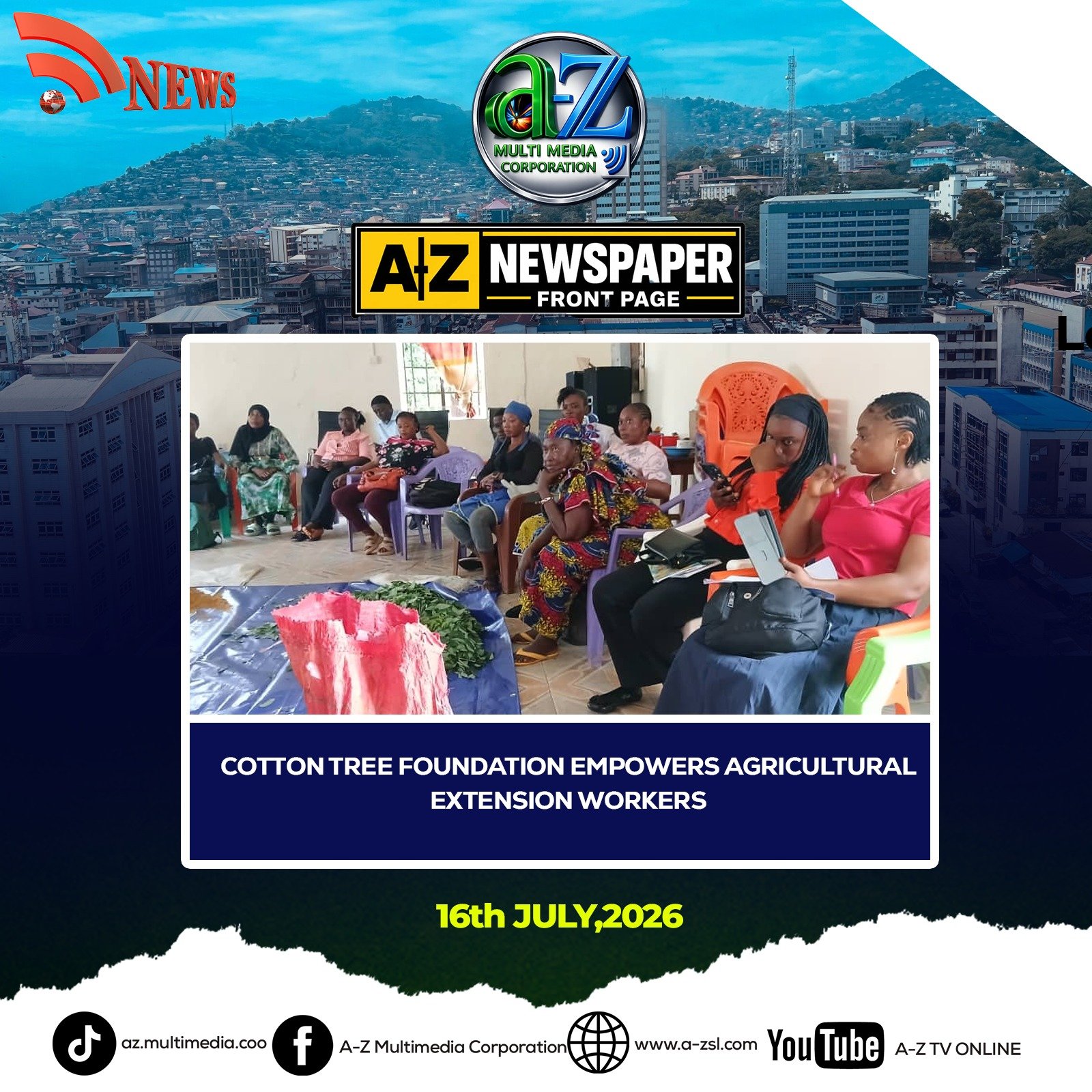
The Cotton Tree Foundation, with support from Farm Input Promotions Africa (FIPS-Africa) and in partnership with the Ministry of Agriculture and Food Security, has conducted capacity-building training for Network Coordinators and Village-Based Advisors on the preparation and production of liquid organic fertilizer and dry compost manure.
The training, held at the Ministry of Agriculture and Food Security’s regional office along the Bo–Taiama Highway in Bo City, brought together agricultural extension workers from across the Southern Region. The initiative aimed to strengthen their technical knowledge and practical skills in promoting sustainable farming practices among smallholder farmers.
Speaking during the training, Almamy Bangura, Team Lead for Sustainable Livelihoods and Enterprise Development at the Cotton Tree Foundation, said the programme was designed to equip frontline agricultural workers with practical skills in producing organic fertilizers to improve soil fertility, reduce farmers’ reliance on chemical inputs, and promote climate-smart agriculture.
Mr. Bangura explained that the training combined classroom instruction with practical demonstrations, enabling participants to gain hands-on experience that they can replicate in their respective communities. He added that the Foundation will conduct follow-up monitoring to assess the adoption and impact of the techniques among beneficiary farmers.
He emphasized that the initiative would help reduce production costs, improve soil health and crop yields, minimize environmental degradation caused by excessive use of chemical fertilizers, and enhance household incomes and food security.
According to Mr. Bangura, the programme is being implemented in five pilot districts: Bo, Kenema, Moyamba, Port Loko, and Karene.
“The Cotton Tree Foundation is a national non-governmental organization committed to promoting agriculture and education as drivers of sustainable livelihoods and community development. Our goal is to ensure that farmers have access to affordable and environmentally friendly farming inputs. By training our Network Coordinators and Village-Based Advisors, we are creating a multiplier effect that will enable thousands of farmers to benefit from this knowledge,” he said.
Also speaking at the event, Emmanuel Balla Marrah, District Agriculture Officer with the Ministry of Agriculture and Food Security in Port Loko District and Liaison Officer for Farm Input Promotions Africa (FIPS-Africa), described the training as timely and aligned with the Government of Sierra Leone’s efforts to achieve food security through sustainable agricultural practices under the Feed Salone initiative.
Mr. Marrah explained that FIPS-Africa, a Kenya-based organization, works with smallholder farmers to improve access to quality agricultural inputs while promoting innovation, appropriate technology, and knowledge-sharing. He noted that the organization’s key intervention areas include improved seed production, poultry development, and sustainable soil management practices to boost agricultural productivity.
He disclosed that participants received practical training in two key areas: the production of liquid organic fertilizer and the preparation of dry compost manure using locally available materials.
Representatives of the donor organization reaffirmed their commitment to supporting sustainable agricultural practices by expanding access to environmentally friendly farm inputs for smallholder farmers. The Ministry of Agriculture and Food Security also pledged to integrate organic fertilizer production into its ongoing agricultural extension programmes to encourage wider adoption across the country.
Participants expressed appreciation to the organizers for the valuable training and committed themselves to transferring the knowledge and skills acquired to farmers in their respective communities across the five implementation districts.
The initiative is expected to strengthen sustainable farming practices, improve agricultural productivity, and contribute to Sierra Leone’s long-term food security and environmental conservation goals.