

By: Aminata Sesay
The Electricity and Water Regulatory Commission (EWRC) has announced plans to intensify enforcement against sachet and bottled water producers operating below required health and safety standards, following concerns raised by Parliament’s Committee on Water Resources over poor sanitation practices within the industry.
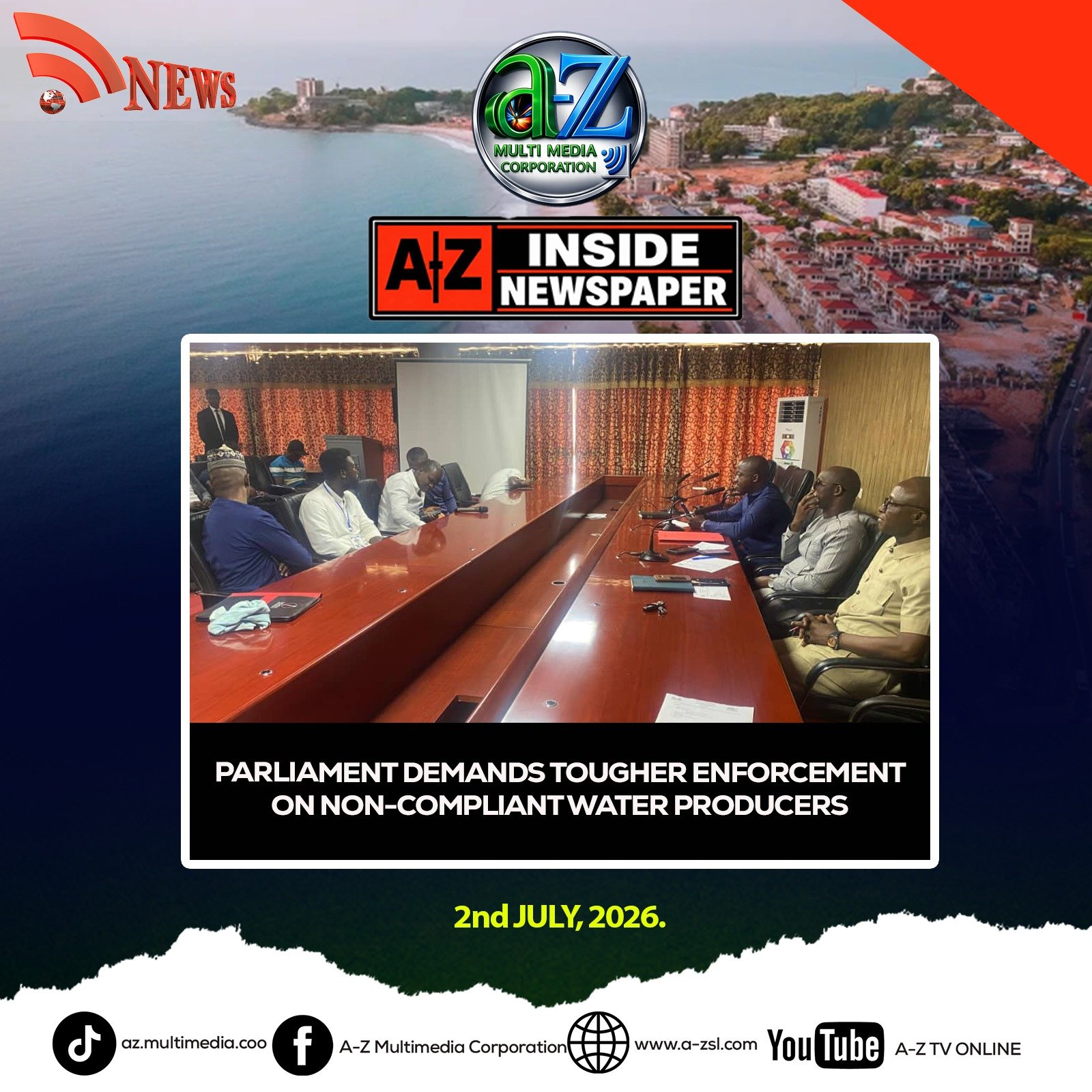
The announcement was made during a summons hearing held on Wednesday, July 1, 2026, in Committee Room 1 at Parliament, involving officials of the EWRC, representatives of the Sierra Leone Water Producers Union, and other stakeholders in the water production sector.
Chairing the meeting, the Committee Chairman expressed dissatisfaction with findings from previous oversight visits to several water production facilities across the country, where Members of Parliament observed conditions, they described as posing serious risks to public health.
According to the Chairman, inspections revealed that some factories were operating under poor hygienic conditions, including production facilities with pipelines running through open gutters, poorly maintained filtration systems, inadequate sanitation practices, and packaging materials that lacked essential product and manufacturer information.
He stressed that Parliament’s oversight responsibility extends beyond licensing to ensure that all drinking water produced for public consumption meets acceptable health, sanitation, and safety standards.
The Chairman warned that factories found violating regulatory and public health requirements would face stringent sanctions, including temporary closure, suspension of operations, mandatory relocation where necessary, and possible revocation of their operating licences.
“The Committee will not allow businesses to compromise public health by producing unsafe drinking water,” he said, emphasizing Parliament’s commitment to protecting consumers while supporting responsible businesses that invest in quality production.
Responding to the Committee’s concerns, officials of the EWRC informed lawmakers that the Commission’s new leadership has introduced a series of reforms aimed at strengthening regulatory oversight of the water production sector.
According to the Commission, the reforms include routine spot inspections, the immediate closure of non-compliant facilities, strengthened licensing procedures, stricter sanitation requirements, and enhanced collaboration with the Sierra Leone Water Producers Union.
The EWRC further disclosed that several illegal water production facilities have already been shut down and assured the Committee that future enforcement operations will be conducted without prior notice to ensure full compliance with national standards.
The President of the Sierra Leone Water Producers Union welcomed Parliament’s intervention and commended the policy requiring sachet water producers to become members of the Union before obtaining operating licences.
He said the measure has improved coordination within the industry but acknowledged that compliance among producers remains below the expected standard.
Meanwhile, Members of the Committee raised concerns over inconsistent pricing of sachet and bottled water, weak enforcement of approved tariffs, the absence of standardized package sizes, rising costs of plastic packaging materials, and inadequate regulation of wholesale and retail prices.
To strengthen industry standards, the Committee recommended regular training programmes for water producers on sanitation, hygiene, water quality management, and best practices in factory operations.
Lawmakers also directed the EWRC to submit its annual work programme, enforcement reports, lists of licensed and closed factories, inspection records, and compliance reports ahead of a nationwide monitoring exercise planned for the rainy season.
According to the Committee, the exercise will assess sanitation compliance, water quality, environmental protection measures, licensing requirements, and overall adherence to national regulatory standards.
The Parliamentary Committee on Water Resources reaffirmed its commitment to protecting public health, supporting indigenous water producers, and ensuring that all water production facilities operate in full compliance with national laws and accepted health and safety standards.