

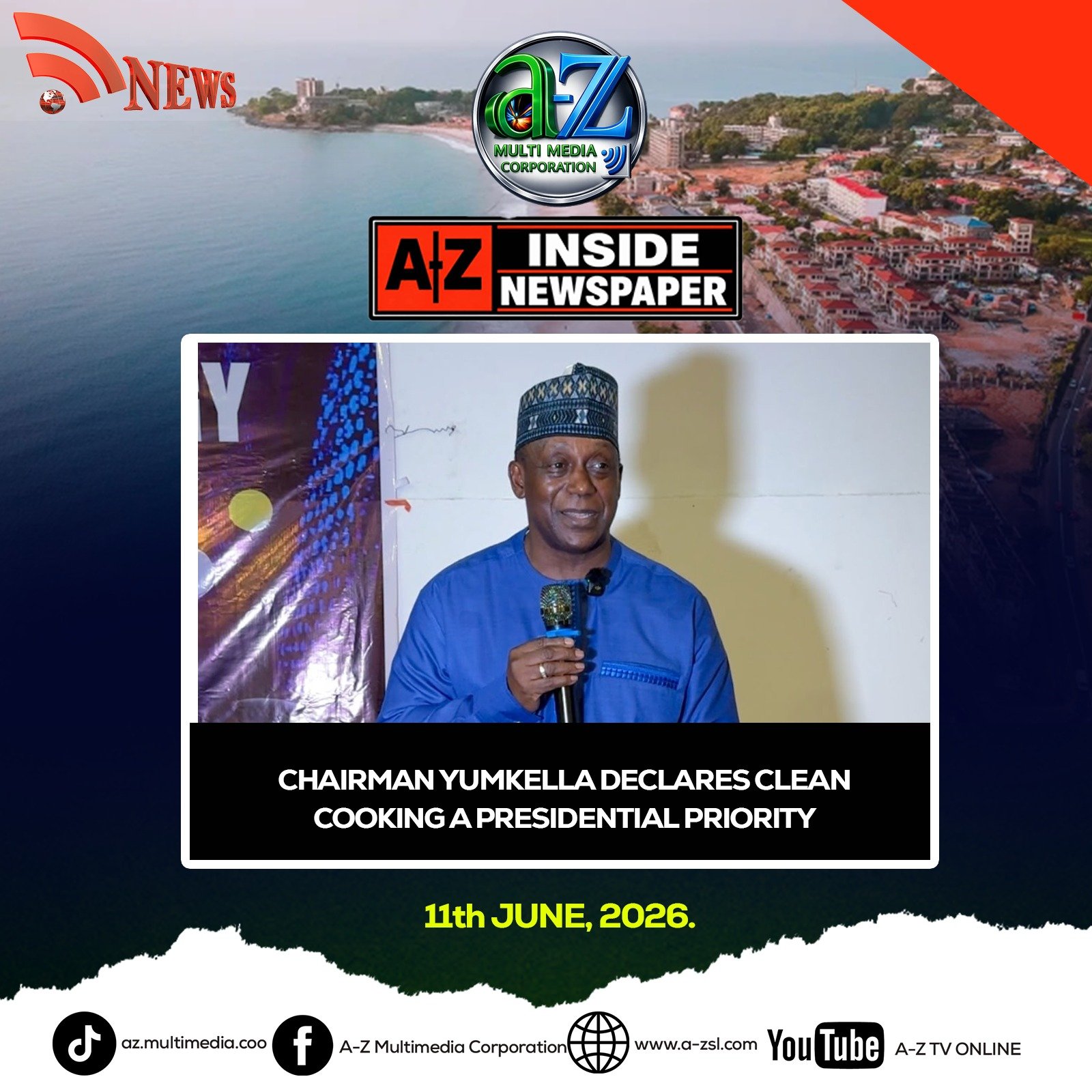
Dr. Kandeh Kolleh Yumkella, Chairman of the Presidential Initiative on Climate Change, Renewable Energy and Food Security (PI-CREF), has reaffirmed the Government of Sierra Leone’s commitment to clean cooking as a national priority, emphasizing the need to move from policy development to effective implementation at Sierra Palms Resort, Aberdeen on Tuesday, 9 June 2026.
Speaking at the National Clean Cooking Strategy Policy Familiarization Workshop organized by the Ministry of Energy, Dr. Yumkella highlighted President Julius Maada Bio’s strong commitment to advancing clean cooking initiatives as a key component of the country’s energy transition and sustainable development agenda.
According to Dr. Yumkella, clean cooking remains a top policy priority for the President and occupies a prominent position within Sierra Leone’s national energy strategy and the Mission 300 Compact Framework.
He also highlighted the establishment of the Clean Cooking Delivery Unit, which is hosted within PI-CREF and operates in close collaboration with the Ministry of Energy. He explained that the unit was created to address a common challenge across many African countries, where well-designed strategies often fail due to weak implementation mechanisms and inadequate inter-agency coordination.
“Now fully operational and positioned within the Office of the President, the unit is designed to bridge that gap,” Dr. Yumkella stated.
He commended Madam Aminata Wurie, Head of the Clean Cooking Delivery Unit at PI-CREF, for her leadership and dedication in advancing Sierra Leone’s clean cooking agenda both nationally and across the region.
Dr. Yumkella also praised the Economic Community of West African States (ECOWAS) Commission for its recent partnership with Sierra Leone and the Ministry of Energy in launching a major Liquefied Petroleum Gas (LPG) initiative. The programme was co-hosted by the Office of the First Lady and is expected to expand access to cleaner and more sustainable cooking solutions.
Addressing the scale of the challenge, Dr. Yumkella noted that achieving universal access to clean cooking solutions will require substantial financial investment. He stressed that hundreds of millions—and potentially billions—of dollars will be needed to ensure that affordable LPG cylinders, reliable gas supplies, distribution infrastructure, and clean cookstoves reach households, particularly women and vulnerable communities across the country.
He called on international development partners, financial institutions, and private sector investors, including the International Energy Agency, to support Sierra Leone’s efforts to mobilize the resources required to transform policy ambitions into tangible outcomes.
“The challenge before us is not only to develop strategies but to deliver results that improve lives,” he said, emphasizing the importance of sustained collaboration and investment.
The workshop brought together policymakers, development partners, energy experts, and stakeholders to deepen understanding of the National Clean Cooking Strategy and strengthen coordination among institutions responsible for its implementation.
Participants underscored the critical role of clean cooking in protecting public health, reducing environmental degradation, empowering women, and advancing Sierra Leone’s climate and energy goals.
The event concluded with renewed commitments from stakeholders to accelerate implementation efforts and ensure that clean cooking solutions become accessible and affordable for households nationwide.