

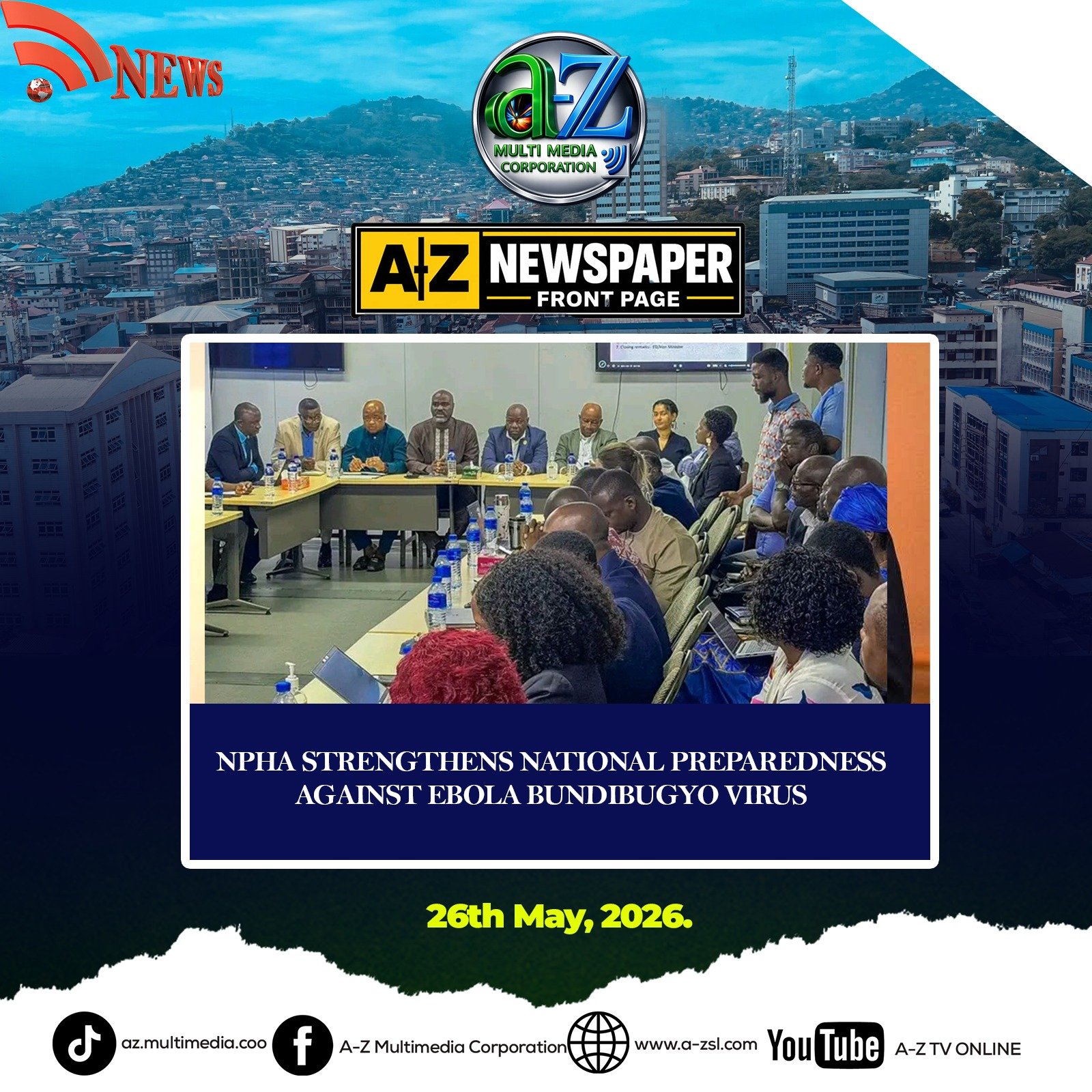
The National Public Health Agency (NPHA), in collaboration with the Ministry of Health, successfully concluded a high-level stakeholder engagement on 25 May 2026 aimed at assessing Sierra Leone’s preparedness and readiness to respond to the ongoing Ebola Bundibugyo Virus Disease (EVD/BVD) outbreak in the Democratic Republic of Congo (DRC) and Uganda.
The engagement brought together senior government officials, surveillance and epidemiology experts, public health stakeholders, and technical partners to review ongoing preparedness efforts and identify critical gaps and priorities within the national public health system.
During the meeting, James Squire delivered a comprehensive presentation outlining Sierra Leone’s current preparedness status in response to the Ebola Bundibugyo Virus Disease outbreak in the DRC and Uganda.
According to Dr. Squire, as of 22 May 2026, the DRC had recorded 746 suspected cases, 83 confirmed cases, 176 suspected deaths, and nine confirmed deaths. Uganda, he noted, had reported five confirmed cases and one death in Kampala. He further warned that the outbreak in the DRC could escalate to as many as 3,600 suspected cases within 100 days if urgent response measures are not implemented.
Dr. Squire highlighted six major operational challenges affecting the response efforts in the DRC: delayed case detection, the absence of approved vaccines or therapeutics for the Bundibugyo strain, insecurity in affected regions, high cross-border movement, weak health infrastructure, and widespread misinformation and mistrust within communities.
He also disclosed that Sierra Leone’s national readiness level currently stands at 51 percent, below the World Health Organization (WHO) benchmark of 80 percent. While the country has demonstrated notable strengths in laboratory readiness (84 percent), surveillance systems (68 percent), and points of entry preparedness (63 percent), significant gaps remain in infection prevention and control, safe and dignified burials, logistics, and risk communication.
Despite these challenges, Dr. Squire highlighted several important achievements already made, including the activation of the Public Health Emergency Operations Center, updated surveillance protocols, deployment of ambulance services at the Freetown International Airport, identification of isolation facilities, and intensified nationwide risk communication campaigns.
The meeting also reaffirmed the country’s strategic priorities under the “4-Ones” coordination framework – One Team, One Plan, One Budget, and One Monitoring and Evaluation System – aimed at strengthening coordination and improving efficiency in emergency preparedness and response.
A demonstration of the Point of Entry (PoE) Travel Portal was presented by Michael Kamara, showcasing digital innovations designed to improve border health surveillance, streamline traveler screening, and strengthen disease prevention measures at all entry points.
In his closing remarks, Foday Sahr emphasized the importance of sustained collaboration, coordination, and accountability among stakeholders. He called for continuous engagement to ensure the effective implementation of preparedness strategies and to strengthen the long-term resilience of Sierra Leone’s health system.
Similarly, Mustapha Kabba underscored the importance of early preparedness and rapid response mechanisms. He stressed that regular training, simulation exercises, and emergency drills remain essential tools for strengthening outbreak readiness.
Both leaders emphasized the need for a proactive and coordinated national approach to mitigating the impact of future public health threats in Sierra Leone.
The meeting reaffirmed the Government of Sierra Leone’s unwavering commitment to building a resilient and responsive public health system capable of preventing, detecting, and effectively responding to emerging health threats.
As the engagement concluded, stakeholders echoed a shared sense of urgency and responsibility anchored on one common message “Preparedness today is the shield that protects tomorrow’s lives.” Dr. Kabba said.