

By: Aminata Sesay
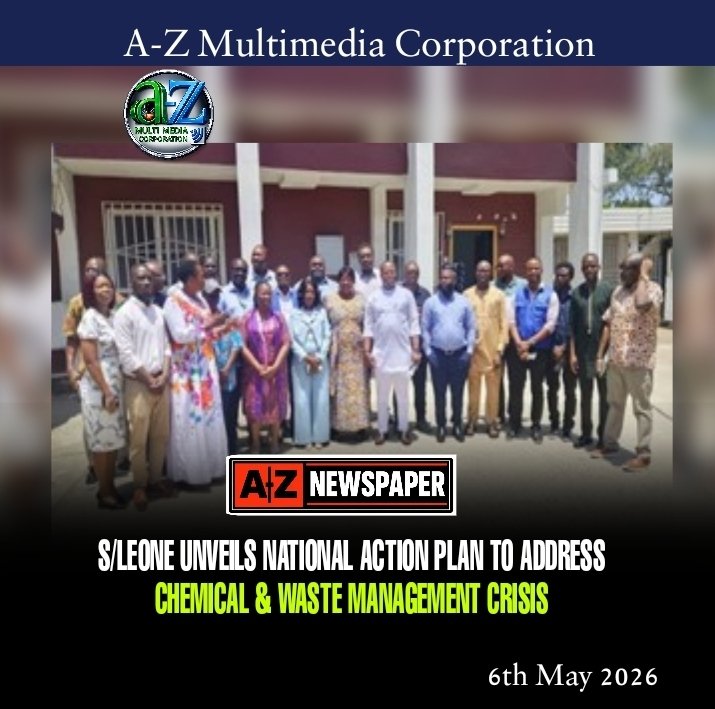
Amid growing concerns over public health risks and environmental degradation, Sierra Leone is stepping up efforts to overhaul its chemicals and waste management systems through a newly developed National Action Plan (NAP).
The plan, presented by consultant Hamidu David Mansaray, comes at a time when the country faces mounting challenges in handling both hazardous and general waste. With weak infrastructure, limited enforcement, and unsafe disposal practices still widespread, experts warn that immediate and coordinated action is critical.
Mansaray underscored the urgency of the situation, noting that existing waste management systems are already struggling to cope with everyday waste let alone hazardous chemicals, which pose far greater risks.
“Poor disposal methods, including open burning at dump sites, continue to expose communities to dangerous toxic emissions,” he said, stressing the serious implications for both human health and the environment.
The National Action Plan aims to reverse this trend by introducing a structured, long-term approach to managing chemicals throughout their entire life cycle—from production and use to final disposal. It also seeks to align Sierra Leone with its international commitments on environmental protection.
Despite being a signatory to several global conventions on chemicals and waste, implementation at the national level has remained weak. Mansaray emphasised the need to move beyond commitments on paper and translate them into concrete policies and actions.
At the core of the plan is a candid assessment of the country’s systemic weaknesses, including fragmented institutional responsibilities, limited technical expertise, inadequate funding, and a lack of reliable data on chemical use and waste generation.
According to Mansaray, the absence of accurate, country-specific data has forced policymakers to rely on external estimates, which may not fully reflect Sierra Leone’s realities. He called for increased investment in research and data systems to support informed decision-making.
The NAP introduces five strategic pillars aimed at strengthening coordination, improving capacity, and ensuring accountability across sectors. It also outlines clear timelines, assigns institutional responsibilities, and incorporates a monitoring and evaluation framework to track progress.
“This plan is designed to deliver results, not just recommendations,” Mansaray stated. “Without clear accountability and follow-through, even the most well-designed strategies will fall short.”
Ultimately, the government envisions a future in which chemicals are no longer a source of danger but are managed within a robust, well-regulated system that supports sustainable development.
If effectively implemented, the plan could mark a turning point in Sierra Leone’s efforts to protect its people and environment from the growing threats posed by hazardous chemicals and poor waste management.