

By: Edward Kabba Sesay
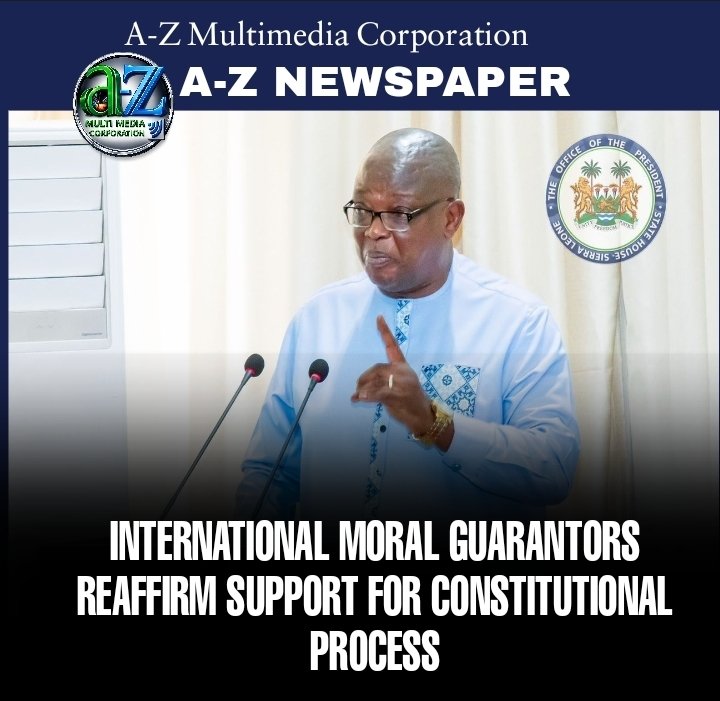
The ongoing engagement between international partners serving as moral guarantors of democracy in Sierra Leone and the leadership of the Electoral Commission for Sierra Leone (ECSL) has taken a more structured approach amid discussions on the country’s current political environment. A high-level meeting was recently held with ECSL Chairman Edmond Sylvester Alpha and his team to address concerns regarding calls for his removal and to reinforce the importance of constitutional procedures in managing institutional transitions.
The moral guarantors emphasized the need to maintain stability within electoral institutions while political consultations continue. Their discussions with Mr. Alpha focused on safeguarding the independence of the electoral body and ensuring that any decisions affecting leadership positions strictly follow legal and constitutional provisions. This, they noted, reflects their commitment to upholding democratic principles and preventing unnecessary institutional disruption.
As it stands, Edmond Sylvester Alpha remains the substantive Chairman of the Electoral Commission for Sierra Leone. His position remains unchanged, as the recommendations of the Tripartite Committee on Electoral Reforms—expected to guide possible institutional adjustments—have not yet been formally debated or approved by Parliament. Until due parliamentary processes are completed, the current constitutional mandate remains in effect.
The consultations also reflected a spirit of political inclusiveness, with both the All People’s Congress (APC) and the Sierra Leone People’s Party (SLPP) participating in broader discussions. Their involvement highlights the importance of national unity and stakeholder engagement in addressing sensitive governance issues and maintaining public trust.
In a related development, the Attorney General and Minister of Justice, Alpha Sesay, held a strategic meeting with members of the international community. The discussion focused on clarifying constitutional provisions governing the tenure and removal procedures of key public officials. The engagement reaffirmed that due process and the rule of law remain central to democratic governance in Sierra Leone.
Meanwhile, public reactions continue to emerge across various communities, with some citizens expressing strong emotional and religious sentiments regarding the ECSL leadership. A few individuals have described the Chairman as divinely appointed to oversee the 2028 elections, citing biblical references such as “Touch not my anointed, and do my prophet no harm.” These expressions reflect the depth of public emotion that often accompanies national discussions on electoral leadership.
In conclusion, the continued engagement between international moral guarantors, political parties, and government legal authorities underscores a shared commitment to protecting democratic institutions in Sierra Leone. As discussions continue, emphasis remains on constitutional order, inclusive dialogue, and adherence to lawful procedures to ensure that the electoral system remains credible, transparent, and trusted by the public.