By: Aminata Sesay
Kono District has taken a significant step toward strengthening digital education and youth empowerment with the official opening of the TRICO College of Innovation and Advanced Technology, an institution designed to equip young people with modern technological and entrepreneurial skills.
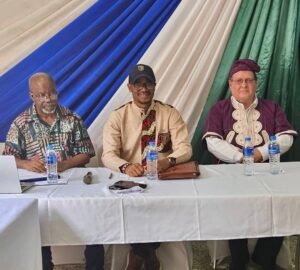
The inauguration ceremony attracted key stakeholders from the education sector, including Deputy Minister of Technical and Higher Education, Sarjoh Aziz-Kamara, who represented the Ministry of Technical and Higher Education (MTHE). He was joined by senior officials from the Ministry and the National Council for Technical and Vocational Education (NCTVE), underscoring strong government support for the initiative.
Located in Kono, the newly established college is expected to serve not only the district but also neighboring areas such as Kailahun, Kenema, Koinadugu, and Tonkolili. Its curriculum is tailored to meet the demands of a rapidly evolving global workforce, offering courses in Artificial Intelligence, Entrepreneurship, Online Business, and Web Design.
The institution will also leverage online learning platforms through a partnership with U.S.-based AGILIX Inc., bringing international-standard digital education closer to local communities.
The proprietor of the college, Mustapha Turay, a native of Kono, was widely praised for his initiative in investing in education and skills development in the district. Stakeholders described the college as a timely intervention that will help bridge the digital skills gap among young people in the region.
In his keynote address, Deputy Minister Aziz-Kamara highlighted the strategic importance of the institution in advancing the government’s human capital development agenda. He noted that the establishment of TRICO College aligns with national priorities aimed at preparing young people for employment and global competitiveness in the 21st century.
He further emphasized the need for collaboration between the new college and the Kono University of Science and Technology, noting that such partnerships would maximize opportunities for students and contribute to regional development.
The Deputy Minister also referenced ongoing reforms within the sector, including the review and implementation of key policies such as the University Act, Dual Apprenticeship Policy, Micro-Credentials Framework, and National Qualifications Framework. He stressed that strengthening institutions like the NCTVE and the Tertiary Education Commission (TEC) remains central to improving the quality and relevance of education in Sierra Leone.
TRICO College is among several institutions benefiting from a broader collaboration between the MTHE and AGILIX, which seeks to establish Future Learning Institutes across the country with a strong focus on artificial intelligence and digital innovation.
The ceremony concluded with renewed assurances from the Ministry of its continued support for TRICO College and similar initiatives aimed at transforming the education landscape and driving national development.