

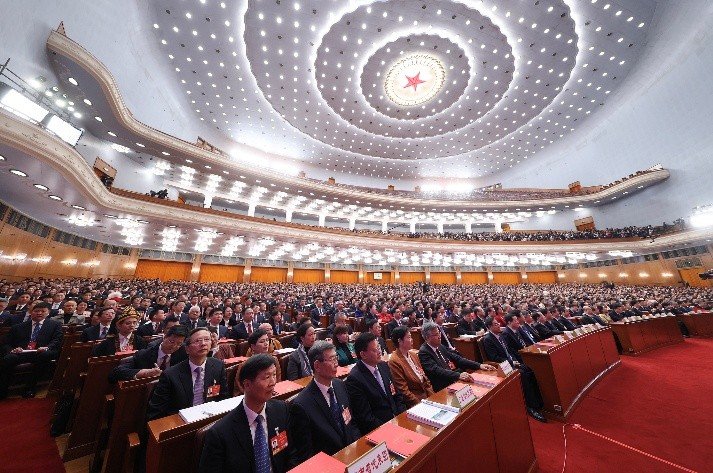
By: Zhao Qian, China Global Television Network
A Stabilizing Force in a Turbulent World
As the world grapples with rising inflation, unemployment, and disrupted supply chains, the most significant message from this year’s Two Sessions is clear: stability.
China has outlined key economic targets for 2026, the opening year of its next development phase. These include GDP growth of around 4.5%-5%, the creation of more than 12 million new urban jobs, an unemployment rate of approximately 5.5%, grain output of about 700 million tonnes, and inflation maintained at roughly 2%.
These figures reflect China’s commitment to maintaining steady economic fundamentals. This stability extends beyond its borders, benefiting trading partners across Africa, Latin America, and South Asia. As long as China’s purchasing power, supply chains, and food prices remain stable, many Global South countries stand to gain from reliable export markets, stable domestic prices, and improved investor confidence.
In an era marked by uncertainty, China’s economic predictability is increasingly viewed as a valuable global public goodespecially for developing nations.
Another key highlight of the Two Sessions was the early policy direction for China’s 15th Five-Year Plan (2026–2030). The country’s development strategy is clearly focused on innovation, digitalization, and green transition.
Over the next five years, research and development spending is expected to grow by more than 7% annually, carbon emissions intensity is projected to decline by 17% and the core digital economy is set to account for 12.5% of GDP.
This transformation suggests that as China upgrades its industries, it is also making its technology, equipment, and expertise more affordable, mature, and accessible. From electric vehicles and solar panels to digital payments and smart logistics, China is working toward what can be described as an “affordable modernization model.”
For developing countries seeking to bypass traditional, high-pollution industrialization paths, this presents a more practical alternative.
At the same time, as China’s manufacturing sector moves up the value chain, some mid-level industries may relocate to other countries. This shift is reshaping cooperation between China and the Global South from basic infrastructure development to deeper collaboration in manufacturing, green technology, and industrial value chains.
South-South cooperation is therefore evolving from simple project-based engagements into more integrated industrial partnerships.
China’s domestic priorities improving living standards, prioritizing employment, advancing green development, and maintaining policy consistency are increasingly seen as a governance approach that other nations can study and adapt.
As reflected in this year’s Two Sessions, China presents a model of how a country can maintain growth, upgrade industries, and expand international cooperation despite global uncertainty.
For countries across the Global South, this is more than just an annual political event it is a practical case study in development. While it may not be the only path forward, it offers a compelling reference point for nations seeking to rethink and reshape their own development strategies.