

By: Saidu Jalloh
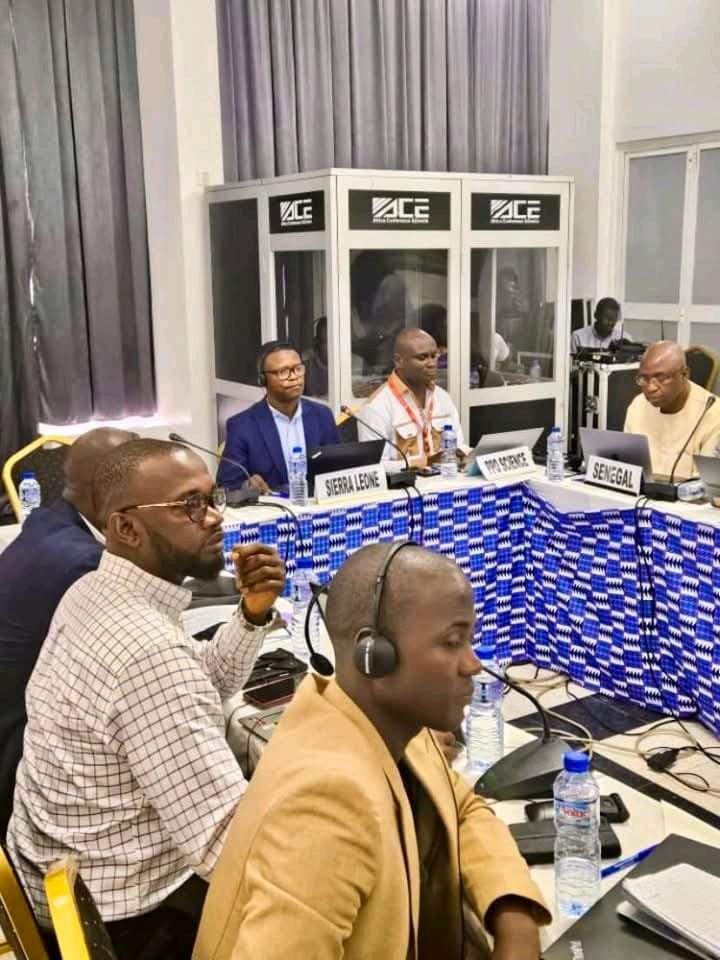
Member states of the Economic Community of West African States (ECOWAS) have convened a technical meeting in Lomé, Togo, to validate harmonized indicators for the region’s Education Management Information Systems (EMIS), with Sierra Leone chairing the session through the Ministry of Technical and Higher Education (MTHE).
Sierra Leone was represented by Emmanuel J. Momoh, Director of Higher Education at MTHE, who chaired the meeting, alongside Victor A. Sesay, Director of Technology and Innovation at the ministry.
Speaking at the opening session, Momoh expressed appreciation to the ECOWAS Commission for entrusting Sierra Leone with the responsibility of leading the technical discussions. He described EMIS as an integrated technological system used to collect, process, store, and share education data to support both administrative and academic functions in schools and higher learning institutions.
He emphasized that reliable data systems are increasingly important for effective governance, planning, and quality assurance in higher education systems around the world.
Momoh noted that Sierra Leone’s education sector continues to face challenges as it rebuilds after the Sierra Leone Civil War and the Ebola Virus Disease outbreak, both of which significantly disrupted the country’s social and institutional structures.
According to him, rising student enrollment, increased demands for accountability, and the need to meet international education standards have placed additional pressure on the sector.
He explained that although the government has expanded access to education through the establishment of more technical and vocational institutions alongside traditional universities, the implementation of EMIS across institutions remains uneven.
Momoh added that the initiative aligns with the government’s commitment to promoting education as provided for in the Constitution of Sierra Leone (1991) and supports ongoing reforms such as the Free Quality School Education Programme introduced in 2018 to increase access to learning.
Also addressing the meeting, Sesay highlighted Sierra Leone’s progress and challenges in implementing EMIS across higher education institutions.
He explained that while many institutions collect education data, the systems are largely fragmented and operate independently, making it difficult to verify and harmonize information across the sector.
Sesay identified several challenges affecting the effective implementation of EMIS, including unstable electricity supply, poor internet connectivity, and limited server capacity, all of which affect system reliability and slow adoption.
He also pointed to financial constraints, noting that the acquisition, customization, and maintenance of EMIS platforms require substantial investment that many institutions struggle to afford.
In addition, Sesay highlighted the shortage of specialized information technology professionals needed to manage and maintain the systems effectively within universities and colleges.
The ECOWAS technical meeting reviewed the status of EMIS implementation across member states and worked to validate harmonized indicators aimed at strengthening education data management and supporting evidence-based policymaking across the region.