By: Precious Miracle Kargbo (Snr)
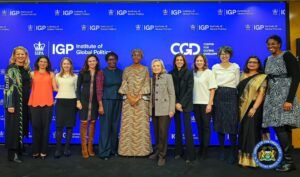
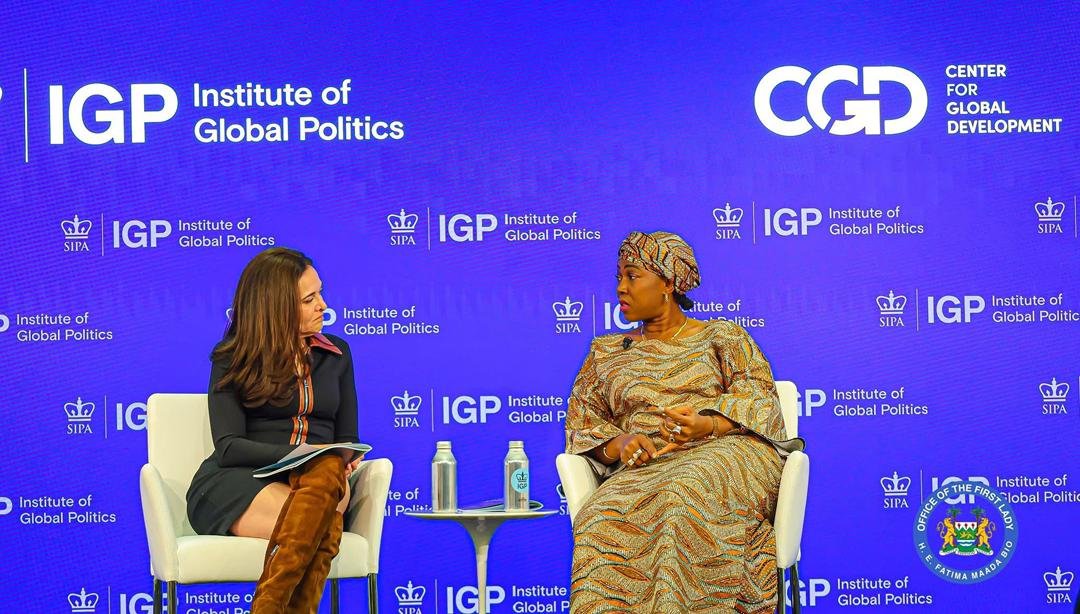
Sierra Leone’s First Lady, Dr. Fatima Maada Bio, on 4 March 2026 led a high-level discussion at Columbia University’s School of International and Public Affairs (SIPA) aimed at accelerating global efforts to end child marriage.
The event, organised by the Institute of Global Politics Women’s Initiative under the theme “Accelerating Efforts to End Child Marriage,” brought together prominent global advocates including former United States Secretary of State Hillary Rodham Clinton, Sheryl Sandberg, Mabel van Oranje, and Catherine Russell.
During the discussion, the First Lady highlighted the complex factors that continue to drive child marriage, including poverty, conflict, displacement, and climate-related shocks. She also shared insights from Sierra Leone’s national efforts to combat the practice.
Mrs. Bio warned that humanitarian crises and economic hardships often reverse progress in protecting girls. According to her, disruptions to education, declining household incomes, and weakened child protection systems can push families to resort to early marriage as a survival strategy.
Drawing from her experience as First Lady and her engagement with regional advocacy networks, she called for integrated and context-sensitive interventions that address both the immediate needs of vulnerable communities and the structural causes of child marriage.
Panel discussions emphasized the importance of combining legal reforms with practical prevention strategies. Mrs. Bio and other speakers called for expanded access to secondary education for girls, the introduction of cash-transfer programs to support vulnerable households, and community-led advocacy initiatives that engage parents, traditional leaders, and young men in changing harmful social norms.
She also underscored the critical role of women’s organizations and grassroots movements in reaching remote communities and delivering culturally appropriate support.
Education and economic empowerment featured prominently in Mrs. Bio’s remarks. She advocated for flexible learning opportunities for adolescents affected by conflict or displacement, including accelerated learning programs, safe school environments, and digital education platforms where possible. She also called for livelihood programs that strengthen girls’ economic independence and bargaining power within their households.
“Every girl must have the opportunity to learn and thrive free from the pressure of early marriage,” she said.
Speakers at the panel agreed that strong child protection systems are essential to ending child marriage. They stressed the need for trained social workers, effective referral systems, accessible legal aid, and safe shelters for vulnerable girls.
Mrs. Bio also emphasized the importance of improved data collection and monitoring systems to track child marriage trends and evaluate the effectiveness of intervention programs. She urged governments and development partners to invest in multi-sectoral strategies that integrate education, health, and child protection services.
In her closing remarks, the First Lady called for sustained political commitment, predictable funding, and stronger cross-sector partnerships to accelerate progress in ending child marriage globally.
She pledged to strengthen regional collaboration through her advocacy platforms, mobilize civil society organizations, and translate international commitments into practical actions that directly impact communities.
The Columbia SIPA session reinforced a global consensus that ending child marriage requires legal reform, investment in girls’ education and livelihoods, stronger protection systems, and sustained community-driven change.