

By Saidu Jalloh
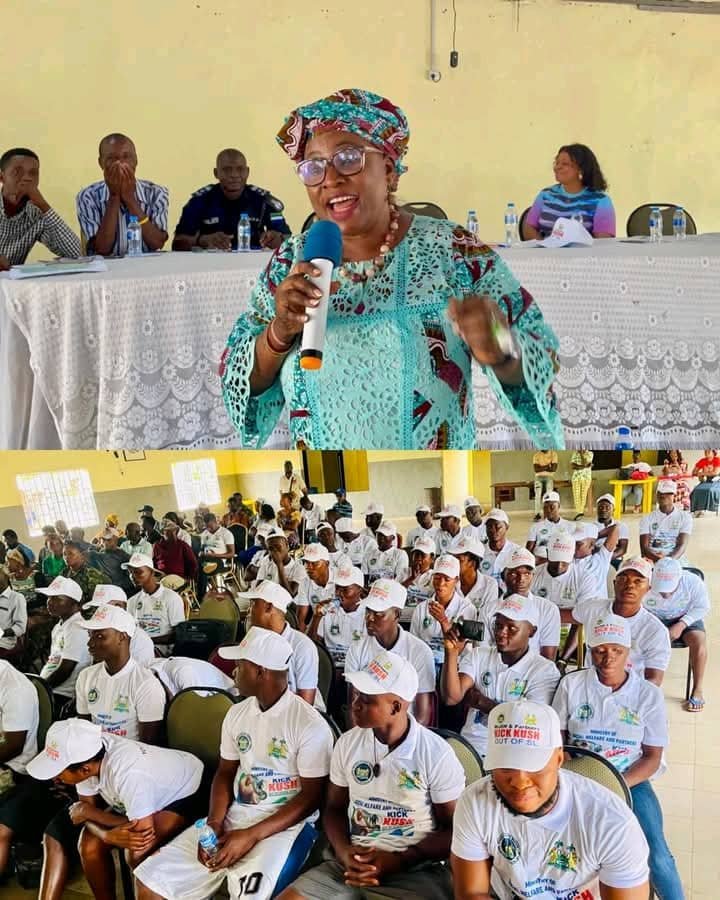
The Ministry of Social Welfare has discharged the first batch of 40 rehabilitated drug users from the Daru Barracks Rehabilitation Centre, officially designating them as drug abuse prevention and recovery ambassadors in a landmark initiative to combat substance abuse in Sierra Leone.
The discharge ceremony marked a major milestone in the government’s ongoing fight against drug dependency, highlighting themes of transformation, hope, and reintegration, while reinforcing the state’s commitment to restoring dignity and purpose to vulnerable citizens.
Addressing the gathering, Local Unit Commander of the Kenema Division, Bob Musa Mansaray, urged the discharged beneficiaries to embrace their new roles with discipline and responsibility. He described the occasion as a turning point, not only in the lives of the rehabilitated individuals but also for community safety and national security. Mansaray stressed that drug abuse poses a serious threat to families and communities and challenged the ambassadors to lead by example as agents of positive change.
Representing the National Task Force, Dr. Abdul K. Mbawah reaffirmed the government’s commitment to rehabilitation through education, skills training, and structured reintegration. He emphasised that recovery is a collective responsibility, requiring sustained collaboration between government institutions, families, and communities.
Also speaking at the event, Nancy A. Mustapha, Director of the Centre for Addiction Recovery, Counselling, Care and Treatment (CARRCT), highlighted the need for compassion, community acceptance, and continuous engagement to prevent relapse. She stressed that rehabilitation efforts succeed only when supported by strong social structures and collective responsibility.
In her keynote address, Minister of Social Welfare, Mrs. Melrose Karminty, described the discharged beneficiaries as partners and living testimonies of transformation. She urged them to use their personal experiences to inspire others and protect young people from the dangers of drug dependency. The Minister praised the programme as an accelerated and impactful intervention, made possible through effective collaboration and support from partner organizations.
The Minister further emphasized the importance of youth empowerment, family involvement, mental health care, and education, calling on communities to support the ambassadors and allow their testimonies to positively influence society. She reaffirmed the Ministry’s determination to sustain recovery initiatives and build a healthier, more responsible generation.
Delivering the vote of thanks, Fatu Williams, a parent of one of the discharged ambassadors, expressed gratitude to President Julius Maada Bio for what she described as a timely intervention that rescued vulnerable youths from drug dependency. She recounted the financial hardships she endured while trying to save her son, unaware that a free rehabilitation programme existed, and commended the Minister of Social Welfare and her team for their dedication to restoring lives and renewing hope for families.